Virtual Nursing Platform: An Evaluation Guide
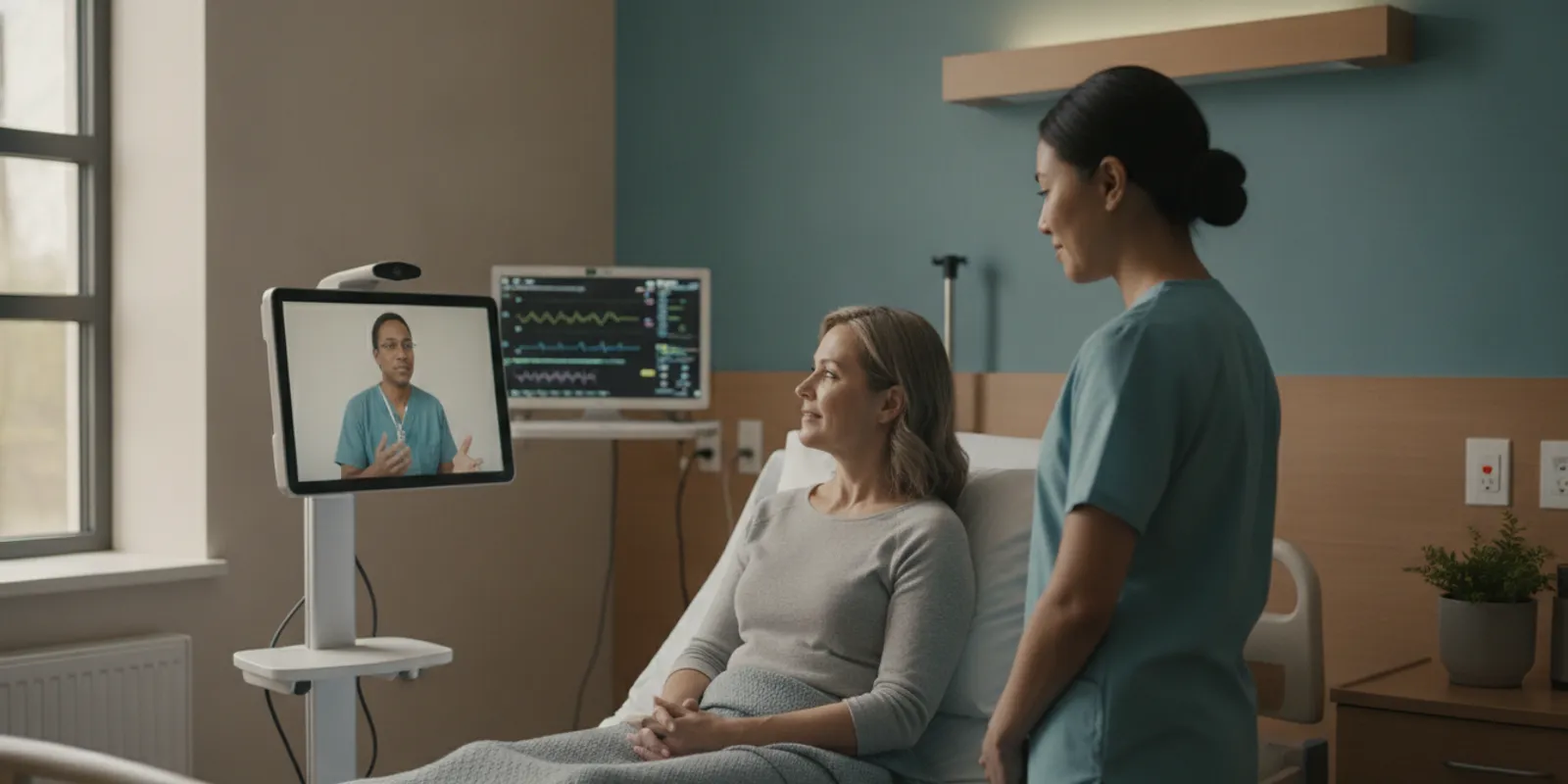
For hospitals, skilled nursing facilities, and long-term care operators, virtual care is most useful when it strengthens the bedside team rather than simply adding another screen. The buying decision should connect clinical access, nursing workflows, remote collaboration, equipment, security, and implementation support.
Book a Demo to evaluate your care workflow with the Dr. Temi team.
A virtual nursing platform can deliver expert nursing care from a remote location through audio and video, remote monitoring devices, and electronic health record access. The strongest options fit into coordinated care workflows, giving remote clinicians and bedside staff practical ways to assess, educate, observe, document, and escalate care. Research on virtual nursing models supports evaluating the full care model, not just the technology endpoint.
That means a serious evaluation starts with the clinical and operational work the platform must support each shift, across the settings and patient populations your organization serves.
What Should a Virtual Nursing Platform Do?
A virtual nursing platform connects remote nursing expertise with patients, bedside staff, and the clinical record. The model can use audio and video communication, remote monitoring devices, and electronic health record access to extend nursing care beyond the room. This definition comes from a review of virtual nursing delivery models published in the National Library of Medicine.
Evaluate the care model, not just the camera
A video endpoint is only one part of the experience. Leaders should ask how a remote clinician joins the care team, how bedside nurses request support, what information is available during the encounter, and how the interaction is documented afterward. A platform should make those steps clear enough to fit real hospital, skilled nursing, and long-term care workflows.
That means evaluating more than image quality or call reliability. Consider whether the system supports observation, patient education, admissions, clinical collaboration, escalation, and handoffs without creating extra work for bedside staff. The goal is coordinated care, with remote clinicians extending the reach of nurses and physicians rather than replacing the people responsible for hands-on assessment and patient relationships.
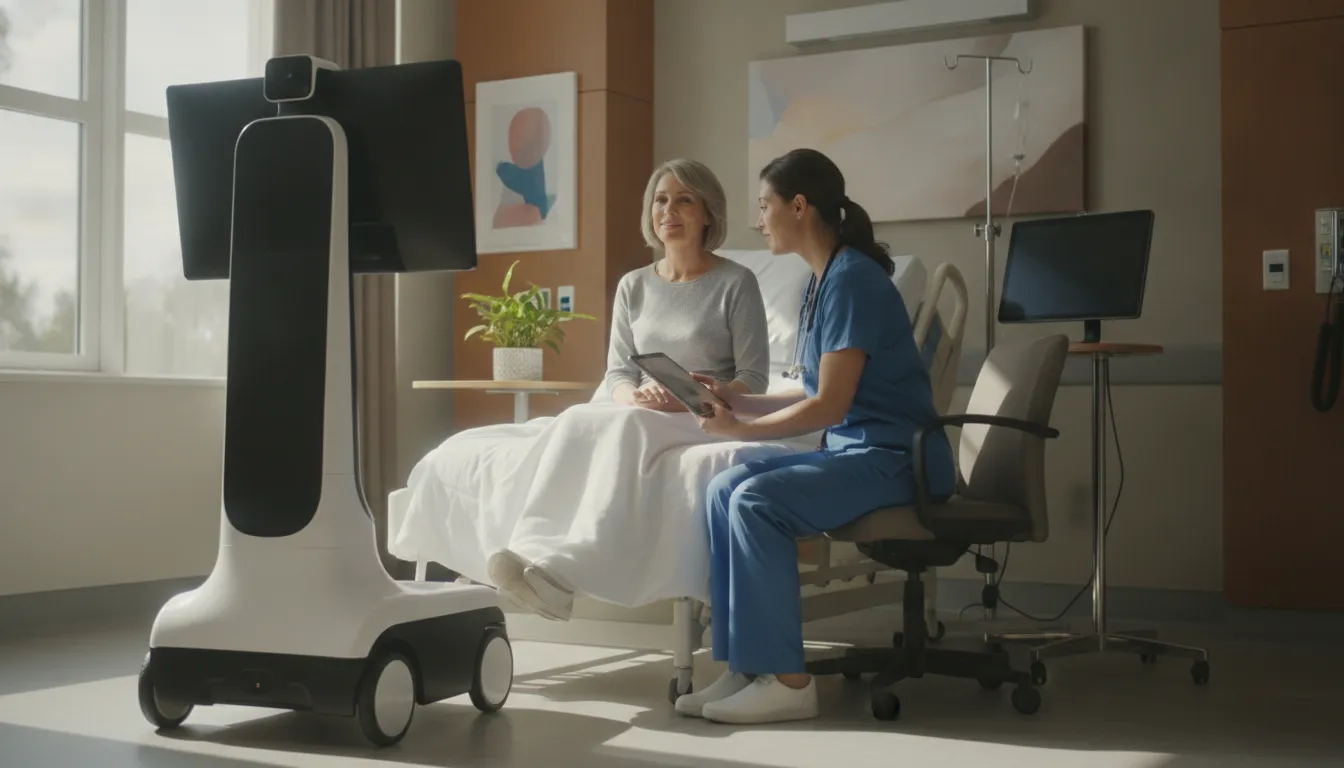
Dr. Temi approaches this need through autonomous robotic telepresence. Instead of leaving a remote clinician on a stationary screen or requiring staff to move a manually operated cart, the platform is designed to autonomously navigate to the patient. It can support a remote physician at the bedside and connect the encounter to broader clinical workflows. Organizations comparing options can review how this differs from a conventional endpoint on the autonomous telemedicine platform page.
The strongest evaluation question is therefore practical: can the platform help the right care-team member reach the right patient, access the right context, and complete the next step with minimal friction? That workflow fit should guide a demonstration and any subsequent pilot.
How Does It Support Bedside Nurses and Remote Clinicians?
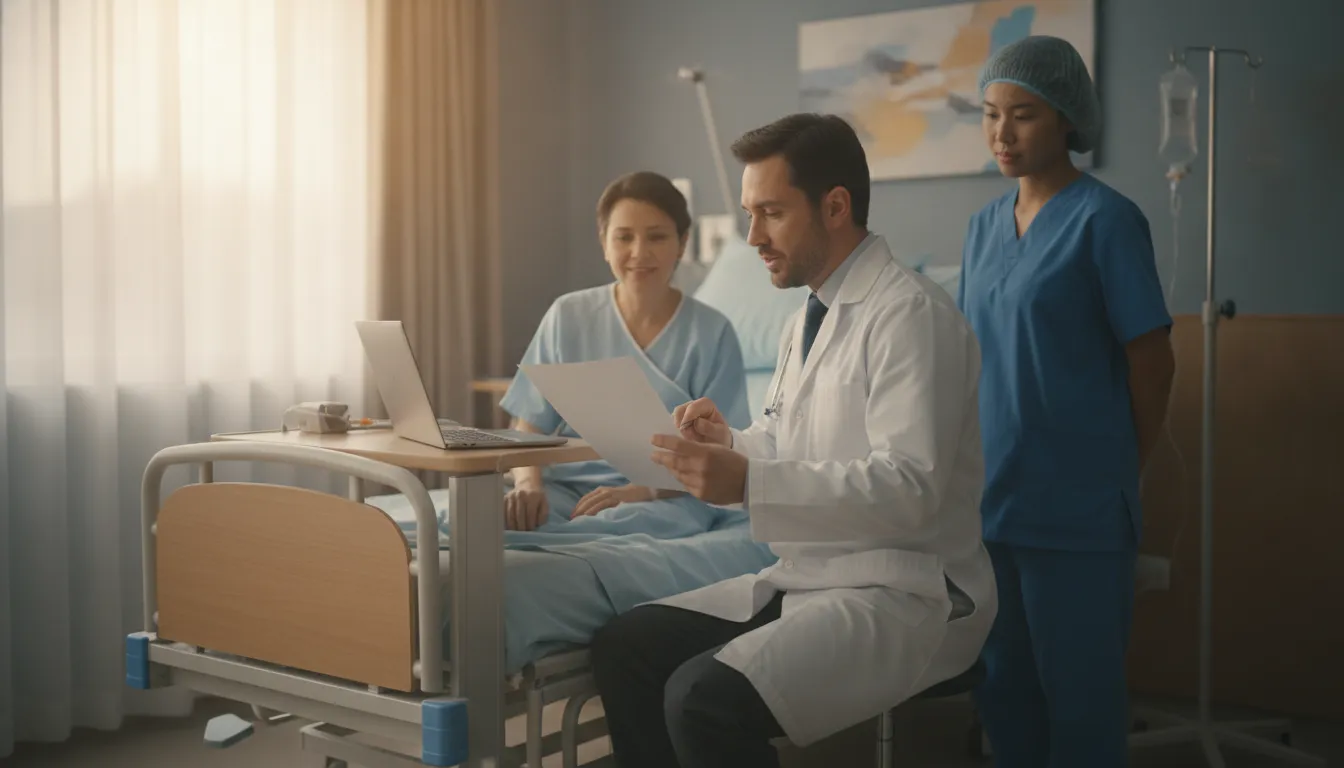
A useful virtual nursing platform should strengthen the care team around the patient, not turn nursing into a remote handoff. Bedside nurses remain central to assessment, hands-on care, communication, and escalation. Remote clinicians can extend that team by supporting observation, education, documentation, and timely clinical collaboration.
Shared visibility across routine and urgent moments
A 2025 mixed-methods study of 880 registered nurses found that reported virtual-nursing uses included patient observation (53%), admission and discharge activities (45%), and patient education (37%). These workflows can help a remote clinician handle appropriate conversations or monitoring while the bedside nurse focuses on physical care and the priorities that require an in-person presence. Monitoring and documentation were also identified as strengths by surveyed nurses. Read the study findings.
Dr. Temi adds a different type of bedside access. Its autonomous robotic telepresence is designed to navigate to a patient, rather than remain a stationary video screen or require staff to transport and position a cart. The company states that it can bring a remote physician to the bedside in under five minutes, 24 hours a day. That may support a more direct conversation among the patient, bedside nurse, and remote clinician when the situation calls for it. Explore the nursing workflow support available through the platform.
Evidence should guide escalation and implementation
The same survey produced mixed findings: 57% of respondents reported no workload reduction, while 43% reported reduced workload, and 53% said care quality improved. Staffing constraints, patient distrust, and workflow inefficiencies were reported limitations. These results are evidence from one survey, not a guarantee. Leaders should define which encounters belong with remote clinicians, how bedside nurses request help, and when an issue requires immediate in-person escalation. A careful pilot with nurse feedback can show whether the workflow improves coordination in that specific setting.
Which Clinical Workflows and Connected Devices Matter?
A virtual nursing platform should fit the work your teams already perform, while making remote participation practical at the bedside. Academic guidance describes virtual nursing as a combination of audio and video communication, remote monitoring devices, and access to the electronic health record, rather than a video endpoint alone. That workflow model is useful for evaluating hospitals, skilled nursing facilities, and long-term care environments.
Map the complete clinical encounter
Start with the moments where remote support can complement bedside staff. During admission, a remote nurse or clinician may help gather history, orient the patient, and identify questions for the local team. During rounding and observation, the workflow should make it easy to check in, escalate a concern, and hand off context without asking staff to repeatedly move equipment. Education and discharge preparation also require a clear way to involve the patient, family members, bedside staff, and remote participants.
For each use case, define who initiates the encounter, who remains accountable at the bedside, what information is documented, and how the next clinician receives the handoff. These details matter as much as the camera or mobile unit.
Evaluate device and documentation fit
Ask whether the platform can support the measurements and examination steps your clinicians actually need. Dr. Temi describes autonomous navigation, connected vital-sign monitoring, and clinical examination support. Availability and workflow fit should still be confirmed for the specific devices, patient population, and care setting under consideration. A session can also include up to 30 participants, which may support coordinated handoffs or education when that capacity fits the encounter.
- Vital signs and other connected measurements needed for the care pathway.
- Clinical examination support, with bedside staff and remote clinicians clearly coordinated.
- Simultaneous EHR access and documentation, including any integration requirements.
- Technical escalation and a fallback process when a device or connection is unavailable.
Include nursing, clinical, IT, and operations leaders in the evaluation. A practical demonstration using a real admission, observation check, or education workflow will reveal more than a feature list.
How Should Leaders Evaluate Security and Interoperability?
Security and interoperability should be evaluated as part of the care workflow, not as separate technical checkboxes. A buying committee should ask how a virtual nursing platform controls access, supports clinical documentation, and fits existing identity, EHR, and support processes before moving to a pilot.
Use a practical security and data-governance checklist
- Access: Confirm that access is credentialed-only and that identity and permissions can be aligned with the roles of remote clinicians, bedside staff, administrators, and support personnel.
- Video: Verify that video is encrypted. Ask how credentials are issued, reviewed, and removed when a team member changes roles or leaves the organization.
- Recording: Clarify the recording and retrieval policy. Dr. Temi describes live calls as not recorded or retrievable. Ensure that this documented policy matches your organization's clinical, privacy, and data-governance requirements.
- Documentation: Identify who owns the clinical record and where notes, observations, and follow-up actions are documented. A virtual nursing implementation should support simultaneous use of the electronic health record, a consideration identified in implementation research on virtual nursing workflows.
- Interoperability: Ask which EHR workflows are supported today, what configuration is required, and how information moves between the platform and the record. Dr. Temi describes EHR documentation through its Clinii partnership, but availability and implementation should be verified for your organization rather than assumed to be universal.
- Support and governance: Confirm escalation procedures for technical issues, ownership of permissions, audit responsibilities, and the support resources available when a workflow or connection fails.
The strongest evaluation includes IT, security, clinical, compliance, and frontline nursing voices. Have each group review the same workflow from its own perspective, then document open questions and required evidence before selecting a virtual nursing platform.
What Does Implementation Readiness Look Like?
Implementation readiness is a care-delivery question, not only an IT checklist. A hospital, SNF, or long-term care operator should define how a virtual nursing platform will fit existing bedside roles, escalation paths, documentation, and staffing patterns before expanding beyond a pilot.
Design the operating model before the technology rollout
Start by determining how many virtual nurses are available during each shift and which patients or workflows they support. The plan should also account for appropriate equipment at the bedside, the physical layout of the virtual nursing center, and clear ownership between remote clinicians, bedside nurses, charge nurses, and local leaders. These are core implementation considerations identified in a review of virtual nursing models, alongside training for virtual encounters and simultaneous use of the electronic health record (clinical implementation review).
Training should cover introductions, privacy-sensitive conversations, handoffs, patient consent processes where applicable, and how bedside staff request or decline remote support. For autonomous robotic telepresence, leaders should also observe how the platform reaches the patient and how connected devices or examination support fit the encounter. Any EHR documentation workflow, including availability through a technology partnership, should be verified in the facility's own environment rather than assumed.
Make the pilot measurable and supportable
Define a narrow pilot population, participating shifts, response expectations, and a named technical escalation path. Include support resources for problem resolution, downtime procedures, and a feedback loop for patients and staff. Evidence is mixed: one survey reported staffing challenges, patient distrust, and workflow inefficiencies, and its authors advised cautious introduction rather than assuming universal gains (mixed-methods nursing study).
- Confirm virtual nurse coverage, bedside equipment, room or command-center layout, and training owners.
- Test simultaneous EHR work, handoffs, escalation procedures, and support response.
- Measure adoption, response time, documentation completion, staff workload, patient experience, and workflow exceptions.
- Review results with clinical, nursing, IT, and operations leaders before scaling.
How Does Platform Fit Change by Care Setting?
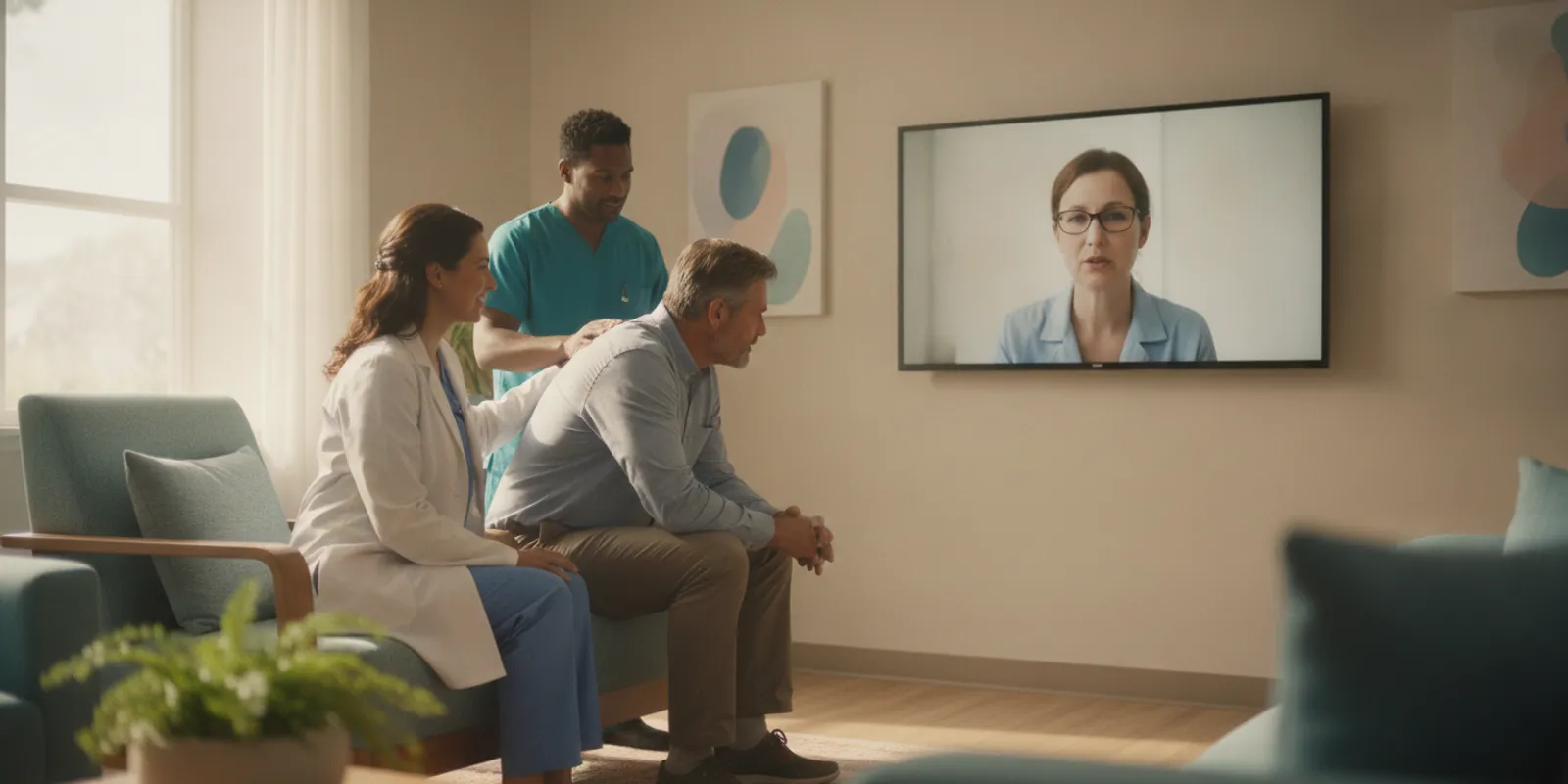
The right evaluation criteria depend on where care is delivered, who is at the bedside, and how remote clinicians will join the care team. A hospital may prioritize throughput and escalation across multiple units. A skilled nursing facility may focus on timely physician access for residents and coordination with on-site nurses. Long-term care operators may place greater weight on continuity, resident experience, and practical support for staff across daily routines.
| Care setting | Likely workflows | Bedside and remote-team considerations | Implementation questions |
|---|---|---|---|
| Hospital or health system | Admission support, patient observation, education, rounding, and escalation across units. | How will remote clinicians coordinate with bedside nurses, physicians, and specialty teams during active care? | Can the model fit existing command-center, EHR, identity, escalation, and unit workflows? |
| Skilled nursing facility | Resident assessments, changes in condition, post-acute follow-up, and clinical collaboration. | Can staff connect a remote clinician to the resident without transporting or positioning equipment, while keeping the nurse central? | Who responds on site, how are examinations and vital signs supported, and what is the technical escalation path? |
| Long-term care | Routine clinical access, monitoring, family connection, and support for resident wellbeing. | Will the experience feel calm and understandable for residents, families, staff, and remote clinicians? | How will training, consent, privacy, scheduling, and ongoing support work across shifts? |
Match the workflow before comparing features
Across settings, evaluate the complete care encounter rather than a video endpoint alone. Dr. Temi describes autonomous navigation, connected vital-sign monitoring, and clinical examination support, with remote physician access to the bedside in under five minutes. Ask each setting-specific team to walk through a real escalation, including who initiates the encounter, what the bedside nurse does, how the remote clinician documents, and how the handoff closes. That exercise reveals fit more reliably than a feature list.
What Should Your Evaluation Team Ask Before a Demo?
A useful demo should test the care model in context, not simply display a device or software interface. Bring nursing, clinical, operations, IT, security, and implementation stakeholders together, then ask questions that connect bedside needs with the work required to support them. Planning guidance for virtual nursing emphasizes staffing, equipment, training, EHR use, escalation procedures, and support resources as part of implementation readiness. Review the implementation considerations before your meeting.
- Workflows: Which encounters should the platform support first, such as observation, admission, education, rounding, or escalation? Where does the remote clinician enter and exit the existing workflow?
- Staffing: How many virtual nurses or clinicians are available per shift, and how will responsibilities be divided between remote and bedside teams?
- Devices: Which connected vital-sign devices and examination tools are supported? Who positions, cleans, maintains, and troubleshoots them?
- EHR and interoperability: Can the remote clinician use the EHR during the encounter? What documentation workflow and integration requirements apply, including any partner-dependent capabilities?
- Security: How are users authenticated and calls protected? Are video sessions encrypted, limited to credentialed users, and not recorded or retrievable?
- Escalation: What happens when a patient needs bedside intervention, the connection fails, or a device does not work? Who responds, and how quickly?
- Training: What training do virtual and bedside teams receive, and how will competency be reinforced after launch?
- Pilot scope: Which unit, patient population, shifts, and workflows should be included first? What support resources and command-center layout are needed?
- Success measures: Which baseline measures will you compare, such as response time, documentation completion, staff workload, patient experience, or escalation frequency?
Bring representative scenarios and identify the people who would own each answer. Then use a Book a Demo conversation to walk through the workflow with your team and determine whether the platform fits your care environment.
Book a Demo to see how autonomous bedside access could support your nursing and clinical workflows.
Frequently Asked Questions
Is a virtual nursing platform worth evaluating for every facility?
It is worth evaluating when your organization needs additional clinical coverage, more consistent observation, admission or discharge support, patient education, or access to remote clinicians. The business case depends on workflow fit, staffing, equipment, implementation readiness, and measurable care goals. A platform should strengthen the care team rather than be treated as a replacement for bedside nurses.
How does virtual nursing support bedside nurses?
Remote nurses can collaborate with bedside staff on observation, documentation, education, admissions, and discharge activities while local nurses remain central to hands-on care. One survey reported patient observation, admission and discharge, and patient education among common virtual nursing uses, but results varied across respondents. Read the survey findings.
What should hospitals and long-term care operators check before choosing a platform?
Evaluate the full workflow, including audio and video quality, remote monitoring devices, clinical examination support, EHR access, identity and access controls, escalation procedures, staff training, technical support, and handoffs. Confirm how the platform works in patient rooms, resident rooms, nursing stations, and any virtual care center.
How should a facility evaluate security and interoperability?
Ask who can access sessions, how video is encrypted, whether calls are recorded or retrievable, and how clinical documentation fits existing systems. Dr. Temi describes encrypted video, credentialed-only access, and live calls that are not recorded or retrievable. EHR documentation options, including the Clinii partnership, should be verified for the specific deployment.
What does implementation readiness require?
Plan staffing by shift, equipment placement, the virtual nursing center layout, training for virtual encounters, simultaneous EHR use, technical escalation, and support resources. These considerations are identified in published implementation guidance for virtual nursing programs. Review the implementation guidance.
Book a Demo to Evaluate Your Care Workflow
A focused demonstration can help your hospital, skilled nursing facility, or long-term care team see how an autonomous clinical care platform may fit existing workflows, bedside roles, and implementation priorities. Review your use cases with the Dr. Temi team and ask practical questions about care-team coordination, connected devices, security, and interoperability. Book a Demo to begin the conversation.