How Hospitals Should Compare Endocrinology Telemedicine Providers

Choosing endocrinology telemedicine for hospitals is not simply a matter of comparing video platforms. Leaders need to determine whether a provider can support the right clinical scope, connect with existing workflows, document care appropriately, and serve patients across the settings their organization manages. Start by defining the care gap and the encounter types to address; then compare each option against the same clinical, operational, technical, and financial criteria.
What should a hospital define before comparing providers?
Endocrinology access challenges vary. One organization may need specialist input for patients in rural or remote facilities. Another may be building virtual coverage across inpatient units, outpatient clinics, or affiliated care settings. A useful evaluation begins with a clear statement of the problem, not with a product feature list.
Bring clinical, operational, IT, and finance stakeholders into the early discussion. Specify the population and locations involved, the hours and response expectations, and the clinical decisions the service is intended to support. Distinguish routine follow-up from urgent consultation and define which situations require in-person care or escalation. These boundaries keep demos focused and prevent unlike services from appearing comparable.
- Care setting: Identify inpatient, outpatient, skilled nursing, rural hospital, or cross-site use cases.
- Clinical scope: List the encounter types and specialist tasks under consideration. Confirm what the remote clinician can assess and what requires local staff or an in-person examination.
- Coverage: Define service hours, scheduling expectations, after-hours needs, and how the organization will request support.
- Current-state baseline: Record referral delays, travel burdens, staffing constraints, and existing virtual-care workflows. Use local data rather than assumed industry averages.
- Success measures: Choose measures the organization can track, such as time to consultation, completed encounters, transfer patterns, clinician and patient experience, and workflow burden.
Write these requirements in a short evaluation brief. Ask every provider to respond to the same version so that differences in scope and assumptions are visible. Add a column for evidence: a written policy, a demonstration, a contract commitment, or a statement that still needs validation. This prevents a persuasive presentation from being treated as proof of an operational capability.
Which provider models are you comparing?
The label “endocrinology telemedicine provider” can describe different services. Some organizations supply a software platform for a hospital’s own clinicians. Others arrange remote specialists, provide a staffed clinical service, or combine technology with operational support. These are not interchangeable. Separate the service model from the technology used to deliver it.
| Model | What the organization evaluates | Questions to resolve |
|---|---|---|
| Hospital-owned virtual clinic | Platform, clinician availability, scheduling, and support for the hospital’s own specialists | Who staffs sessions? How are referrals triaged and documented? |
| External specialist service | Specialist coverage, service scope, response process, and handoffs | Which clinicians participate, and how is continuity managed? |
| Technology-enabled bedside access | Remote encounter technology, local workflow, examination support, and device integration | What must staff do at the bedside, and how does the clinician assess the patient remotely? |
| Hybrid model | How platform, local clinicians, and external specialists share responsibilities | Who owns each step, including escalation, follow-up, and records? |
For example, a scheduled video visit for an ambulatory patient and a bedside consultation in a facility have different operational needs. A platform-only vendor may not supply clinicians; a clinical service may not provide the equipment or integrations a hospital expects. Compare the complete arrangement, including any local staffing and technology the buyer must supply.
It can help to draw a responsibility map for each model. Put the patient or resident, referring clinician, remote specialist, bedside staff, IT team, and records team in separate lanes. Then trace referral, preparation, connection, assessment, documentation, escalation, and follow-up. If a step has no clear owner, treat that as an unresolved design issue rather than assuming the vendor will absorb it.
How should clinical scope and examination support be assessed?
Ask providers to walk through representative encounter scenarios, not just show a polished interface. Include a routine consultation, a patient who needs assistance using the equipment, and a situation where the clinician decides an in-person assessment or escalation is needed. The purpose is to understand what each model enables and where its limits lie.
For each scenario, document who initiates the visit, who is present, how information is gathered, and what happens after the clinician’s assessment. Confirm how the remote specialist reviews relevant history, medications, test results, and prior notes. Ask what examination tools are available and whether a local clinician or staff member must assist. Do not assume that a video connection alone supports the same assessment as a staffed bedside encounter.
- Which endocrinology services are included, and which are outside scope?
- How are referrals screened and prioritized?
- What patient information is available before and during the visit?
- Can local staff support examination steps or connected devices, and what training is needed?
- How are care recommendations communicated to the patient’s care team?
- What conditions trigger escalation, transfer, or an in-person appointment?
- How are follow-up plans assigned and tracked?
Ask for clear written responsibility boundaries. A provider should explain which decisions remain with the treating clinician and how the service fits the organization’s clinical governance. Avoid evaluating a broad promise of “complete care” without mapping the actual encounter and required local roles.
For an apples-to-apples review, use the same scenario with every finalist. A sample could begin with a referral from a remote facility, include an unavailable lab result, and end with recommendations that require local follow-up. Ask the provider to explain what the remote clinician sees, what bedside staff do, what is recorded, and how an unresolved task returns to the care team. Note any workaround that depends on staff performing an unplanned task.
How do workflows differ across hospital and facility settings?
Workflow fit often determines whether a telemedicine service is usable after launch. Map the encounter from referral through follow-up, including the people and systems involved. A process that works in a staffed specialty clinic may require different support in a rural hospital or a long-term care facility.
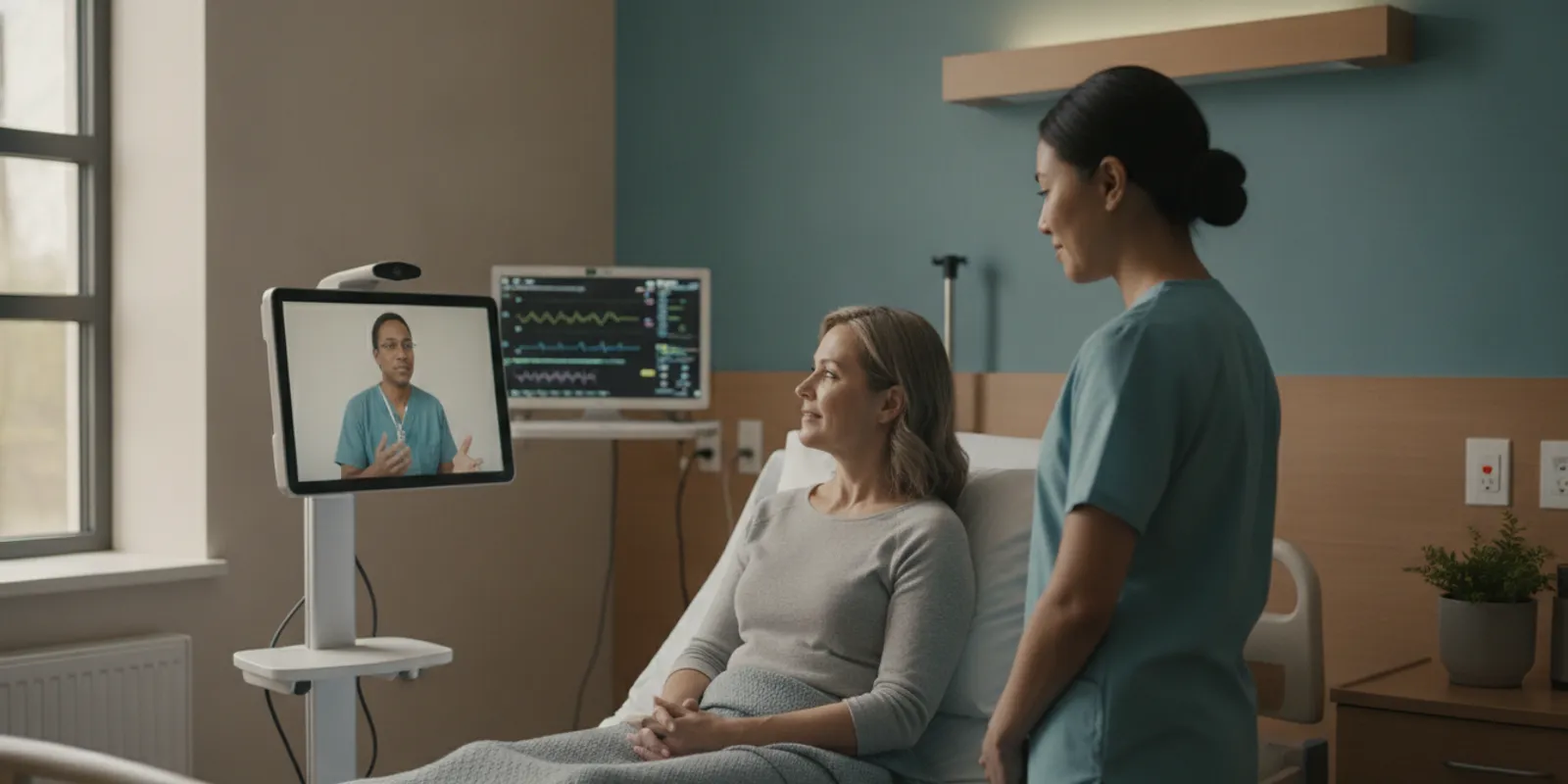
Ask each provider to describe scheduling, urgent requests, patient preparation, identity confirmation, consent processes, interpreter access where needed, and technical assistance. Clarify how the specialist joins and how the local team is notified. For bedside encounters, determine whether staff must transport, position, or operate equipment. Dr. Temi describes an autonomous robotic telepresence model that navigates to the bedside; staff still assist with the patient and clinical devices as needed. Read more about the Dr. Temi telemedicine solution.
Also examine interruptions and failure paths. What happens if the patient is unavailable, a connection drops, a device does not work, or the specialist is delayed? Who contacts the patient or unit, and how is the event recorded? Establish a fallback that preserves clinical responsibility rather than leaving staff to improvise.
For multi-site organizations, test whether the workflow can be standardized without ignoring local differences. Identify which elements must be consistent, such as referral criteria and documentation, and which may vary by site. A small pilot can expose practical issues before broader deployment.
Before the demo, ask the frontline team to describe a typical busy shift. Identify who can accept a request, locate the patient, prepare the room, and assist during the encounter. A process that looks simple on a diagram may fail if the only staff member available is handling another clinical task. For each extra action, record its frequency, owner, and likely effect on the unit so that operational burden is considered alongside clinical value.
Which technology and integration questions matter?
Technology should support the clinical workflow, not dictate it. Compare connectivity requirements, equipment, device compatibility, accessibility, and support. Ask providers to demonstrate the actual configuration proposed for your setting, including the network conditions and devices used at the point of care.
Review how records and clinical data move between systems. Ask whether notes can be documented in the organization’s electronic health record, what integrations are available, and whether data transfer is automated or requires manual work. Dr. Temi’s company materials describe EHR integration through its Clinii partnership; buyers should verify the relevant system, scope, and implementation requirements for their own environment. The solutions overview can help frame a discussion of the broader platform, but confirm details directly for the intended use case.
- What equipment is required at the patient location, and who supplies and maintains it?
- Which vital-sign devices or examination tools can be used during the encounter?
- What network, identity, and access controls must the organization support?
- How are records, orders, and follow-up instructions documented and routed?
- What information is stored, transmitted, or retained, and for how long?
- How are upgrades, outages, and technical support handled?
For a remote encounter, privacy and security review should be specific. Request documentation on access controls, encryption, recording and retention practices, and incident response. Dr. Temi states that live calls are encrypted and are not recorded or retrievable; organizations should review the applicable product documentation and agreements rather than treating a general statement as a substitute for their own assessment. Johns Hopkins provides an overview of its secure telemedicine approach; use authoritative institutional resources as context, not as proof of another vendor’s practices.
Build a simple integration test plan before selection. Choose a representative user account and a realistic encounter record, then verify login, access permissions, data visibility, note routing, and what happens when a field is missing. Involve the EHR team early; a phrase such as “integration available” may describe a range of configurations, from a direct workflow connection to a manual process. Record the interface, configuration, and effort required at each site.
How should service coverage and continuity be compared?
Ask for a precise description of who provides the clinical service, how coverage is scheduled, and how continuity is maintained. The answer may differ substantially between a technology platform used by the hospital’s own endocrinologists and a service that supplies remote clinicians. Confirm the qualifications and credentialing process relevant to the organization, as well as how clinicians are matched to locations and patient needs.
Review service hours, expected response times, holiday coverage, and the process for rescheduling or substitute coverage. If a provider cites rapid access, ask how that timing is defined and measured, what events are included, and whether the commitment applies to the proposed service configuration. Do not treat a best-case demonstration as a contractual service level.
Continuity also depends on communication after the encounter. Determine who receives the note, who follows up on recommendations, and how open items are tracked. For a patient who moves between sites or care settings, ask how relevant information follows the patient and how the care team can identify prior consultations.
Request a coverage calendar or sample operating schedule, then test it against the hours your sites actually need. Ask how absences, unexpected demand, and a backlog are handled. If the model uses the organization’s own specialists, establish how virtual sessions fit with their existing clinic and inpatient duties. If an external service supplies clinicians, clarify how the service coordinates with local clinicians and what information is shared before a visit. A written escalation tree can reveal gaps that a general statement about “24/7 availability” leaves unanswered.
How can leaders compare implementation, support, and cost?
Request an implementation plan that identifies dependencies and owners. It should cover clinical workflow design, technical review, equipment deployment, staff orientation, testing, launch support, and ongoing service review. Ask for a realistic sequence and what the provider needs from the organization before each stage can begin.
Cost comparisons should include the full operating model, not a headline subscription or per-visit figure alone. Identify setup, equipment, connectivity, integration, training, support, clinician coverage, and renewal or termination terms. If a financial model depends on reimbursement, ask which requirements apply, who bills, what documentation is needed, and what happens when a claim is not payable. Reimbursement and eligibility depend on current rules and the specific facility and service; do not assume that a program guarantees payment or eliminates facility costs.
Dr. Temi describes a rural healthcare access program for qualifying facilities. Organizations considering it should review current eligibility, operational requirements, and applicable reimbursement rules before making a financial projection. The Rural Healthcare Access Program page is a starting point for that conversation, not a substitute for compliance and finance review.
Compare support commitments in practical terms: available hours, response channels, issue escalation, training resources, and responsibility for equipment maintenance. Review contract provisions with procurement, legal, compliance, and clinical leadership. Make assumptions visible so that a low initial quote is not mistaken for a lower total cost.
For a useful cost worksheet, separate one-time and recurring items, then mark each as fixed, usage-based, or dependent on local choices. Include internal labor for implementation, workflow coordination, and ongoing support, even if it does not appear on a vendor quote. Ask what happens if volume is lower or higher than expected, if a site is added, or if the organization changes its EHR workflow. Have finance compare scenarios rather than relying on a single forecast, and identify which assumptions must be verified before a contract is signed.
Implementation readiness deserves the same detail. Name an executive sponsor, clinical owner, technical lead, and site contacts. Agree on training audiences, a practice period, launch-day support, and a route for staff to report issues. Establish review checkpoints after launch, with a process to revise training or workflow when staff feedback identifies friction. These arrangements make responsibilities visible and help leaders distinguish a temporary launch problem from a model that does not fit.
What should a consistent evaluation scorecard include?
Use a shared scorecard for demos, written responses, and pilot reviews. Set weights before scoring so that the team does not change priorities to favor a familiar vendor. Each evaluator should record evidence, not just a numeric rating.
| Evaluation area | Evidence to request | Example review prompt |
|---|---|---|
| Clinical fit | Scenario walkthroughs, scope statement, escalation boundaries | Can the model support the encounters we defined? |
| Workflow fit | Referral-to-follow-up map, local staffing assumptions | Who performs each step, and where is extra work created? |
| Technology | Demonstration in proposed configuration, integration details | Will the equipment and data flow work at our sites? |
| Coverage and continuity | Coverage plan, response definitions, handoff process | What happens when the usual clinician or connection is unavailable? |
| Privacy and governance | Security documentation, retention practices, responsibilities | Can our privacy, security, and clinical teams approve the model? |
| Implementation and support | Milestones, owners, training, support commitments | What resources and time are required from our organization? |
| Financial and contractual fit | Itemized cost assumptions, term, exit and renewal language | What is included, variable, or dependent on reimbursement? |
| Outcomes and measurement | Baseline, metric definitions, reporting plan | Can we measure the result with data available to us? |
Score each category on a consistent scale, such as 1 for a major gap, 3 for an acceptable fit with conditions, and 5 for a strong fit supported by evidence. Record unresolved questions beside the score. A high total should not erase a critical failure in clinical scope, security, or workflow readiness.
Weighting should reflect the organization’s use case, not a generic ranking. A remote site with limited specialist access may prioritize reliable coverage and a workable bedside process. A large health system may place more emphasis on integration, governance across facilities, and consistent reporting. Decide which criteria are mandatory gates and which can be balanced against one another. Then keep a decision log that records the evidence, owner, and deadline for every open issue.
How should a pilot test the choice?
A focused pilot should answer specific questions. Select a small number of sites or workflows that represent the intended use, and establish a baseline before launch. Include staff who will request, support, and receive the service. Ensure the pilot has a defined clinical owner and a process for reviewing issues.
Track measures that align with the original care gap. These might include time from request to completed consultation, completion and cancellation rates, staff time spent coordinating visits, technical interruptions, patient and clinician feedback, and follow-up completion. Define each measure before collection. A change in one metric does not by itself show why the change occurred or whether the model caused it.
Set decision points in advance: what evidence would support expansion, what problems require adjustment, and what would stop the pilot? Review results with clinical, operational, IT, privacy, and finance stakeholders. A pilot is most useful when it tests the real workflow and has a credible comparison with the organization’s baseline.
Use a pilot checklist to make the test concrete: confirm site readiness, user access, equipment availability, referral criteria, the fallback plan, and a method for capturing staff feedback. Run a tabletop exercise for a missed visit or failed connection before seeing patients. After the first sessions, review a small sample of encounters with the appropriate clinical and operational leaders. Look for consistent documentation, clear handoffs, and unanswered follow-up actions, not only whether the video or device functioned.
At the end, compare results with the baseline and explain limitations in the data. Separate issues that can be fixed through configuration or training from issues inherent to the service model. Document the decision to expand, extend, redesign, or stop, along with the owner and timing for each next step. This gives leadership a defensible basis for action instead of relying on impressions from a demonstration.
Frequently asked questions
Is an endocrinology telemedicine platform the same as a specialist service?
No. A platform may enable an organization’s own clinicians to conduct remote visits, while a specialist service may provide clinicians or coverage. Some arrangements combine technology and clinical support. Confirm exactly what is included and who is responsible for each part of care.
Can telemedicine replace an in-person endocrinology examination?
Not in every situation. The appropriate approach depends on the clinical question, available examination support, patient needs, and the clinician’s judgment. Ask providers to explain limitations and escalation pathways for the scenarios your organization expects.
What should a hospital ask about electronic health record integration?
Ask which system and workflows are supported, what information is exchanged, whether documentation is automated or manual, and what technical or contractual dependencies apply. Confirm the specific configuration with your IT and clinical teams.
How can a provider’s access-time claim be evaluated?
Ask how the clock starts and stops, which request types count, what hours and sites are included, and whether the timing is an average, target, or contractual commitment. Request evidence for the configuration being proposed and define a local measure for any pilot.
What is the best next step after comparing providers?
Shortlist options against your written requirements, resolve high-risk questions, and run a workflow-based demonstration or pilot. Include the stakeholders who will approve, operate, and measure the service.
With a clear clinical use case, shared evaluation criteria, and a realistic pilot, hospital leaders can compare endocrinology telemedicine options on how care will actually work—not simply on a feature list.