How to Compare the Best Telemedicine Companies for Stroke Coverage in Hospitals
Choosing among the best telemedicine companies for stroke coverage in hospitals starts with defining the clinical problem, not comparing brand names. A useful evaluation separates clinician coverage from the technology that enables an encounter, then tests how each option fits the hospital’s stroke pathway, staffing model, examination needs, and transfer decisions. This guide offers a structured way to compare those elements without assuming that every telemedicine platform provides stroke specialists or an equivalent service.
What kind of stroke coverage does the hospital need?
Begin by documenting when and where the access gap occurs. A hospital seeking an emergency specialist opinion overnight has a different requirement from a facility building routine follow-up or supporting a patient already under a local team’s care. Define the clinical purpose before reviewing vendors. The more specific the use case, the easier it is to tell whether a proposal solves the actual problem or simply adds another video connection.
- Acute consultation: Identify whether the need is urgent remote specialist assessment and how that consultation connects to the hospital’s existing emergency response.
- After-hours coverage: Determine the hours and days when the local team needs remote support, including weekends, holidays, and periods when in-house coverage is thin.
- Ongoing follow-up: Specify whether the goal is continuity between visits, care coordination, rehabilitation support, or scheduled specialist access.
- Multi-site access: Note which locations, patient populations, and local resources must be supported, and whether the same workflow should operate across all sites.
Put the current pathway on paper. Include who recognizes a possible stroke, who activates the response, how the remote clinician is contacted, who is at the bedside, and what happens if the remote service is unavailable. Map the handoffs in sequence, including who records key times, who shares relevant information with the remote clinician, and how recommendations reach the people responsible for local care. If a hospital already has a transfer protocol, include the circumstances that trigger it and clarify that a remote consultation does not replace those local decisions.
It is useful to write two versions of the workflow: the expected path and the exception path. The expected path can show a successful connection, bedside assessment, clinical discussion, documentation, and disposition. The exception path should show what happens if the request is incomplete, the endpoint cannot connect, the remote clinician needs more information, or the patient must be transferred. Ask each candidate to address both paths. A solution that looks efficient only when every step works perfectly may create extra work during the encounters when the team needs support most.
Which provider models are being compared?
“Telemedicine provider” can describe a clinical staffing organization, a software platform, equipment, or a combination. Ask each prospective partner to state exactly what it supplies and what remains the hospital’s responsibility. This distinction is especially important in stroke care, where access to a remote clinician, bedside examination support, local decision-making, and transfer coordination may be separate parts of the pathway.
| Model | What it may provide | Key questions for buyers |
|---|---|---|
| Remote clinical coverage service | Clinicians who consult remotely under an agreed coverage arrangement | Which clinicians cover the service, when are they available, and how is escalation handled? |
| Telemedicine platform or equipment | Video connection, endpoint devices, and related workflow tools | Who provides the clinician, bedside assistance, maintenance, and technical support? |
| Integrated coverage and technology model | A defined combination of clinical services and telemedicine capabilities | Which party owns each step, and how are clinical and technical issues separated? |
| Autonomous robotic telepresence | A mobile endpoint that can navigate to a bedside and support a remote clinical encounter | What examination devices are supported, and what staff actions are still required? |
These categories are not interchangeable. A technology vendor should not be assumed to supply stroke clinicians, and a staffing service should not be assumed to include bedside equipment or local workflow integration. Ask for a clear responsibility matrix and review it with clinical, operational, and IT stakeholders.
The matrix should name an accountable party for clinician scheduling, credentialing information, device readiness, connectivity, documentation, and downtime escalation. Where responsibilities are shared, specify who initiates the handoff and how the receiving team confirms it is complete. Include the hospital’s own responsibilities, such as patient identification, bedside assessment, local orders, consent processes where applicable, and transfer decisions. Written ownership prevents an important task from becoming “everyone’s responsibility” and therefore no one’s task.
How should clinical coverage and response workflows be assessed?
Ask for a description of the actual coverage arrangement rather than relying on broad phrases such as “24/7 access.” Establish whether the statement applies to clinician availability, platform availability, or both. Confirm how a request is initiated, acknowledged, routed, and escalated, and ask what happens when the first contact does not connect. Request the precise definition of any stated response interval: does the clock start with the initial page, a completed request, or another event, and does it end at acknowledgment or clinician connection?
- What clinicians participate, and what credentials or privileges must the hospital verify?
- What hours, locations, and encounter types are included in the proposed scope?
- How does the remote clinician communicate with the bedside team and document recommendations?
- Who remains responsible for local assessment, orders, decisions, and follow-up?
- What contingency applies during a network, device, or staffing interruption?
- How are handoffs handled when a consultation begins near the end of a coverage period?
- What reports will the hospital receive to review requests, connections, exceptions, and unresolved issues?
For acute stroke pathways, the buyer’s clinical leaders should validate that the proposed service fits local protocols and decision authority. Remote technology is one part of the pathway; it does not replace local emergency processes or clinical judgment. Consider discussing the workflow with emergency medicine, neurology, nursing, quality, and medical staff leadership before procurement moves forward.
Have these reviewers walk through a realistic scenario and identify where the remote clinician joins, what information must be available, and how the team proceeds if a consultation cannot be completed. Use more than one scenario: an uncomplicated connection, a poor audio or video connection, a patient who requires transfer, and a case in which local and remote teams need to clarify responsibilities. Document unresolved questions as procurement conditions rather than relying on verbal assurances. If a candidate cannot explain how its model behaves under pressure, that gap belongs in the evaluation record.
How should the hospital assess examination support and bedside technology?
Video quality matters, but it is only one part of a clinical encounter. Buyers should determine what the clinician can see and hear, which connected devices are available, and which bedside staff actions are necessary. A demonstration should reflect the intended setting rather than a generic conference call. The question is not merely whether two people can speak. It is whether the remote clinician can participate meaningfully in the hospital’s defined encounter while the bedside team understands its role.
For each option, ask the vendor to show the full sequence: request an encounter, connect the remote clinician, position the endpoint, use any examination or vital-sign devices, communicate with staff, and conclude with documentation and next steps. Distinguish autonomous navigation from manually moved equipment. If staff must transport or position a device, record that requirement as part of the operational workload. Include different room layouts and likely network conditions in the demonstration, and note how the system handles audio, screen visibility, and the clinician’s view of the patient and connected devices.
Ask what cleaning, charging, storage, and routine readiness checks are expected between encounters. Identify who confirms that the endpoint is ready and what happens if a device is missing, out of charge, or unavailable in the room where it is needed. A small operational task can become significant when it is repeated across multiple sites or during a busy shift. Include those tasks in the staffing and total-cost discussion rather than treating them as invisible work.
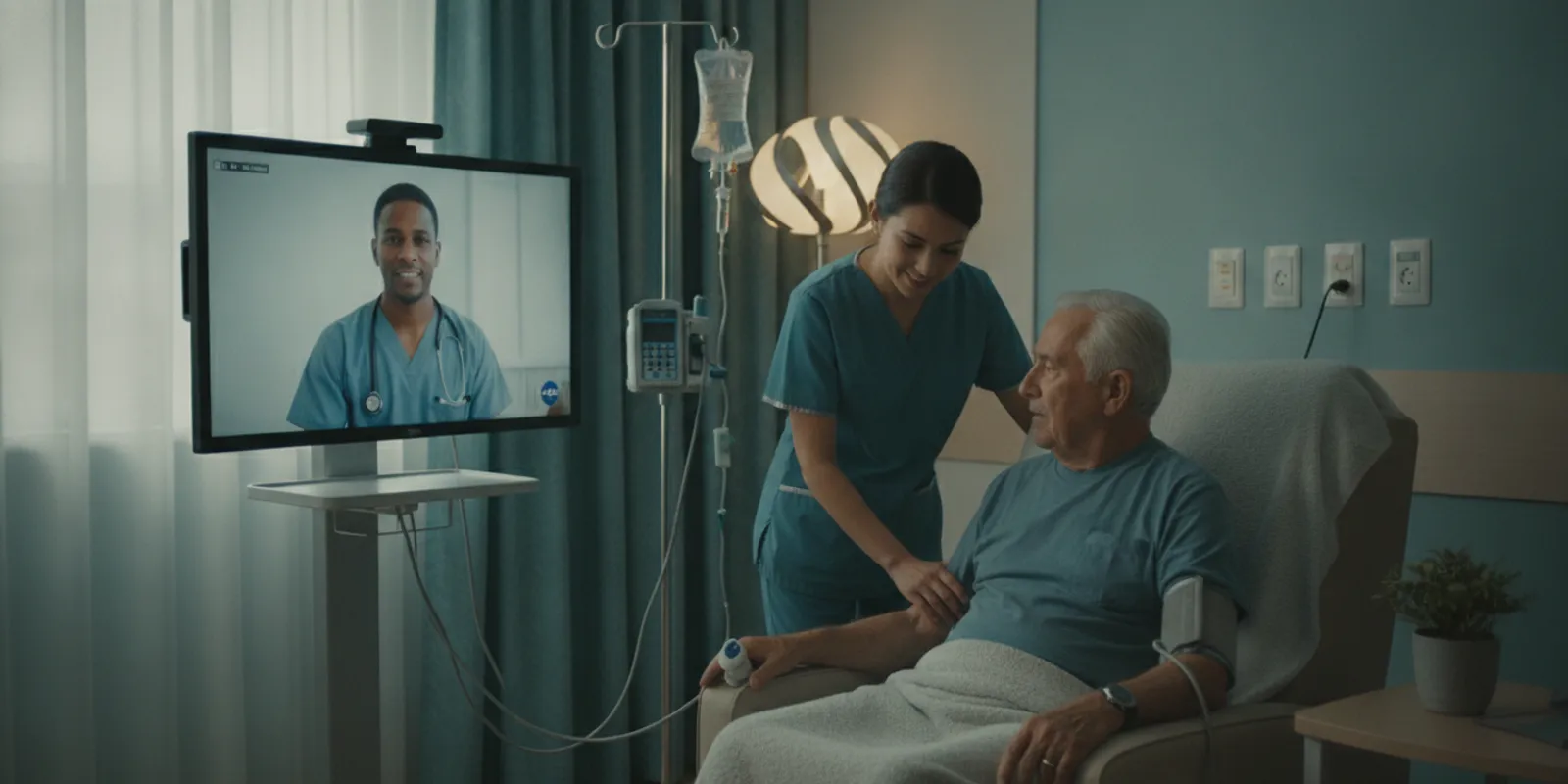
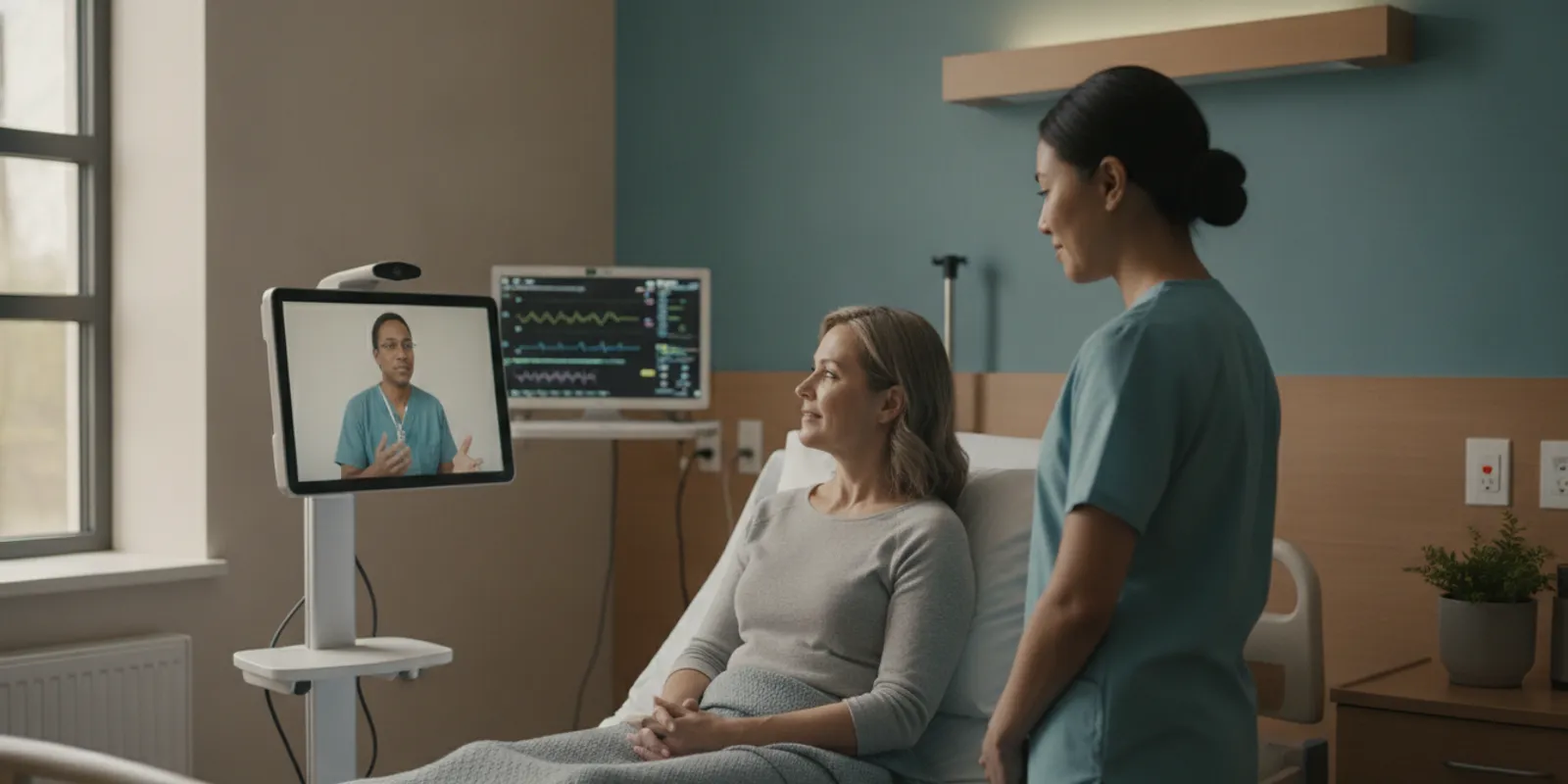
Dr. Temi is an autonomous robotic telepresence platform designed to navigate to a bedside and support a complete remote clinical encounter. Its telemedicine solution includes an ICU-grade patient monitor and digital stethoscope; staff still assist with vitals and examination devices. A hospital evaluating this model should ask how it fits the particular stroke workflow and should not infer that the platform itself supplies a stroke specialist. Review the Dr. Temi solutions and platform overview as part of a broader requirements review.
Which technology, records, and governance questions matter?
Technology review should include connectivity, endpoint placement, security, documentation, and support. Bring IT, information security, clinical informatics, and privacy staff into the evaluation early, and request answers in writing. A clinically useful platform still has to pass the hospital’s technical and governance reviews before it can be used reliably.
- Connectivity: What network conditions are required, and what is the fallback when video or audio quality degrades? Ask whether coverage differs by building, unit, elevator, or room.
- Documentation: Where is the encounter documented, who is responsible for completion, and what interfaces or integrations are available?
- Privacy and security: How are users authenticated, how is data protected, and what is retained? Verify claims against the vendor’s current documentation and your organization’s policies.
- Support: Who receives technical issues, what support hours apply, and how are urgent operational problems escalated?
- Change management: What training is needed for clinicians and bedside staff, and who maintains protocols?
- Access control: How are user roles created, reviewed, changed, and removed when a staff member leaves or changes duties?
Dr. Temi describes its live calls as encrypted and not recorded or retrievable, with access limited to credentialed users. Buyers should confirm current details with the company and perform their own privacy and security review. The about page provides company context; it does not replace formal diligence or a security assessment.
Establish the hospital’s own approval process for user access, device placement, incident reporting, and any changes to how clinical information is handled. A vendor response is useful evidence, but the hospital’s privacy, security, and clinical governance teams should determine whether it meets their requirements. Ask for an escalation route that includes both technical incidents and workflow or safety concerns. These issues may be related but should not be forced into the same queue or treated as routine help-desk requests.
How can leaders compare service coverage and continuity?
Coverage promises should be translated into measurable operational terms. Ask vendors to define availability, response measurement, escalation, staffing dependencies, and reporting. Separate a target or service-level commitment from historical performance, and request the evidence and time period behind any reported result. Discuss holidays, planned maintenance, surge periods, and backup coverage. For each exception, confirm who informs the hospital and how the local team should proceed while service is unavailable.
Continuity also includes the people and processes around the platform. Ask how new remote clinicians are added, how credentials are verified, and whether the hospital receives notice of material changes to coverage. Clarify whether the same person or team handles technical and clinical escalation. During a multi-site rollout, determine whether one location’s outage affects other sites and whether the vendor can separate site-level configuration from organization-wide changes.
For broader context, a Harvard Gazette report on a study of stroke telemedicine describes comparisons of outcomes and 30-day survival among patients treated at many U.S. hospitals. It is evidence about a study, not proof that any specific vendor will produce the same result. Read the Harvard Gazette coverage and ask vendors to substantiate any outcome claims they make for their own service. Buyers can also review research on telehealth and stroke survivors’ access questions in this study indexed by the National Library of Medicine; its subject and population should be considered separately from an acute hospital coverage decision.
How should leaders assess implementation and cost?
Compare the complete operating model, not only a quoted subscription or service fee. Consider setup, devices, connectivity, integration, training, support, clinical staffing, and internal time. Ask what is included, what is optional, and what could change the total cost during the contract term. Request an itemized view that separates one-time work from recurring expenses, and ask about renewal, termination, equipment return, and transition responsibilities.
A transparent comparison should also state which assumptions depend on encounter volume or staffing availability. Include the cost of local readiness work, such as network assessment, room preparation, user provisioning, training coverage, and policy review. If a proposal includes equipment, ask who owns it, who repairs it, and how replacement or upgrades are handled. If it includes remote clinicians, identify the scope of that coverage separately from platform fees. This makes it easier to compare a staffing arrangement with an autonomous bedside technology model without treating unlike costs as equivalent.
For a rural facility considering Medicare telehealth reimbursement, confirm current rules, eligibility, and payment details with qualified compliance and finance staff. Do not assume that a particular reimbursement applies to every location, service, or vendor arrangement. The Rural Healthcare Access Program page describes the program context; the facility must independently validate eligibility and requirements.
For an implementation plan, request named workstreams and owners for clinical protocol alignment, technical readiness, training, deployment, and ongoing review. Define what constitutes launch readiness and who can pause the rollout if a safety, privacy, or workflow issue remains unresolved. Include a plan for onboarding new staff and refreshing training after protocol or system changes. Record dependencies such as network approvals and interface testing so that the launch date reflects readiness, not only contract signature.
What should a consistent evaluation scorecard include?
Use one scorecard for every candidate and have clinical, operational, IT, and finance reviewers score independently before discussing differences. A simple scale can be 1 (does not meet), 2 (partially meets), and 3 (meets), with a separate “not verified” status so missing evidence is not mistaken for a positive result. Add a place for evidence source, reviewer, date, and follow-up owner. This makes it easier to distinguish a genuine capability from a promise that has not yet been documented.
| Evaluation area | Evidence to request | Decision test |
|---|---|---|
| Clinical scope | Written service description and clinician coverage details | Does it match the defined use case and local clinical governance? |
| Workflow and response | Walkthrough, escalation path, downtime plan | Can the bedside team follow it reliably? |
| Examination support | Live demonstration of endpoint and connected devices | Does it support the required encounter tasks? |
| Technology and records | Architecture, integration information, privacy and security materials | Can it pass internal review and fit documentation practices? |
| Implementation | Deployment plan, training plan, support responsibilities | Are owners, dependencies, and readiness criteria clear? |
| Cost and terms | Itemized pricing, contract scope, renewal and exit terms | Is the full cost and responsibility allocation understood? |
Weight the categories according to the hospital’s needs, but do not allow a high technology score to compensate for an unresolved clinical coverage gap. Keep evidence, assumptions, and open questions alongside each score. Set minimum pass conditions for non-negotiable items, such as required coverage windows or approved downtime procedures, before applying weighted scores. This prevents a strong average from obscuring a gap that makes a candidate unsuitable for the intended workflow.
Consider adding a confidence field to every score. A “meets” rating based on a live demonstration is different from one based only on a sales description. Likewise, a response-time commitment in a contract should be evaluated differently from an informal statement. Record the conditions under which a capability was demonstrated, including the endpoint, network, room, user role, and workflow scenario. This makes later review more useful and gives leaders a defensible explanation for the final decision.
How can a pilot test the choice?
A pilot should test a bounded workflow with clear owners, not simply demonstrate that video connects. Select a site and use case, include the staff who will perform each step, and agree on success measures before the first encounter. Measures might include completion of the defined workflow, technical interruptions, staff usability feedback, documentation completion, and adherence to escalation procedures. These are evaluation measures, not promised outcomes.
Set a review cadence and define how incidents, near misses, and workflow exceptions will be reported. At the end, compare observed performance with the baseline and the agreed criteria. Decide whether to stop, revise, or expand based on documented findings and stakeholder review. A pilot should not bypass required clinical, privacy, security, or procurement approvals.
Include a short debrief with bedside staff after each test period and route recurring issues to an assigned owner. Keep the pilot limited enough that unresolved questions can be addressed before expansion, and record what changed between test cycles so the evaluation remains fair across candidates. Test at different times when practical, including a period that exercises the intended after-hours process. Ask the team to explain the downtime procedure without referring to a written script; that check can reveal whether the process is usable in practice.
How should the hospital govern the service after launch?
Selection is not the end of the evaluation. Establish a recurring governance review that includes clinical leadership, nursing or bedside operations, IT, privacy and security, quality, and the contract owner. Review utilization, connection exceptions, unresolved support requests, training completion, changes to the clinical workflow, and any incidents or near misses. The review should focus on whether the service continues to fit the hospital’s needs, not only whether invoices are being paid.
Define which changes require renewed review. Examples may include a new location, a new endpoint, a change in documentation practice, a different coverage arrangement, or a material change in network architecture. Keep the current responsibility matrix and downtime plan available to staff, and provide a clear route for reporting when the documented workflow no longer matches what happens at the bedside. A governance process gives the hospital a way to correct small mismatches before they become system-wide barriers.
Frequently asked questions
Are all telemedicine companies for stroke coverage clinical staffing providers?
No. Some provide technology, some arrange clinical coverage, and some combine elements. Confirm in writing who supplies clinicians and who operates each part of the encounter.
Does autonomous telepresence mean no bedside staff are needed?
No. An autonomous endpoint can navigate to the bedside, but local staff still support the encounter, including assistance with vital signs and examination devices when needed.
Can a hospital rely on a vendor’s response-time claim?
Ask how the measure is defined, what period and population it covers, and whether it is a contractual commitment or a reported historical result. Validate it during a pilot where practical.
How should a hospital compare claimed clinical outcomes?
Request the underlying evidence, study design, setting, and relevance to the proposed service. Do not treat results from one study or provider as a guarantee for another hospital.
What is the most important difference between a platform and a coverage service?
A platform provides some combination of connection, endpoint, devices, and workflow tools, while a coverage service provides clinicians or arranges their availability. A hospital may need one, the other, or a defined combination, so the contract should make the distinction explicit.
What is the next step in the evaluation?
Use the requirements and scorecard to narrow the field, then ask shortlisted providers to demonstrate the real workflow and provide evidence for their claims. If autonomous bedside telepresence is part of the hospital’s evaluation, contact Dr. Temi to discuss a demonstration and determine whether the platform aligns with the organization’s clinical and operational requirements. A careful comparison makes the responsibilities, evidence, and workflow fit visible before a hospital commits to a provider model.