A Hospital Guide to Choosing Telemedicine Partners for Resistant Infections
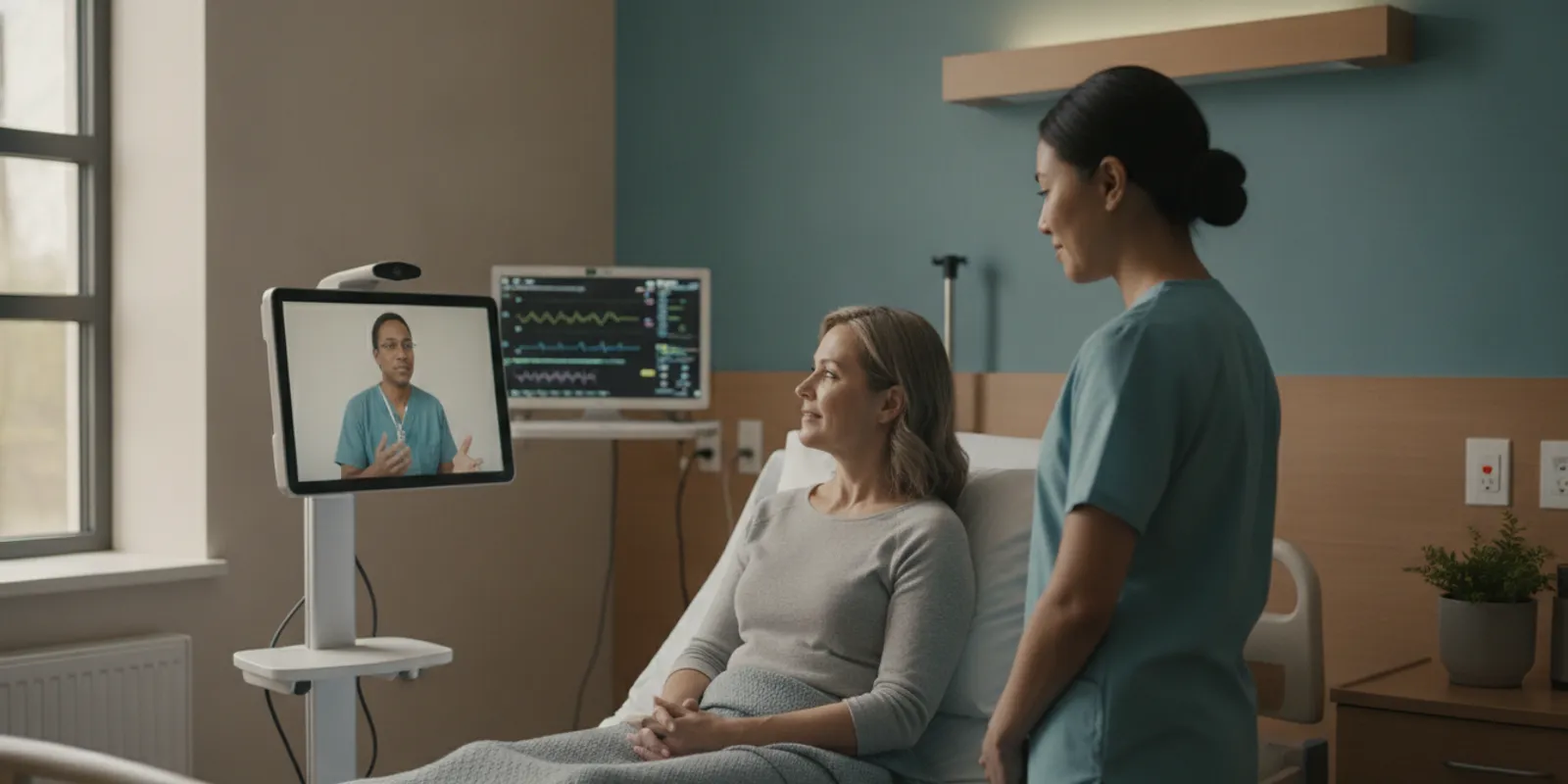
Choosing telemedicine partners for resistant infections hospitals can rely on starts with a precise clinical use case, not a product demonstration. Hospitals need to distinguish clinical coverage from technology, define who acts on remote recommendations, and verify that the workflow fits local infection-prevention and escalation procedures. A disciplined comparison helps leaders identify a partner model worth testing without assuming that one platform or service fits every setting.
What should a hospital define before comparing partners?
Start by describing the operational problem. “Resistant infections” can refer to different organisms, patient populations, and care settings. A telemedicine partnership might support infectious-disease consultation, access to a remote clinician, bedside assessment, or coordination with facility staff. These are distinct service models, so avoid treating them as interchangeable.
Write a concise use-case statement that names the population, location, consultation trigger, expected response window, and decisions the remote clinician may support. Specify whether the program concerns suspected or confirmed infection and whether it serves inpatient, post-acute, or another setting. Clinical leadership should define scope and ensure the plan aligns with local policy and applicable requirements.
- Clinical need: Which assessments or decisions need remote support, and which remain with the on-site team?
- Care setting: Where will encounters occur, and what equipment and staff are available?
- Coverage: What hours and response expectations matter for this use case?
- Escalation: What happens when the patient needs hands-on assessment or a higher level of care?
- Measures: Which process and quality indicators will show whether the workflow functions?
Keep the first scope narrow enough to test. A pilot designed to improve access to specialist input should not quietly become a test of every aspect of infection management. A bounded use case makes proposals easier to compare and accountability easier to establish.
For example, a hospital might define its initial question as whether a remote consultation can reliably connect an on-site team with an appropriate clinician when a specified trigger occurs. That is more actionable than asking vendors to solve “resistant infections” generally. The hospital can then decide which triggers belong in the protocol, what information staff should have ready, and when an in-person evaluation remains necessary.
Which partner models are you comparing?
Hospitals may be offered a clinical service with clinicians and coverage, software for the hospital’s own clinicians, bedside telepresence equipment, or a combined arrangement. These differ in staffing, governance, support, and contract responsibilities. Ask each candidate to state plainly what it supplies and what the hospital must provide.
| Partner model | What it may provide | Questions to resolve |
|---|---|---|
| Remote clinical service | Clinician coverage, consultations, or specialty support | Who employs and credentials clinicians? What coverage and escalation are included? |
| Telemedicine software | Video, messaging, scheduling, or documentation tools | Who supplies clinicians, devices, support, and workflow ownership? |
| Bedside telepresence | A way for remote clinicians to connect with patients and local teams | How is equipment positioned, operated, cleaned, and integrated into care? |
| Combined service and technology | A bundled operational and technical arrangement | Which party owns each clinical, technical, and operational function? |
Do not assume that a technology vendor supplies clinicians or that a clinical service supplies equipment. Make a responsibility map covering who initiates an encounter, gathers information, assists the patient, documents the interaction, communicates recommendations, and follows up. This map should match the contract and clinical protocols.
Ask vendors to identify dependencies as well as included components. A proposal may rely on hospital staff to initiate calls, collect measurements, maintain devices, or enter notes in a record. Those tasks are not incidental: they determine whether the model is workable on a busy shift. Compare proposals by total workflow, not by the number of features listed.
How should clinical scope and infection-prevention workflows be assessed?
Evaluate whether the proposed model fits the work clinicians need to perform. Ask what information a remote clinician receives before the encounter, what examination support is possible, how observations are communicated, and how the team handles missing information. Identify bedside tasks that require an on-site professional. Remote access should support local care teams, not imply that staff are unnecessary.
Include infection prevention in the design from the start. Ask how the hospital will manage room entry, device placement, cleaning and disinfection, equipment movement, and any components that contact the patient or environment. The infection-prevention team should review the workflow and manufacturer instructions for equipment. Replace broad assurances with a written procedure staff can follow.
Walk through edge cases before selecting a partner. What happens if the patient’s condition changes during a call? What if a physical examination or intervention is needed, the connection fails, or staff cannot obtain a measurement? Agree on backup routes and escalation thresholds. A remote consultation does not remove the need for the hospital’s existing emergency and infection-control procedures.
The CDC describes programs that gather information about antibiotic-resistant infections, causes, and risk factors. That surveillance context can help leaders understand why reliable clinical and operational processes matter, but it is not a patient-care protocol. See the article describing CDC programs for tracking antibiotic-resistant infections. Hospitals should rely on their own clinical leadership and infection-prevention policies for care decisions.
A practical workflow review can use a tabletop scenario. Select a representative case and ask staff to narrate each step: who recognizes the trigger, who requests consultation, which records and observations are assembled, how the remote clinician connects, and who acts on recommendations. Then repeat the scenario with a failed connection or a need for hands-on assessment. Note points where ownership is unclear and revise the procedure before a live pilot.
What should hospitals verify about access and bedside technology?
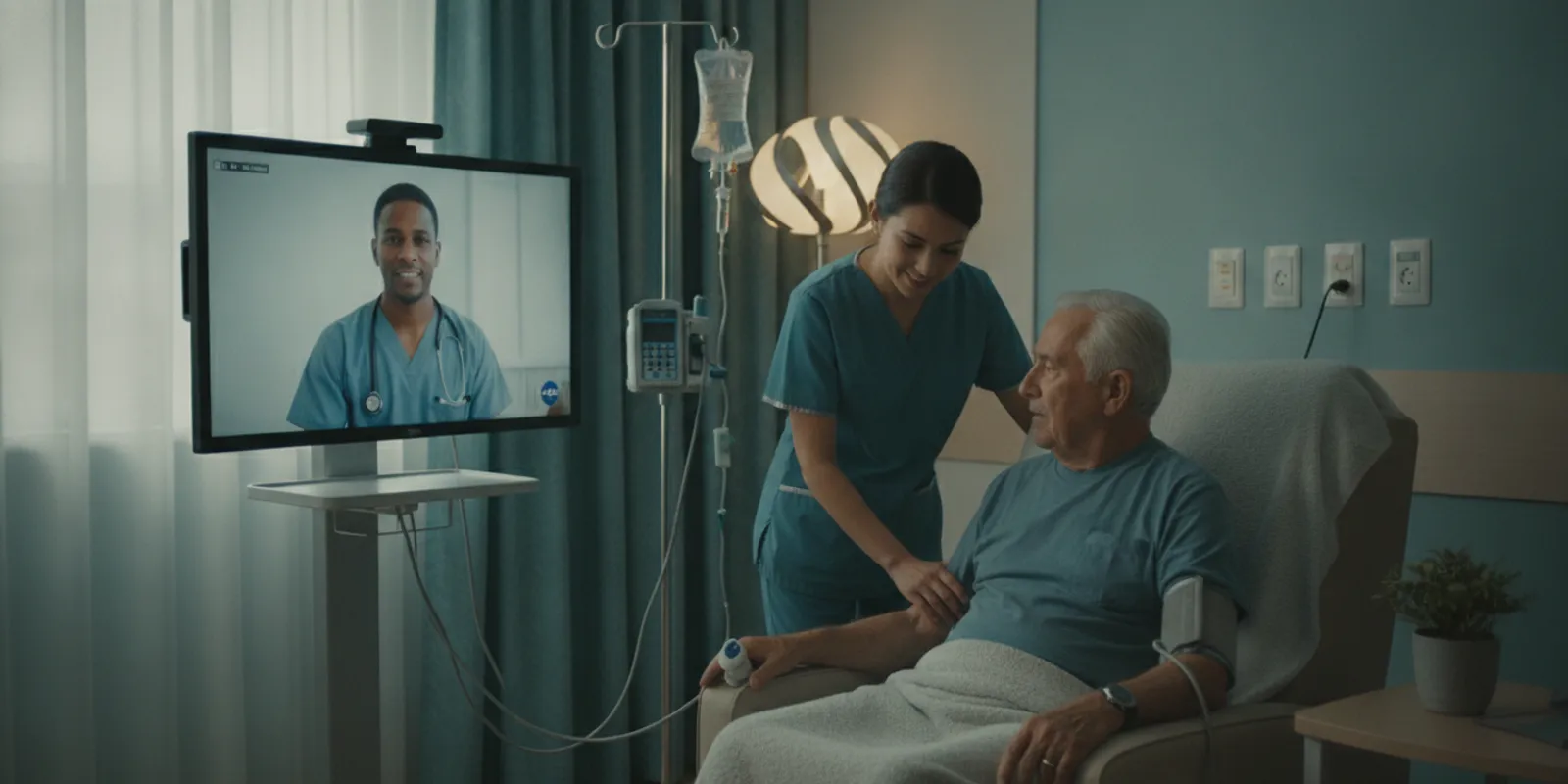
Technology affects whether remote care can happen reliably at the point of need. Compare the actual setup, not a feature list. Does staff need to locate, move, power, position, or operate equipment? Can the remote clinician see and hear the patient and relevant team members? Can the encounter include the people needed to make decisions? What connectivity and technical support are required?
Bedside telepresence models vary. A conventional cart may require staff to transport and position it. An autonomous platform may navigate to the bedside, subject to its operating environment and configuration. That difference matters when access depends on timely arrival and staff workflow. Dr. Temi describes its platform as autonomous robotic telepresence that supports a remote clinical encounter with connected medical devices. Review the solutions overview and the telemedicine solution, then assess fit against the hospital’s use case rather than assuming it addresses every resistant-infection workflow.
Ask candidates to demonstrate a complete encounter under realistic conditions. Include how local staff assist with devices, how information reaches the clinician, how multiple participants join, and where documentation is recorded. Confirm technical requirements and integrations with the vendor and hospital IT and clinical teams. A demonstration should reveal practical steps and limitations, not only polished features.
Build a scenario list for demonstrations. One scenario might involve a routine consultation with a stable connection; another can test a participant joining from a second location or a measurement that needs to be repeated. Ask the vendor to show what the local team must physically do and what the remote clinician can observe. Do not accept a narrated slide in place of seeing the operational sequence.
Check the room and route, too. Consider whether the device can reach the intended bedside, where it can be stored or charged, and how staff know it is ready. Verify that the camera and audio setup supports a useful encounter while respecting patient privacy. Identify dead zones, access restrictions, elevator or doorway constraints, and how the team will respond if navigation or connectivity is unavailable.
How should staffing, credentials, and accountability be compared?
A partnership needs explicit clinical ownership. Determine who provides the clinician, where that clinician is licensed to practice, who verifies credentials and privileges, and how medical staff processes apply. If the hospital uses its own clinicians, clarify scheduling, availability, and backup coverage. If the partner supplies clinicians, review service scope, qualifications, supervision, and escalation arrangements.
Document responsibilities across the full encounter. A remote clinician may assess and advise within an agreed scope. On-site staff may gather observations, operate equipment, assist the patient, and provide hands-on care. The hospital’s governance responsibilities remain important. Ensure agreements, protocols, and training describe these divisions in plain language.
| Evaluation area | Evidence to request | Internal reviewers |
|---|---|---|
| Clinical scope | Written use case, service boundaries, escalation process | Medical leadership, nursing, infection prevention |
| Credentials and coverage | Credentialing workflow, coverage hours, backup plan | Medical staff office, clinical operations |
| Technology and security | Architecture, access controls, data flow, support details | IT, information security, privacy |
| Operations | Device workflow, training plan, cleaning procedure | Nursing, facilities, infection prevention |
| Commercial terms | Pricing structure, implementation scope, renewal and exit terms | Finance, procurement, legal |
Use a responsibility matrix to make handoffs visible. For each task, record who performs it, who is accountable for the result, and who must be informed. For instance, the hospital may own triage criteria while a partner may provide a remote clinician; a nurse may facilitate the bedside connection, while the clinician documents the consultation in the agreed record. Validate every assignment with the people who will do the work.
Continuity deserves specific attention. Ask what happens when the usual remote clinician is unavailable, when a consultation extends beyond a shift change, or when a recommendation requires follow-up after the call. Define who owns unresolved questions and how the next clinician sees prior documentation. A partner relationship should not create a gap between remote advice and local execution.
Which technology, privacy, and integration questions matter?
Involve IT, privacy, security, and clinical informatics early. Ask what data the system handles, how users authenticate, how access is limited, what is stored, and how records are retained or deleted. Request documentation on encryption, audit logs, incident response, subcontractors, and business associate responsibilities where applicable. Compare the answers with hospital policies; do not infer compliance from a product label.
For live video, verify whether calls are recorded, where recordings or notes reside, and what happens if a connection drops. Confirm how the encounter is documented in the medical record and whether clinicians must enter information in a separate system. If integrations are proposed, test the exact workflow and data fields rather than relying on a roadmap statement.
Assess operational reliability as well. Establish a service-desk path, response expectations for technical failures, device maintenance responsibilities, and downtime procedures. Ask for a demonstration under realistic network and staffing conditions. Teams need a fallback plan so care can continue when the platform is unavailable.
Build a short verification checklist with named reviewers. IT can confirm network and identity requirements; privacy can review data use and retention; security can assess controls and incident procedures; clinical informatics can test documentation and workflow. The review should end with explicit decisions, open questions, and owners—not a general statement that the tool “integrates.”
Plan for staff changes as well as system changes. New users need a practical orientation to access, device handling, documentation, and downtime steps. Agree how the partner will communicate updates and how the hospital will approve changes that affect clinical workflow. A solution that works only because a few early adopters know undocumented workarounds is not ready to scale.
How can leaders compare implementation, support, and cost?
Compare total operating requirements, not just a headline fee. Include implementation, equipment, connectivity, training, support, integration work, and internal staff time. Ask which items are included, which depend on the facility, and how changes are priced. For reimbursement-related proposals, require current documentation and have finance and compliance review eligibility, coding, and operational assumptions. Do not assume reimbursement or savings apply universally.
Evaluate implementation as a sequence of responsibilities and milestones. A useful plan names owners on both sides, identifies decisions needed before launch, and explains how workflows will be tested. Training should cover the actual encounter, infection-prevention procedures, troubleshooting, escalation, and downtime—not only device operation.
For broader context on the company and its approach, read about Dr. Temi’s autonomous clinical care. Organizations evaluating a rural program can review the Rural Healthcare Access Program information and verify current qualification and reimbursement details directly. These pages are starting points, not substitutes for a hospital’s financial and compliance review.
Ask procurement and finance to compare the full term of the arrangement. Clarify one-time setup charges, recurring charges, service boundaries, renewal timing, price changes, support levels, and termination assistance. Establish what happens to equipment and data if the agreement ends. Make assumptions visible, including expected utilization and internal labor, so leaders can compare like with like.
Implementation plans should include a readiness gate. Before launch, confirm that protocols are approved, staff have completed role-specific training, technical checks pass, device cleaning instructions are available, escalation contacts are known, and the fallback process has been rehearsed. If an item is incomplete, assign an owner and decide whether the pilot can safely proceed without it.
What should a consistent evaluation scorecard include?
Use the same questions and scoring definitions for every candidate. A simple scale can distinguish “not demonstrated,” “partially demonstrated,” and “demonstrated with evidence.” Require bidders to identify assumptions and substantiate important claims with documents or a demonstration. Do not award points for features that do not map to the defined use case.
- Clinical fit: Does the model support the intended population, setting, and escalation path?
- Workflow fit: Can staff carry out the process with clear roles and manageable steps?
- Infection-prevention fit: Can equipment and room workflows be reconciled with facility procedures?
- Coverage and accountability: Are availability, credentials, responsibilities, and backup defined?
- Technology and integration: Are access, documentation, privacy, security, and support requirements met?
- Implementation and economics: Are costs, internal effort, assumptions, and contract terms transparent?
- Evidence and limitations: Can the partner substantiate relevant claims and describe where the model may not fit?
Weight criteria according to the hospital’s priorities. A setting that needs timely bedside access may put more weight on arrival workflow and availability. A program focused on specialist coverage may emphasize clinician supply, credentialing, and continuity. Record why each criterion receives its weight so the decision can be explained to stakeholders.
Keep the scoring evidence-based. A candidate might receive a high score for a documented workflow, but a lower score if it cannot demonstrate a required fallback or leaves role ownership unspecified. Add a notes column for evidence source, assumptions, and follow-up. This makes a numerical score useful without allowing a strong presentation to obscure unresolved operational questions.
Before final scoring, invite each candidate to respond to the same clarification questions. Then circulate the scorecard among clinical, operational, technical, and financial reviewers. Where opinions differ, record the reason and decide whether the disagreement reflects different priorities or missing evidence. A documented rationale supports a more transparent selection than a single blended score.
How should a pilot test the partnership?
Choose a limited setting and define success before implementation. Include representative users and scenarios, while keeping care decisions under normal hospital clinical governance. Measure process performance such as time from request to connection, completion rate, technical interruptions, staff time, and documentation completion. Clinical leadership should select quality and safety measures; do not treat a small pilot as proof of clinical outcomes.
Collect feedback from clinicians, nurses, infection prevention, IT, and operational teams. Track where the process breaks down: device availability, room access, connectivity, unclear handoffs, or delays in escalation. Review incidents and near misses through existing channels. Agree who can make changes and who can pause the pilot if safety or operational concerns arise.
Use a simple measurement plan. Define each measure, its source, who records it, and how often the team reviews it. For example, “time to connection” needs a clear start point, such as consultation request, and a clear end point, such as the remote clinician joining. If staff time matters, agree whether it means hands-on minutes, total elapsed time, or both. Consistent definitions prevent teams from comparing unlike observations.
Include a baseline or comparator where feasible, while recognizing that a small operational test may not support broad conclusions. Record the case mix and contextual factors that may affect results, such as staffing or network conditions. Separate technical success from clinical benefit: a completed call is evidence about access workflow, not by itself evidence of improved patient outcomes.
At the end, compare results with the original objectives. Decide whether to refine, extend, or stop based on evidence and stakeholder review. Do not scale merely because a demonstration went well or one encounter succeeded. A pilot is useful when it tests assumptions that matter to the hospital’s actual workflow.
Where can autonomous bedside telepresence fit?
Autonomous bedside telepresence may be relevant when a hospital wants a remote clinician to connect with a patient and local care team without staff transporting and positioning a conventional cart. Dr. Temi states that its platform can navigate to the bedside and support a complete remote clinical encounter with connected medical devices. The hospital should verify availability, operating requirements, device workflows, and clinical fit for its setting.
It is one potential component of an access strategy, not a replacement for infection-prevention policy, local clinical judgment, or in-person care when needed. Learn more about the telemedicine approach and bring clinical, nursing, IT, infection-prevention, and procurement stakeholders into the evaluation.
For a hospital considering this kind of model, a focused demonstration can answer operational questions: how the device reaches a bedside, how staff support connected examination tools, how a remote clinician communicates with the team, and what happens when the encounter needs escalation. The purpose is not to presume fit, but to give decision-makers a concrete basis for testing the workflow against their own protocols.
Frequently asked questions
Can telemedicine replace an infectious-disease team?
No. Telemedicine is a way to support access and communication. Hospitals should define how remote clinicians relate to local specialists, on-site teams, and existing escalation procedures.
Does a telemedicine partner handle infection-prevention procedures?
Responsibilities vary by arrangement. The hospital’s infection-prevention team should review room, equipment, cleaning, movement, and staff workflows, then document who performs each task.
What is the difference between a service partner and a technology vendor?
A service partner may supply clinicians or clinical coverage. A technology vendor may supply software or equipment without clinicians. Some arrangements combine the two, so contracts and responsibility maps should make the division clear.
What should a hospital measure in a pilot?
Measure outcomes tied to the use case, including access and workflow performance, technical reliability, documentation, staff feedback, and safety review. Clinical leadership should select and interpret any clinical measures cautiously.
A careful selection process keeps the focus on clinical purpose, accountable workflows, and verifiable capabilities. With those foundations in place, hospital leaders can decide whether a telemedicine partnership fits their needs and how to test it responsibly.