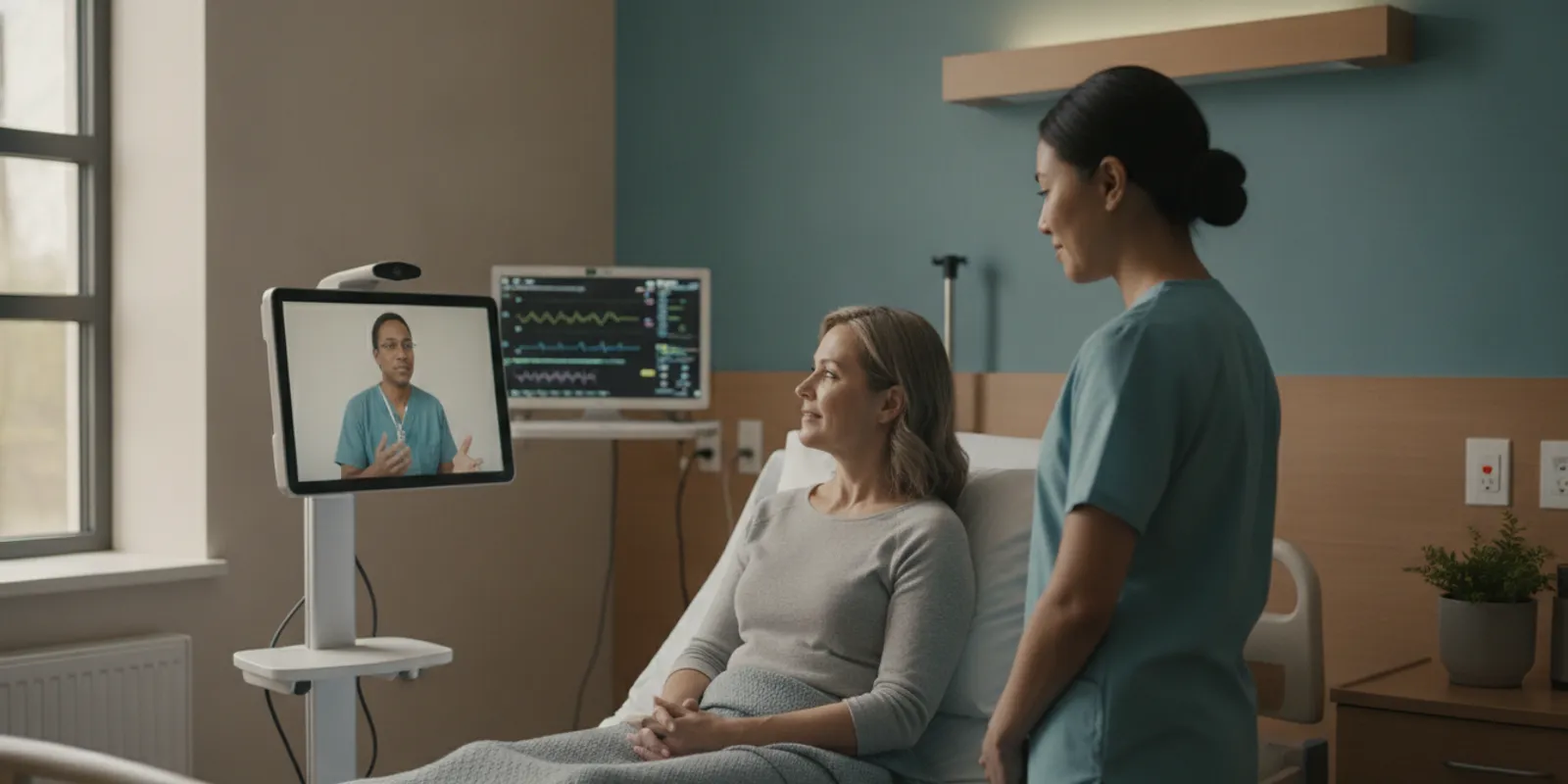
Choosing Nephrology Telemedicine and Dialysis Partners for Hospitals

For hospitals searching for nephrology telemedicine dialysis partners, the first step is to define the care model, not build a vendor list. Decide which patients and services need support, who is accountable for each clinical decision, and how the hospital’s nephrology team, dialysis organization, and technology fit together. Then compare partners against the same requirements. A clear scope helps prevent a telemedicine platform from being mistaken for a clinical group or dialysis provider.
What does a hospital need from a nephrology and dialysis partnership?
A partnership may involve several distinct organizations. A nephrology practice supplies clinicians and clinical coverage. A dialysis organization may provide dialysis services, staff, equipment, or operational support, depending on the arrangement. A hospital owns its own care processes and obligations. A telemedicine technology provider enables remote encounters or related workflows; it does not automatically provide specialist staffing, dialysis treatment, or clinical coverage.
These roles can overlap in a contract or program, but buyers should never assume they do. Ask each prospective partner to state, in writing, what it provides and what remains the hospital’s responsibility. The answer should be specific enough to guide contracting, clinical governance, staffing, technical setup, and escalation planning.
Begin by identifying the main problem to solve. For example, a hospital might be trying to make specialist consultations available across more locations, coordinate nephrology input with an existing dialysis workflow, or establish a defined process for remote bedside encounters. These are different goals. They may require different partners, coverage arrangements, and technology.
Also identify the patient groups and care settings in scope. Is the partnership for inpatient consultations, outpatient follow-up, care in a skilled nursing setting, or another defined environment? Which locations and hours are included? What kinds of encounters are excluded? A narrow first phase is often easier to assess than a broad proposal that promises to address every setting at once.
Which partner roles should buyers distinguish?
Use a role map before reviewing proposals. It should name the organizations involved and assign ownership for each important task. This makes it easier to see whether a proposal offers a complete operating model or only one component of it.
| Partner or function | What to establish | Questions for the buyer |
|---|---|---|
| Nephrology clinical group | Clinician coverage, consultation scope, handoffs, documentation, and escalation expectations | Who provides the clinicians? Which encounters are covered? How are availability and response expectations defined? |
| Dialysis organization | Its services, locations, staff responsibilities, equipment, and coordination with hospital workflows | Which dialysis operations are in scope? Who communicates with the hospital team? What is outside the agreement? |
| Hospital team | Local clinical leadership, referrals, staff participation, policies, and follow-up processes | Who approves the care pathway? Which hospital roles initiate, support, and close an encounter? |
| Telemedicine technology provider | Remote encounter tools, device connectivity if applicable, onboarding, support, and technical boundaries | What does the platform enable? What integrations are available and validated for this use? Who handles technical issues? |
| Operational and compliance leads | Contract review, privacy and security review, credentialing processes, and performance oversight | Who signs off on the model? What evidence and approvals are required before go-live? |
Use the table to expose gaps, not to assign work based on assumptions. If a vendor says “the platform manages the visit,” ask what that means in operational terms. Does it provide a connection, route a request, support a clinician’s remote examination, or own a clinical service? These are materially different responsibilities.
How should the hospital define the clinical use case?
Write a short use-case statement before inviting proposals. Include the setting, intended participants, type of encounter, hours, and the desired operational change. Avoid beginning with a particular device or product feature. That keeps the evaluation centered on the problem rather than on a vendor’s preferred solution.
Next, map the current process from request to follow-up. A simple flow can identify who recognizes the need for consultation, who places the request, how it reaches the nephrology team, how the encounter is arranged, and where the outcome is documented. Include the steps for follow-up and escalation. Ask staff who perform the work to validate the map; an executive-level description may not capture shift handoffs or local constraints.
For each step, name the owner and the expected handoff. For example, define whether a hospital clinician or another authorized role requests the consultation, who confirms the remote clinician’s availability, and who remains present with the patient when appropriate. The exact workflow depends on the care model and hospital policy. It should be designed and approved by the responsible clinical and operational leaders, not inferred from a technology demonstration.
State what success would look like without promising a clinical result. Measures might include whether requests reach the intended team, whether scheduled encounters occur as planned, whether required documentation is available to the appropriate parties, and whether technical interruptions are resolved through a known process. Select measures that the hospital can actually collect and review.
How can hospitals compare nephrology telemedicine partners?
Give each candidate the same written requirements and ask for concrete answers. A polished presentation is not a substitute for a defined service. Compare the clinical model, operational commitments, technical fit, governance, and commercial terms separately, then review how those elements work together.
Clinical scope and coverage
Ask what services and encounter types the nephrology group provides, which clinicians participate, and how coverage is organized. Clarify hours, scheduling, response expectations, availability during holidays or other constrained periods, and the process when the assigned clinician is unavailable. Request a clear description of clinical responsibility and how the partner coordinates with the hospital’s own clinicians.
Do not assume that a general telemedicine offering includes nephrology expertise, dialysis-specific workflows, or a particular coverage model. Ask candidates to distinguish services they deliver directly from services supplied by another organization. Have clinical leadership review the proposed scope for fit with the intended use case.
Dialysis coordination and boundaries
Ask the dialysis organization and clinical group to explain how their work intersects with hospital operations. Which team communicates changes or concerns? What information is exchanged, through which approved channels, and at what point in the workflow? Who is responsible for follow-up when the patient transitions between settings?
Seek examples of the proposed coordination process, not generalized claims of integration. A written responsibility matrix can name the accountable party, supporting roles, communication method, and escalation path for each handoff. Have the relevant hospital leaders verify that it reflects actual staffing and policy.
Technology, devices, and documentation
Inventory the technology required for the proposed encounter. Ask what the partner supplies, what the hospital must supply, what network and room conditions are needed, and which connected devices are supported for the intended workflow. If medical devices are part of the plan, request the exact supported configuration and clarify who sets them up, assists during use, maintains them, and responds to a device problem.
For documentation and data exchange, ask which systems are involved, what information is transferred, and what remains a manual step. “Integration” can mean different things. Request a workflow demonstration that shows the actual exchange relevant to the use case, and confirm any technical claims with the hospital’s IT and security teams before relying on them.
Evaluate privacy and security through the hospital’s established review. Ask for the materials its security team needs, including information about access, data handling, retention, and support procedures. Do not treat a general statement about security as a substitute for the hospital’s own review. For background on federal healthcare programs and official resources, consult the Centers for Medicare & Medicaid Services; confirm applicable requirements with the hospital’s compliance and reimbursement experts.
Implementation and support
Ask for an implementation plan with named responsibilities, dependencies, training, testing, and a proposed sequence. Establish who trains which users, how new staff are oriented, and what support is available during normal operations and after hours. Ask how incidents are reported, prioritized, and communicated to the hospital.
A useful proposal identifies what must be ready before launch: approved workflows, authorized users, connectivity, device readiness where applicable, documentation steps, escalation contacts, and a process for rehearsing the encounter. Ask candidates to identify prerequisites they do not control. That makes the implementation plan more credible and helps the hospital avoid discovering dependencies at go-live.
What should a hospital verify before selecting a partner?
Use a structured review rather than a single overall impression. A basic scoring sheet can compare candidates across categories while preserving the reason for each score. Weight the categories according to the hospital’s priorities, and require evidence or a clear explanation for high scores.
- Fit to the defined use case: Does the proposal address the specific setting, patient group, hours, and intended workflow?
- Clear accountability: Are clinical, operational, technical, and follow-up responsibilities assigned?
- Coverage and escalation: Are availability, response expectations, and contingency steps explicit?
- Workflow practicality: Can staff explain how a request, encounter, documentation, and follow-up will work in their setting?
- Technical readiness: Have IT, security, and clinical engineering reviewed the relevant systems, network, and device requirements?
- Implementation support: Are training, testing, go-live support, and ongoing service responsibilities written down?
- Measurement: Are the measures, data sources, review cadence, and owners agreed before launch?
- Commercial and contract clarity: Are included services, exclusions, fees, renewal terms, and change processes understandable?
Ask candidates to identify limitations and assumptions. A partner that clearly names what it does not provide can be easier to evaluate than one that leaves boundaries ambiguous. Confirm references or examples only to the extent permitted by the hospital’s procurement process, and do not treat another organization’s result as a guarantee for your own setting.
Which warning signs should trigger more questions?
Some proposal language sounds comprehensive but leaves important decisions unresolved. Treat broad promises as a reason to ask for definitions, not as proof that the hospital’s needs are covered. A few focused questions can reveal whether a partner understands the actual operating environment.
- One party appears to own every function. Ask which services are delivered directly and which depend on a subcontractor, hospital team, or separate clinical group.
- Coverage is described without a schedule or process. Request clear availability, response expectations, and a plan for unavailability or service interruption.
- “Seamless integration” is not demonstrated. Ask to see the specific exchange or workflow, and have hospital technical teams verify what is supported rather than relying on a general label.
- Responsibilities are assigned to “the facility.” Ask which role, department, or named owner is expected to perform each step, and whether that work is feasible with existing staffing.
- Business-case assumptions depend on reimbursement. Separate confirmed contract costs from estimates and have qualified hospital staff validate any coverage or payment assumptions before approval.
- Success is defined only by a promised outcome. Request operational measures, a data source, an owner, and a review schedule instead of relying on an unsupported guarantee.
These are not automatic reasons to reject a candidate. They are prompts to make the scope testable. If the partner cannot clarify a key assumption, document the uncertainty and decide whether the hospital can accept it, resolve it through contract language, or should continue evaluating other options.
How should leaders assess cost and contract terms?
Compare the full proposed operating cost, not just a headline rate. Depending on the arrangement, the hospital may need to account for clinical coverage, technology, devices, network changes, training time, support, integration work, and internal administration. Ask which charges are recurring, which are one-time, and what changes if the number of sites, users, or covered hours changes.
Make a clear distinction between a partner’s commercial offer and any possible payment or reimbursement pathway. Do not assume that a service qualifies for a particular payment, that a payer will cover it, or that reimbursement will offset program costs. Coverage and billing depend on current rules and the specific circumstances. Have the hospital’s reimbursement, finance, and compliance experts independently verify the assumptions against current authoritative guidance, including applicable information from CMS.
Review the contract for service definitions, response commitments, data and security responsibilities, training, support, service changes, termination, and transition arrangements. Check that the contract matches the operational plan. If the proposal describes a support service that is absent from the agreement, resolve that difference before approval.
How can a hospital validate the partnership before a broad rollout?
Plan a limited validation phase with a defined location or workflow, an accountable clinical sponsor, and a date for review. The goal is to test whether the promised process works in the hospital’s real environment—not to prove a broad clinical or financial claim in a short trial.
- Approve the use case. Confirm who is eligible for the workflow, what it includes, and what is out of scope.
- Confirm ownership. Review the responsibility matrix with the nephrology group, dialysis partner, hospital departments, and technology provider.
- Test the operating steps. Rehearse a request, connection, staff participation, documentation, and follow-up using an approved scenario.
- Check the technical setup. Validate connectivity, user access, devices, and any data exchange in the intended environment.
- Prepare staff. Provide role-specific training and publish escalation contacts and support instructions.
- Review early measures. Track agreed operational indicators, collect staff feedback, document issues, and decide what needs to change before expanding.
Set a review date and define decision criteria in advance. If a workflow is not reliable, pause expansion and identify whether the cause is staffing, unclear ownership, training, technical configuration, or an unrealistic requirement. Fix the root issue and retest. A staged approach makes the next decision more informed than a rapid expansion based only on initial enthusiasm.
Where can autonomous bedside telepresence fit?
Some hospital or post-acute workflows may also need a way to enable a remote clinical encounter at the bedside. Dr. Temi describes its platform as autonomous robotic telepresence for clinical encounters, with a robot that navigates to the bedside and supports remote interaction. It is a technology platform, not a nephrology practice, dialysis provider, or substitute for the hospital’s clinical governance. Buyers should evaluate whether that capability fits a separately defined workflow and confirm the necessary staffing and device responsibilities.
Explore the company’s solutions overview to understand the platform context, or read about Dr. Temi. For an organization considering remote bedside encounters, compare the proposed workflow with the hospital’s clinical, technical, and operational requirements rather than assuming one technology addresses every partnership need. The Rural Healthcare Access Program is a separate program; eligibility and any payment assumptions should be verified for the specific facility and current rules.
How should the hospital govern the partnership over time?
Assign a sponsor and a working group before launch. The sponsor should be able to resolve cross-department decisions, while the working group brings together the people who own clinical practice, daily operations, technology, security, and financial review. The right membership depends on the scope, but each responsibility needs an owner who can make or escalate decisions.
Agree on a recurring review cadence and a simple issue log. For each concern, record what happened, who is investigating, the next action, and whether the workflow or training needs to change. Review operational measures alongside staff feedback; a technically successful connection does not by itself show that the end-to-end process is working as intended.
Set a change-control process as well. If the partner changes coverage, equipment, workflows, or data handling, determine who evaluates the change and how affected staff will be informed. A partnership may evolve after launch, so the hospital should keep its role map, contact list, and approved workflow current.
For organizations considering Dr. Temi as one technology component, the company overview and solutions overview provide additional context. The technology should still be assessed against the hospital’s defined use case and approved by its responsible clinical, operational, and technical leaders.
Frequently asked questions
Is a nephrology telemedicine vendor the same as a dialysis partner?
No. A telemedicine technology vendor may enable remote encounters, while a nephrology group provides clinical services and a dialysis organization may provide dialysis-related services or operations. The actual scope depends on the agreement, so buyers should map responsibilities explicitly.
Should hospitals select the clinical group or the technology first?
Define the use case and required clinical model first. Then determine which clinical, operational, and technical partners are needed to support it. This sequence helps the hospital avoid selecting technology that does not fit the service or workflow it intends to establish.
What belongs in a partner evaluation demonstration?
Ask the candidates to walk through a realistic, approved workflow: how a request is initiated, how the right clinician or service is reached, how staff participate, how technical issues are handled, and how documentation and follow-up occur. A feature tour alone may not reveal whether the operating model is workable.
Can a hospital assume telemedicine or dialysis services will be reimbursed?
No. Reimbursement depends on the service, payer, setting, eligibility, and current requirements. The hospital’s finance, compliance, and reimbursement experts should verify applicable rules before using payment assumptions in a business case.
What is a sensible first step?
Convene the clinical, operational, finance, IT, and compliance stakeholders to approve a concise use-case statement and responsibility map. Once the hospital agrees on the need and boundaries, candidates can be compared against the same practical criteria.
A strong partnership is one the hospital can describe clearly: who provides care, who supports the workflow, how the teams coordinate, and how performance will be reviewed. Define those points before signing or expanding an agreement.