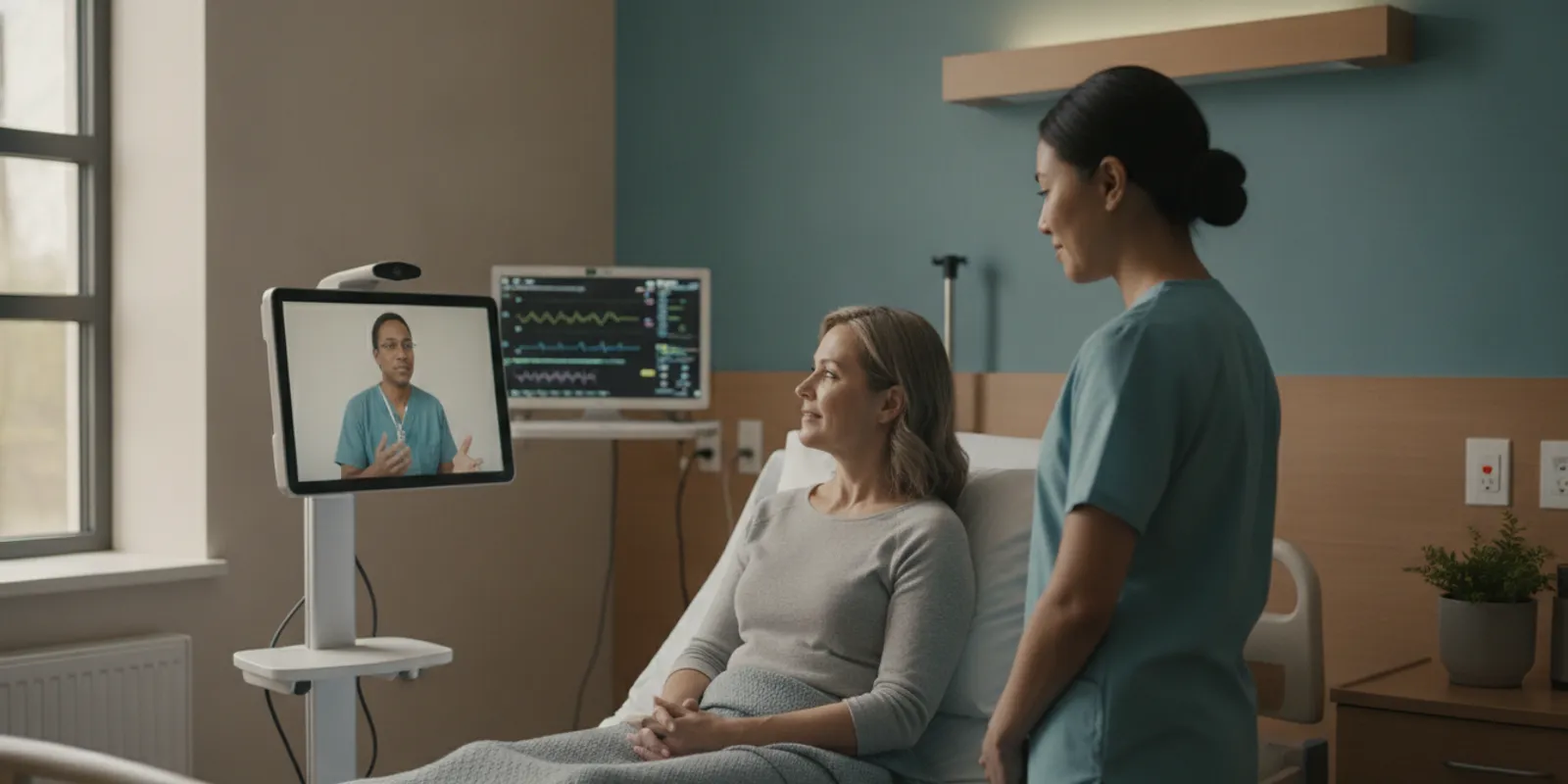
Telemedicine Reimbursement: A Practical Guide for Healthcare Organizations

Telemedicine reimbursement is a workflow question, not just a rate
Telemedicine reimbursement is the process of determining whether a payer covers a remote clinical service, which organization or professional may bill, which code and modifier apply, and what documentation supports the claim. For healthcare organizations, the answer depends on the payer, patient location, provider location, service, technology, contract, and current policy. Medicare, Medicaid, and commercial plans do not create one universal reimbursement model.
This guide gives facility leaders a practical framework for working with billing, compliance, clinical, and payer teams. It is not legal, coding, or billing advice. Before a program launches, confirm every rule with the applicable Medicare Administrative Contractor, state Medicaid agency, payer, and qualified reimbursement professional.
Short answer: telemedicine reimbursement usually has separate parts. A professional claim may cover the clinician's service. An originating site may have a facility fee when the payer allows it. A technology platform or telepresence robot does not automatically create a billable service. Reimbursement follows the covered clinical service, the eligible parties, and the payer's current rules.
What does telemedicine reimbursement include?
Healthcare leaders often use "telemedicine reimbursement" as shorthand for several payment questions. Separating them early prevents a facility from confusing a clinician's professional payment with the facility's own payment or with the cost of operating the program.
Professional payment
The distant clinician or professional may submit a claim for a covered service when the payer's requirements are met. The code, place of service, modifier, provider enrollment, patient relationship, medical necessity, and documentation can all affect the claim. The physician or other practitioner should confirm the applicable rules rather than assuming that an in-person workflow can be copied without changes.
Originating-site facility payment
The facility where the patient receives care may qualify for a separate originating-site facility fee under some payer programs. Medicare's Q3014 is the clearest example for eligible services and settings. It is a facility payment, not a substitute for the distant professional's claim, and it is not the total cost or value of a telemedicine encounter.
Technology and operations
Equipment, connectivity, staffing, training, integration, and documentation workflows may be necessary to deliver the encounter. These costs are not automatically reimbursable simply because they support telemedicine. The facility should model them separately from payer revenue and treat any technology-related reimbursement as a payer-specific question.
Dr. Temi approaches this operational problem through autonomous robotic telepresence. Its platform is designed to bring a remote physician to the bedside in under five minutes, 24 hours a day, without requiring staff to transport or position equipment. That workflow may help an organization evaluate access and operating requirements, but the platform itself does not guarantee payer coverage. Review the Dr. Temi telemedicine solution separately from the reimbursement analysis.
How does Medicare telemedicine reimbursement work in 2026?
For Medicare, leaders should start with the current CMS telehealth services list and the claims-processing guidance in effect for the date of service. CMS publishes the 2026 List of Telehealth Services, while its CY 2026 claims guidance addresses the originating-site facility fee. Always verify that the particular clinical service, patient setting, provider, and claim pathway meet current requirements.
Q3014 is an originating-site facility fee
CMS publishes the current Medicare telehealth originating site facility fee for HCPCS code Q3014 on its telehealth services page. CMS Transmittal 13507 states that, for dates of service on or after January 1, 2026, Medicare pays the facility fee as 80 percent of the lesser of the actual charge or the CMS-published fee amount. The document also notes that the beneficiary may be responsible for an unmet deductible and Medicare coinsurance. Read the CMS CY 2026 claims-processing transmittal before using the figure in a financial model.
The practical implication is important: a published fee amount is not a universal net payment, not a guaranteed amount for every facility, and not a substitute for checking the claim's actual allowed amount. A facility should also confirm whether it is an eligible originating site for the service and whether the professional service is separately payable under the applicable Medicare rules.
Medicare verification questions
- Is the clinical service on the current Medicare telehealth services list for the date of service?
- Is the patient located in an eligible setting, and is the organization enrolled and authorized to bill?
- Does the facility meet the requirements for an originating-site facility fee?
- Which professional, facility, place-of-service, and modifier fields belong on the claim?
- What documentation shows the service occurred, who participated, and why it was medically necessary?
- How will deductible, coinsurance, denials, and corrected claims be handled?
Do not calculate program payback by multiplying visits by the published Q3014 figure alone. Use the amount the organization can actually bill and collect after eligibility checks, contractual limits, patient responsibility, denials, staffing, technology, and operating costs.
Explore Dr. Temi's telemedicine workflow before you build a reimbursement and operating model.
What changes for Medicaid and commercial payers?
Medicaid and commercial reimbursement require a payer-by-payer review. Federal Medicaid guidance explains that states have flexibility in deciding whether and how to cover telehealth, which services and provider types qualify, where care can be delivered, and how much to reimburse. The Medicaid reimbursement guidance also describes possible distant-provider payment, originating-site facility fees, and treatment of technical or equipment costs.
Medicaid is state-specific
A facility should begin with the state Medicaid provider manual, fee schedule, telehealth bulletin, and enrollment rules. Confirm whether the state recognizes the provider type, permits the modality, pays an originating-site facility fee, requires a modifier, and has special rules for nursing facilities, hospitals, rural sites, or behavioral health. Medicaid guidance also points providers to state scope-of-practice rules. Cross-state care may require a license in the state where the patient is located.
Commercial coverage follows the contract
Commercial plans may use their own covered-service policies, network rules, authorization requirements, payment policies, documentation standards, and telehealth amendments. A state parity law may affect some plans or services, but it does not remove the need to read the specific contract and payer policy. Ask the payer how it treats the professional claim, facility fee, remote patient location, audio and video modality, provider type, and denied or incomplete claims.
Because rules change, use current payer materials rather than an old spreadsheet or a vendor promise. The Center for Connected Health Policy's Fall 2025 state telehealth policy summary describes significant variation across jurisdictions. Treat it as a research starting point, then confirm the live state and payer requirements before billing.
| Payment question | Who to verify with | What to confirm |
|---|---|---|
| Is the clinical service covered? | Payer and clinical billing team | Code, modality, setting, provider type, authorization, and medical necessity |
| Can the facility bill an originating-site fee? | Payer, MAC, or state Medicaid agency | Eligible site, code, enrollment, allowed amount, patient responsibility, and claim fields |
| Can technology or technical support be reimbursed? | Payer contract and compliance team | Whether an allowed payment pathway exists and what documentation is required |
| Can the remote clinician practice across state lines? | Compliance, licensing, and state regulators | Patient location, professional license, scope of practice, and credentialing |
What should a facility verify before billing?
A reimbursement-ready telemedicine program connects policy to a repeatable bedside workflow. Before the first claim, assign an owner for each question and retain the answer in a version-controlled policy file. The goal is not to predict every payer decision. The goal is to know which facts must be checked before a service is scheduled and billed.
1. Define the clinical service
Write down what happens during the encounter. Identify the patient, the treating professional, the facility staff involved, the clinical purpose, the modality, the connected devices, and the documentation produced. A remote consultation, a facility-supported examination, a monitoring workflow, and an administrative communication may have different coverage and coding implications.
2. Confirm payer and patient eligibility
Confirm the patient's plan, eligibility on the date of service, prior authorization rules, network status, deductible, and coinsurance. For Medicare, confirm the current national guidance and any contractor instructions that apply to the organization. For Medicaid, use the patient's state policy. For commercial plans, use the current contract and payer policy, not a general telehealth summary.
3. Confirm provider, site, and licensure requirements
Document the billing entity, rendering provider, supervising relationship if relevant, facility enrollment, credentialing, and patient location. If the clinician and patient are in different states, ask compliance to confirm licensure and scope-of-practice requirements before the visit is scheduled.
4. Build documentation into the encounter
The record should support the service that was delivered. Depending on payer and service, this may include the reason for the encounter, participants, patient and provider locations, modality, examination findings, medical decision-making, consent where required, time or other code-specific elements, orders, follow-up, and the identity of the billing professional. Your coding team should define the exact required fields.
5. Track denials and policy changes
Start with a small set of measures: scheduled encounters, completed encounters, clean claims, first-pass payment, denials by reason, days to payment, patient responsibility, facility-fee collections, and operating cost per completed encounter. Review the results with finance, clinical operations, compliance, and the payer team. Recheck rules when CMS, a state agency, or a commercial payer updates its policy.
How can telemedicine operations support reimbursement readiness?
Reimbursement depends on the covered service, but operations determine whether the organization can deliver and document that service consistently. A telemedicine workflow should make it clear who requests the encounter, how the patient is reached, who supports the bedside examination, where the record is documented, and how the claim team receives the necessary information.
Dr. Temi is built around autonomous navigation and bedside clinical access rather than a stationary video screen. The platform can support a remote physician's live interaction with a patient and on-site team, including connected clinical devices where configured. It can also support larger care-team sessions and EHR documentation through the Clinii partnership, subject to the organization's implementation and configuration. These capabilities may help leaders map the operational steps around a covered encounter, but they do not change a payer's coverage policy.
For rural organizations, Dr. Temi maintains a dedicated rural healthcare access program page with a qualification path. Facilities should treat that path as an eligibility conversation, not a guarantee that Medicare reimbursement will cover deployment or operating costs. Confirm the facility's program status, payer rules, utilization assumptions, and financial terms before approving a business case.
If your team is evaluating an autonomous telemedicine platform, compare the clinical workflow, staffing requirements, documentation path, security controls, integration needs, implementation support, and payer assumptions together. That broader review is more useful than selecting technology from a reimbursement figure alone.
Telemedicine reimbursement questions healthcare leaders ask
Does Medicare reimburse telemedicine?
Medicare reimburses certain covered telehealth services when the service, provider, patient setting, claim, and documentation meet current requirements. Medicare may also pay an eligible originating-site facility fee. Check the current CMS telehealth services list and claims guidance for the date of service.
What is Q3014?
Q3014 is the HCPCS code for the Medicare telehealth originating site facility fee. CMS publishes the applicable annual fee amount, while current claims guidance describes payment as 80 percent of the lesser of the actual charge or that published amount. This is not a universal net payment or the professional fee.
Does Medicaid reimburse telemedicine?
Medicaid telemedicine reimbursement varies by state. State Medicaid programs decide which services, provider types, modalities, locations, and payment methods qualify within federal requirements. Verify the patient's state policy and current provider manual before billing.
Do commercial insurance plans pay for telemedicine?
Many commercial plans have telehealth policies, but coverage and payment depend on the plan, contract, network, service, provider, location, and current payer rules. Confirm benefits, authorization, billing codes, modifiers, and facility-fee treatment with the payer.
Can a technology platform guarantee telemedicine reimbursement?
No. A platform can support a clinical workflow, but reimbursement is determined by payer policy, covered service, eligibility, provider and site requirements, coding, documentation, and claim adjudication. A vendor should not replace the facility's billing and compliance review.
What should a facility do first?
Choose one target service and payer, map the encounter workflow, ask the payer and billing team for written guidance, confirm provider and site eligibility, define documentation fields, and run a controlled pilot. Measure clean claims and denials before expanding the program.
Build a reimbursement-ready telemedicine plan
Telemedicine reimbursement is manageable when leaders treat it as a cross-functional operating process. Start with the service and payer, separate professional and facility payment, verify current rules, document the encounter, and model collections conservatively. Then evaluate whether the technology can support the bedside workflow your clinical and revenue-cycle teams need.
Dr. Temi helps healthcare organizations explore autonomous clinical care and bedside physician access across hospitals, skilled nursing facilities, long-term care settings, rural hospitals, and provider networks. Book a Demo to discuss your facility's access goals and the questions your billing, compliance, and payer teams need to answer.
Last reviewed: October 1, 2026. Reimbursement rules can change. Confirm current requirements with CMS, the applicable state agency, the payer, and qualified billing and compliance professionals before relying on this guide.