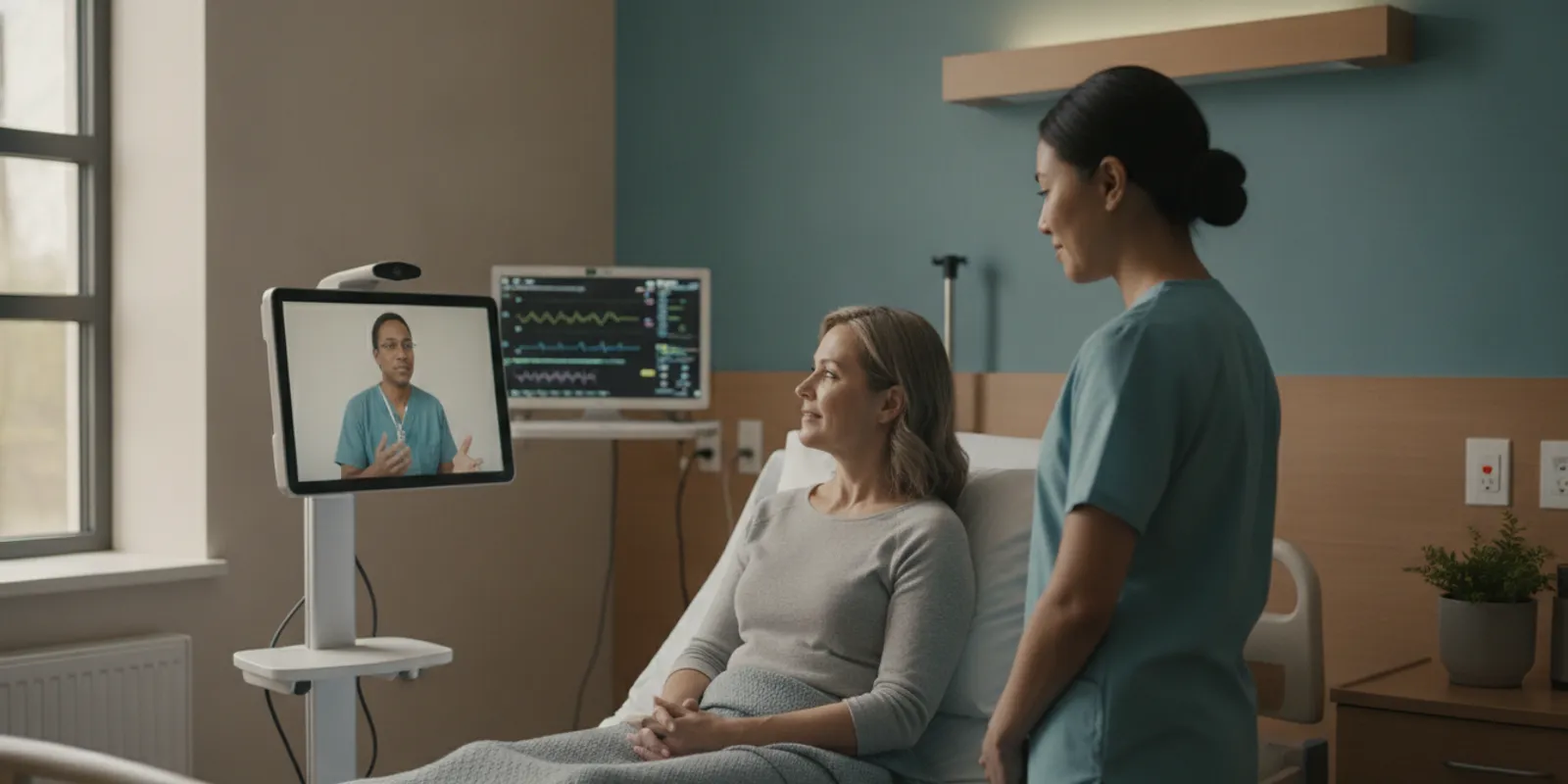
Telemedicine Readiness Assessment: A Healthcare Organization Guide

A telemedicine readiness assessment helps healthcare leaders identify what is in place, what needs attention, and who must be involved before expanding remote care. It is not a pass-or-fail test or a technology shopping list. A useful assessment looks across leadership, clinical workflows, staffing, technology, security, patient needs, and measurement so the organization can make a grounded decision about its next step.
What does a telemedicine readiness assessment cover?
Readiness is the organization's ability to support a defined model of remote care in its real operating environment. That includes the people who deliver and coordinate care, the patients or residents who receive it, the tools and connections used during an encounter, and the policies that govern decisions and follow-up.
There is no single score that fits every organization. A hospital adding remote specialist access has different needs from a skilled nursing facility coordinating bedside visits or a provider network connecting clinicians across locations. Start with the use case, then assess whether the essential conditions for that use case are present.
Readiness assessment resources describe the value of examining organizational needs and gaps before launching a telehealth project. The telehealth readiness assessment literature and the Telehealth Resource Center's technology needs and readiness guide can help teams structure that early review. A tool supports discussion; it does not replace clinical, operational, privacy, or technical judgment.
Think of the assessment as a decision aid, not a certificate. It should help leaders distinguish prerequisites from preferences. For example, a clearly assigned clinical escalation path may be essential before a pilot, while a particular reporting format may be refined later. Recording that distinction prevents a long list of observations from becoming an unprioritized wish list.
How should leaders define the care model first?
Before rating readiness, write down the specific care problem the organization wants to address. A broad goal such as “do more telemedicine” is difficult to assess. A useful statement identifies the setting, the people involved, the encounter, and what should happen afterward.
- Setting: Which facilities, units, or locations are in scope?
- Participants: Which clinicians, local staff, patients or residents, families, and support roles may take part?
- Encounter: Is the goal a consultation, follow-up, specialist input, or another defined clinical interaction?
- Workflow boundary: What happens before, during, and after the remote encounter, including escalation?
- Success: What evidence would show the model is useful and safe for this organization?
Turn the goal into a short use-case statement. For example: “At two units, a bedside team will connect a resident with an available remote clinician for a defined consultation, document the encounter, and follow the established escalation process if remote assessment is not sufficient.” This wording is not a clinical protocol. It is a planning boundary that helps the team ask the right readiness questions. Specify what is out of scope too, such as other facilities, encounter types, or populations that will need separate review.
This clarity prevents a common planning mistake: evaluating a tool without agreeing on the work it must support. It also helps leaders see whether the intended model depends on local staff to initiate, prepare, or assist with an encounter. For a general overview of the platform and its care setting, see Dr. Temi's clinical and operational solutions.
Which readiness domains should the team assess?
Use a consistent scale for each domain. For example, rate each item as 0 (not assessed), 1 (gap), 2 (partly in place), or 3 (defined and supported). Add a note with the evidence and the person responsible for follow-up. Do not treat a high average as proof that a critical safety or workflow gap can be ignored.
| Domain | What to examine | Evidence to collect |
|---|---|---|
| Leadership and governance | Executive sponsorship, decision rights, clinical ownership, and escalation for unresolved issues | Named sponsor, accountable clinical lead, approved scope, and decision log |
| Clinical workflows | Scheduling, encounter preparation, local assistance, documentation, follow-up, and escalation | Mapped current-state workflow, role assignments, and sample scenarios |
| Staffing and training | Coverage, availability, confidence, orientation, and ongoing support | Role-based training plan, coverage assumptions, and support contacts |
| Technology and facilities | Connectivity, devices, integration needs, room or bedside conditions, and technical support | Site survey, network findings, device inventory, and issue-resolution path |
| Privacy and security | Access, identity, data handling, privacy practices, and incident response | Security and privacy review, access controls, and documented policies |
| Patient and resident needs | Communication preferences, accessibility, consent process, and support during visits | Input from patients or residents, staff observations, and accessible instructions |
| Measurement and improvement | Baseline, operational indicators, experience feedback, and review cadence | Metric definitions, data owner, baseline, and scheduled review |
For each rating, capture a short rationale: what was checked, which role confirmed it, where the evidence is stored, and what remains uncertain. A score of 2 should not mean “almost ready” by default. It could mean that one site has a tested process while another has not, or that a draft policy exists but has not been approved. The written explanation makes ratings comparable across departments and prevents confidence from being mistaken for proof.
How can leadership and governance be evaluated?
Readiness starts with clear accountability. Identify an executive sponsor who can resolve cross-functional barriers and a clinical owner who can address care standards and clinical escalation. Include operational, nursing, IT, privacy, compliance, and finance perspectives as appropriate to the organization and use case.
Ask whether the group has agreed on the intended population, setting, scope, and boundaries of the service. Confirm who can approve changes, who reviews incidents or concerns, and how decisions are recorded. If the project depends on a partner, clarify which responsibilities remain with the organization. A vendor discussion can inform the review, but the organization should retain ownership of its clinical and operational decisions.
For a practical first pass, name the accountable person for each domain in the table. “Everyone” is not an owner. If several departments share a responsibility, identify the lead and the handoff points.
Then test whether the governance group can make the decisions the assessment may surface. If IT identifies a connectivity constraint, who can authorize remediation or narrow the scope? If clinical and operational leaders disagree about a workflow, what is the review path? If an issue crosses facilities, who has authority to set a common approach? These questions expose decision bottlenecks early. A simple responsibility map can name the accountable lead, contributors, approver, and people who need to be kept informed for each major decision.
Are clinical workflows ready for remote encounters?
Map an encounter from the first request through documentation and follow-up. Include the normal path and exceptions. For example, what happens if the clinician is delayed, a connection drops, a patient or resident needs assistance, or an in-person assessment is needed? The answers should reflect local clinical judgment and policy, not assumptions about what technology can decide.
Specify how an encounter is initiated and how the right clinician is connected. Decide who verifies that the patient or resident is ready, who assists with connected examination devices when needed, and how the care team communicates during the visit. Include how findings, next steps, and unresolved issues are documented in the organization's record-keeping process.
Walk through at least three scenarios with the people who would perform the work: a routine scheduled encounter, a time-sensitive request, and an exception such as a dropped connection or a change that calls for another level of assessment. Ask participants to describe the next action in their own words. If two roles assume the other will call the clinician, document the gap instead of resolving it with an informal promise. Identify the handoff, the backup contact, and the point at which the encounter should move to an alternative pathway.
In settings where local staff support the encounter, define that support plainly. Remote care can change where a clinician participates; it does not remove the need for appropriate bedside assistance or clinical oversight. Dr. Temi describes its model as autonomous robotic telepresence: the platform can navigate to the bedside to support a complete remote clinical encounter, while facility staff remain part of the care workflow where needed. Learn more about Dr. Temi's approach to autonomous clinical care.
What staffing and training questions matter?
Assess availability as well as headcount. A workflow may be well designed on paper but fail when the people assigned to initiate or assist with encounters are occupied with other responsibilities. Review coverage by shift, weekends, holidays, and other periods that matter to the chosen care model.
- Which roles initiate, coordinate, assist with, and document each type of encounter?
- What training does each role need before the workflow begins?
- How will new staff learn the process, and how will existing staff get refreshers?
- Who can help when a user has a technical or workflow question?
- How will the organization gather staff feedback and address workload concerns?
Use a short scenario exercise to test the plan. Ask participants to talk through a routine visit and an exception, such as a failed connection or a change in patient condition. Note steps that are unclear, depend on an unavailable role, or have no defined handoff. Those findings are specific readiness gaps that can be addressed before expanding use.
Training should match the tasks, not just the software. A scheduler may need to know how to place an encounter and communicate changes. A bedside team member may need to understand the setup, assistance, and escalation steps relevant to the local process. A clinician may need orientation to how the remote workflow, documentation, and team communication fit together. Define how competency or completion will be recorded, who supports new hires, and how the team will refresh guidance after a workflow changes. If staff cannot explain where to get help during a real encounter, the support model needs more definition.
Is the technology and facility environment suitable?
Technology readiness is more than confirming that a device powers on. Review connectivity in the intended care areas, device access, account and authentication processes, integration requirements, and the availability of technical support. Ask how equipment will be charged, cleaned, stored, and maintained when those tasks apply to the selected model.
Check the environment in which care will happen. Consider network coverage at the bedside, noise, lighting, accessibility, privacy during the visit, and whether staff can support the encounter without disrupting other care. For mobile systems, assess routes and spaces in the actual facility rather than relying only on a floor plan.
Record the results by site or unit. A system-wide “ready” rating may conceal a weak connection or a workflow constraint in one location. If an organization operates across multiple settings, use a common checklist while documenting local differences.
Make the technical review observable and repeatable. List each intended location, the device or connection to be used, the person who tested it, the conditions during the test, and any issue found. A successful test in an office does not establish that the bedside environment will work during a busy shift. Consider whether the test should be repeated at different times or in areas with different layouts. For mobile platforms, walk the actual route and note doorways, elevators, thresholds, busy corridors, and places where privacy or access may affect the workflow. Assign any unresolved integration or support question to a specific owner rather than leaving it as a general vendor follow-up.
How should privacy, security, and patient needs be considered?
Bring privacy and security reviewers into planning early. Confirm how users are authenticated, who is allowed to join an encounter, what data is handled, how access is managed, and what processes apply if a concern arises. Review the vendor's current documentation with the organization's own privacy, security, and compliance teams. Do not assume that a general product statement resolves the organization's review.
Patient and resident readiness deserves the same attention as infrastructure. Consider language access, hearing or vision needs, cognitive and communication support, the process for explaining the encounter, and how consent is handled under applicable policies. Ask representatives of the people receiving care, where appropriate, what would make the experience clear and comfortable.
Also define when remote care is not the right fit for an encounter and how the care team moves to an appropriate alternative. The organization should rely on its clinical policies and judgment for those decisions.
Keep the assessment specific without turning it into a substitute security review. For example, record which department will validate access requirements, which policy governs consent and communication, and how a potential privacy concern is escalated. The readiness team can identify open questions and confirm that the appropriate reviewers are engaged; it should not make unsupported conclusions about regulatory compliance. For patient and resident input, ask practical questions: Were instructions understandable? Was help available when needed? Was the setting sufficiently private? Feedback can reveal barriers that a network test or written policy would not show.
How can the organization measure readiness and progress?
Use a small set of measures tied to the stated use case. Separate readiness indicators from results after service begins. Before launch, readiness indicators might include completed workflow mapping, trained roles, verified connections in intended locations, and approved escalation procedures. After the service is in use, leaders can review operational performance, staff and patient or resident feedback, and clinical or service outcomes that their organization has defined and can measure responsibly.
For every measure, specify its definition, data source, owner, baseline if available, and review frequency. Avoid choosing a metric simply because it is easy to count. A measure should help leaders decide whether the model is accessible, workable, and aligned with the care goal.
Use the results to identify barriers and adjust the plan. An assessment is most useful when it is revisited as conditions change, such as a new site, workflow, integration, or patient population. The Pan American Health Organization's telehealth technical documentation includes a readiness tool for health institutions, offering another reference point for structured review.
Keep measures actionable and avoid blending unlike findings into a single score. For example, a team might track the share of intended locations with a completed connection test, whether each key role has completed the relevant orientation, and how many high-priority actions remain open. These are planning indicators, not proof of clinical effectiveness. Once a service is operating, choose outcome and experience measures with the relevant clinical and operational leaders, define a reliable source, and compare results against a suitable baseline where available. Set a review date in advance so findings lead to a decision rather than accumulating in a dashboard no one revisits.
What should the readiness review produce?
A useful review ends with a short, owned action plan rather than a vague conclusion. Summarize the intended care model, readiness findings by domain, evidence reviewed, unresolved risks, and the steps needed to address them. Assign an owner and target review date to each action. Then agree on what evidence will be sufficient to mark it complete.
- Clarify scope: Record the population, sites, encounter type, and boundaries under consideration.
- Rate each domain: Use the same scale and attach evidence rather than relying on impressions.
- Prioritize gaps: Address safety, clinical ownership, privacy, workflow, and operational dependencies before lower-impact preferences.
- Assign owners: Name the person accountable for each action and the people who need to contribute.
- Set a review point: Reassess after actions are complete and whenever the model or operating environment changes.
- Decide the next step: Continue discovery, run a limited evaluation, revise the scope, or pause until key conditions are met.
To make the action plan usable, describe each item as a verifiable change. “Improve staff readiness” is difficult to close. “The unit lead will confirm that each assigned role has received the workflow guide and can identify the technical support contact” is clearer. Separate blockers from follow-up improvements, state dependencies, and agree who can accept the evidence. If an action is outside the team's authority, name the decision-maker needed to move it forward.
For organizations evaluating bedside access, the discussion can also test whether the intended model requires a clinician to travel, local staff to move equipment, connected devices, or a particular form of facility support. These details help the team assess fit without confusing a readiness review with a commitment to purchase. Organizations considering rural care models can review the Rural Healthcare Access Program information separately to understand whether that program is relevant to their circumstances.
What questions should healthcare leaders ask before a demo?
Bring the assessment findings to any product discussion. That makes the conversation more useful than a general feature review and gives the organization a chance to test the workflow against its own requirements.
- How does the platform support the specific encounter and setting we identified?
- What must clinicians and facility staff do before, during, and after a visit?
- Which connected devices or integrations are relevant to our use case, and what should we verify?
- How does the solution handle navigation and access in our actual facility environment?
- What training, technical support, and operational responsibilities should we plan for?
- What information should our privacy, security, clinical, and IT reviewers examine?
- How can we evaluate a proposed workflow using our scenarios and success measures?
Ask for a demonstration of the defined workflow, not only a tour of features. Bring a representative scenario and note where staff participate, what information is exchanged, what happens when something does not proceed as expected, and which questions remain for your internal reviewers. Capture the answers against your readiness domains so the conversation informs the assessment rather than replacing it.
Frequently asked questions
Who should lead a telemedicine readiness assessment?
An executive sponsor should enable decisions across departments, while a clinical owner guides care-related questions. Operations, nursing, IT, privacy, compliance, and other relevant teams should contribute based on the use case.
Can an organization complete the assessment without selecting a vendor?
Yes. Defining the care model, workflows, stakeholders, and requirements first can make later product discussions more focused. A vendor may help clarify capabilities, but the organization can retain ownership of its needs and evaluation criteria.
Does a high readiness score mean a service is ready to begin?
Not by itself. Scores summarize a discussion; they do not replace review of critical gaps, clinical policies, privacy and security requirements, or local operational conditions. Leaders should resolve important dependencies and confirm the appropriate next step.
How often should readiness be reviewed?
Review it when the scope, site, workflow, technology, or patient population changes, and at planned decision points. The team should set its own cadence based on the service and its governance process.
Build readiness around the care you intend to deliver
A thoughtful telemedicine readiness assessment connects organizational goals to the practical conditions required for safe, workable remote encounters. By involving the right people, documenting evidence, and assigning owners to gaps, healthcare leaders can make a clearer decision about what to evaluate next.