Telemedicine EHR Integration: Key Considerations for Connected Care
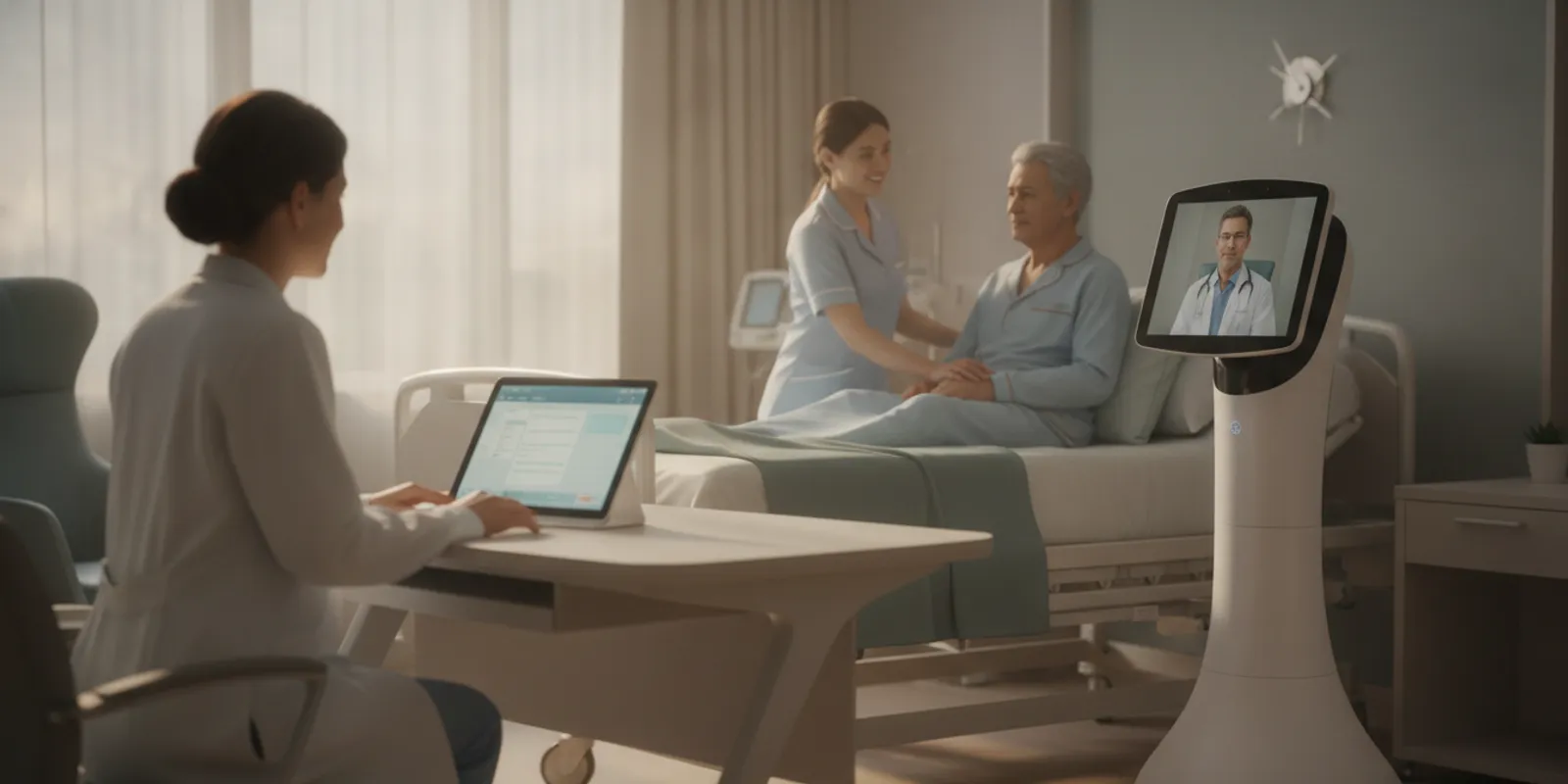
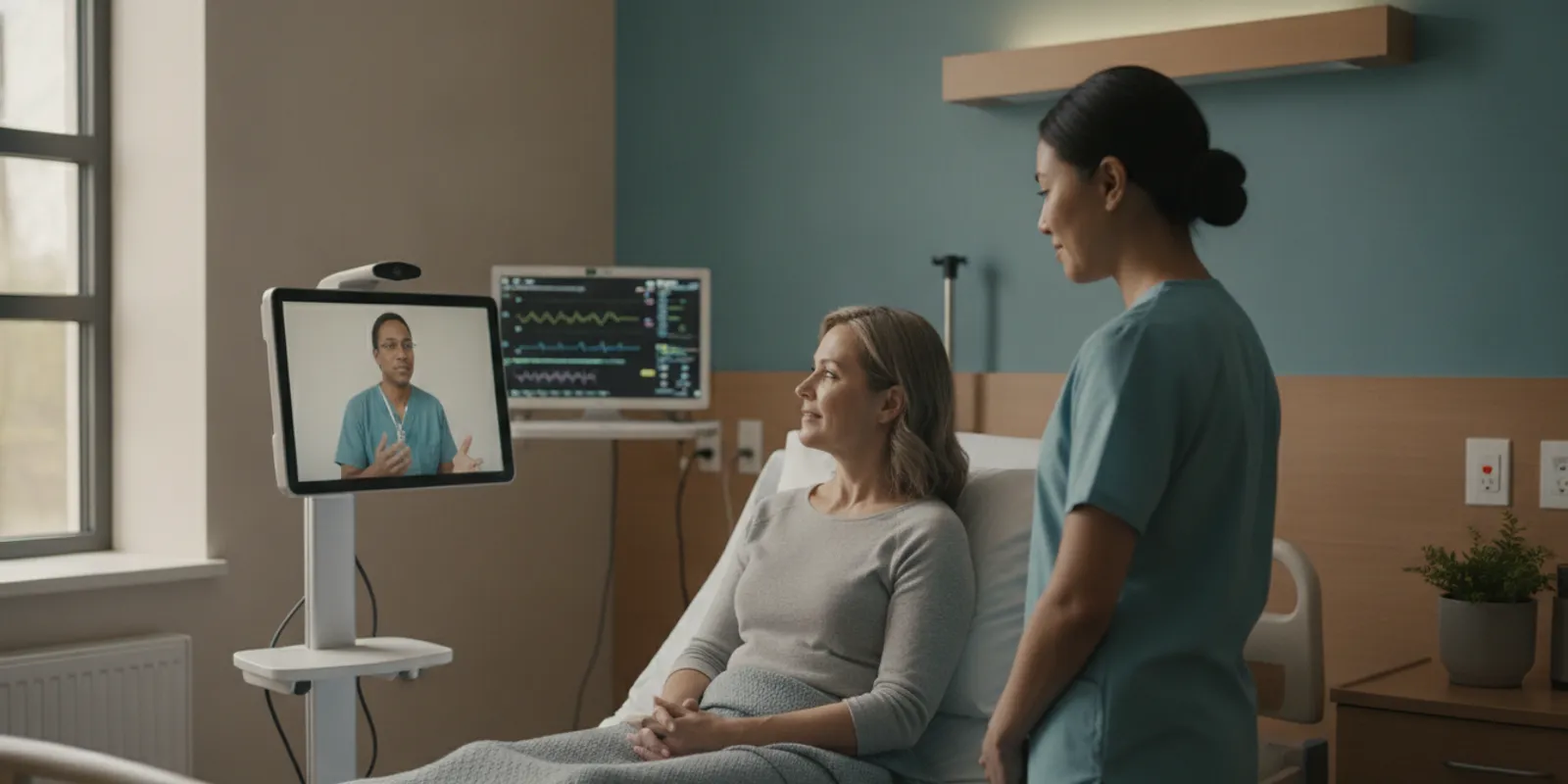
Telemedicine EHR integration is more than connecting a video visit to a chart. For healthcare IT, clinical informatics, and virtual-care leaders. The goal is to make the right patient information available to the care team and ensure the encounter is documented in a dependable, reviewable workflow. Dr. Temi brings a remote physician to a patient bedside through autonomous robotic telepresence, while its EHR connection is supported through the Clinii partnership. The right evaluation connects identity, clinical context, documentation, access, and follow-up at each facility.
What should telemedicine EHR integration accomplish?
Telemedicine EHR integration should help an authorized care team prepare for, conduct, document, and follow up on a remote encounter without creating uncertainty about the patient record. Integration is not one feature. It is a set of technical connections and operating decisions involving systems, users, patient identity, information exchange, and clinical responsibility.
Before comparing vendors, write the specific job the connection must do. One organization may need a remote clinician to review selected chart information during a visit. Another may need encounter details or documentation returned to its EHR. A skilled nursing or hospital program may also need staff to coordinate the bedside, remote physician, and recordkeeping process. These are different requirements and should not be treated as interchangeable.
A useful outcome statement is testable: an authorized clinician can confirm the correct patient, review the agreed clinical context. Complete the remote encounter, and document it in the approved record workflow, with a named owner for anything that does not transfer automatically. This wording does not assume universal automation. It gives the evaluation team a shared standard.
Distinguish a connected video session from a connected clinical encounter. Video enables communication, but it does not by itself confirm that the clinician has the correct chart, that the patient is correctly identified, or that documentation is complete. The American College of Cardiology discussion of telehealth interoperability and patient safety is a useful reminder to keep those questions in the integration review.
How does information move through an integrated telemedicine visit?
Map information movement from the visit request through encounter closure and follow-up. A process map often reveals more than a vendor feature list because it shows the source of truth. The person responsible for each action, and every remaining manual handoff.
- Request and scheduling: Identify where the request begins, who initiates or schedules the visit, and what information the care team needs before the encounter.
- Patient identification: Define how staff and clinicians match the patient to the correct record. Include duplicate, incomplete, or unmatched records and the person who resolves them.
- Chart context: Specify the information needed for the use case, such as the current concern, allergies, relevant history, medications, recent notes, or results. Do not assume that a connection exposes every chart element.
- Encounter delivery: Document how the remote clinician reaches the patient and how bedside staff support the visit. Include what happens when a participant is unavailable or the connection must be restarted.
- Documentation: Decide where the final note and related encounter information belong, who enters or signs them, and what moves through the connection versus a defined manual process.
- Follow-up: Assign responsibility for orders, referrals, care-plan updates, notifications, or unresolved exceptions that remain after the call.
For a facility-based program, a swimlane map can be especially useful. Create lanes for the facility team, remote clinician, telemedicine solution, EHR, and any integration partner. Put each action in the lane of the party that performs it. If a handoff has no owner, the map has exposed a decision that should be resolved before implementation.
Which integration pattern fits the clinical workflow?
The best integration pattern is the one that supports the intended clinical workflow, not simply the one with the longest feature list. Leaders should compare the actual information and actions required at each step, then document which system remains authoritative.
| Pattern | What it may support | Questions to confirm |
|---|---|---|
| Separate systems with a defined process | Staff use the telemedicine solution and EHR separately with documented handoffs. | Who confirms identity, reviews context, documents the visit, and tracks exceptions? |
| Context access during the visit | An authorized clinician accesses relevant EHR information while conducting the encounter. | Which records and roles are in scope, and how are existing access controls preserved? |
| Information exchange | Selected encounter details or documentation move between the telemedicine solution and EHR. | Which fields transfer, what triggers transfer, and how are errors or corrections handled? |
| Embedded workflow | Some visit actions begin or finish within an EHR workflow, depending on product and configuration. | Which departments, locations, user roles, and functions are actually covered? |
Do not use the word integrated as a substitute for a workflow demonstration. Ask the vendor and integration partner to show the proposed path with representative roles and a realistic test patient. Confirm whether the demonstration reflects the exact EHR edition, facility configuration, and documentation process under consideration.
What should leaders decide about clinical documentation?
Documentation decisions should identify the official record, the responsible author, the required fields, and the fallback when information does not transfer. These decisions matter because a technically connected visit can still produce an incomplete or ambiguous clinical record.
Where does the official record live?
Choose the system of record for the clinical encounter. If the EHR is authoritative, define how the note is created, reviewed, signed, corrected, and found later. If a supporting platform stores operational information, define what belongs there and what must be copied or returned to the EHR. Avoid creating two competing versions of the same clinical event.
Who owns the note?
Assign responsibility by role, not by assumption. A remote physician may conduct and sign the clinical note, while facility staff may confirm the patient, begin the visit, provide bedside support, or route an exception. The workflow should also specify who reviews an incomplete note and how corrections are handled.
What happens when a transfer fails?
Every workflow needs a visible fallback. If documentation or selected encounter details do not transfer, the responsible person should know what to enter, where to record the exception, and how to confirm completion. A fallback that exists only in a training conversation is not an operational control.
How should patient identity and access be evaluated?
Patient identity and user access should be tested together because the right user viewing the wrong record is still a clinical risk. Evaluate how the patient is matched, how users authenticate, and how permissions change when roles or employment change.
- Define the identifiers used to match the patient and resolve duplicates or mismatches.
- Test representative roles, including remote clinicians, nurses, facility staff, and administrators.
- Separate view, edit, document, and sign permissions rather than treating access as one setting.
- Confirm how onboarding, offboarding, credential changes, and delegated access are managed.
- Document who can see the encounter context and which actions create an audit trail.
For Dr. Temi, the documented security description includes encrypted video, credentialed-only access, and live calls that are not recorded or retrievable. Those points are useful inputs to a local review, but they do not answer every question about an organization's EHR permissions, retention policies, or governance. The healthcare organization should confirm the complete proposed configuration with its appropriate teams.
What should an interoperability review cover?
An interoperability review should test data scope, direction, timing, identity, error handling, and ownership. A broad claim that a platform connects with an EHR is not enough to establish that every desired function works in every site configuration.
Use a question set that is specific to the intended encounter:
- Which EHR products, versions, environments, and facility locations are in scope?
- Which data elements are read, written, or exchanged, and in which direction?
- What starts the exchange, and how quickly should the receiving system reflect it?
- How are patient matching, duplicate records, missing fields, and corrections handled?
- Which user permissions and roles are required for each step?
- What happens when an interface, network connection, or destination system is unavailable?
- Which organization owns support for the telemedicine workflow, EHR, and integration layer?
Dr. Temi supports EHR documentation through its Clinii partnership. Customer information describes support across more than 30 leading EHR systems, including Epic, Cerner, and athenahealth. That breadth should be treated as a starting point for discovery, not as a guarantee that every function, version, site, or configuration is automatically supported. Confirm the specific environment and documentation steps during evaluation.
For general background, the review Telemedicine for healthcare: Capabilities, features, barriers provides broader context on telemedicine capabilities and implementation barriers. It should not be used as proof that a particular vendor supports a specific interface.
How can a facility judge workflow fit before rollout?
Workflow fit is demonstrated by the people who perform the work, using a realistic encounter from preparation through documentation and follow-up. A polished product demonstration may show capabilities without exposing staffing constraints, interruptions, handoffs, or exception handling.
Include frontline staff, clinicians, clinical informatics, IT, privacy, security, and operations in the evaluation. Ask each group to perform the steps it will own. Test an expected path and at least one failure path, such as an unavailable patient match, a missing permission, a disconnected call, or an incomplete note.
Keep a test log with the scenario, expected result, observed result, issue owner, and resolution. If the result depends on a particular EHR configuration or role, record that detail. The goal is not to prove that a technology works in the abstract. It is to determine whether the proposed workflow works for the people, patients, systems, and policies involved.
What should healthcare leaders ask vendors?
Vendor due diligence should turn broad claims into documented answers about the proposed deployment. Ask the vendor and relevant integration partner to demonstrate the workflow, identify assumptions, and explain support boundaries.
- Can you demonstrate the exact patient-identification and documentation workflow we plan to use?
- Which functions are supported for our EHR, version, departments, locations, and user roles?
- What information is exchanged, and what remains a manual step?
- How are incomplete transfers, downtime, corrections, and duplicate records handled?
- Which party supports each component when the workflow fails?
- What security, privacy, access, and data-retention materials can our review teams examine?
- What assumptions should be validated in a pilot before production rollout?
Ask the vendor to walk through a failure, not only the ideal case. Record answers in the implementation plan, including anything that depends on local configuration or further technical review.
Where does Dr. Temi fit in connected care?
Dr. Temi adds autonomous robotic telepresence to the connected-care workflow by bringing a remote physician to the patient bedside, while the Clinii partnership supports EHR documentation. The value is not just a video connection. It is the coordination of bedside access, remote clinical participation, documentation, and facility operations.
Organizations evaluating the platform should still validate their own workflow. Confirm the target EHR, documentation needs, roles, locations, and support model. Dr. Temi can be evaluated alongside the broader Dr. Temi telemedicine solution and the organization's existing clinical and information-governance requirements.
Book a Demo to discuss your facility's workflow
How should an implementation plan and pilot be structured?
A practical implementation plan names the workflow, owners, dependencies, test scenarios, training needs, and measures of success before rollout. A focused pilot can then test the real operating model without treating a successful demonstration as production proof.
- Define the clinical use case, locations, patient population, and systems in scope.
- Map the encounter from request through follow-up and assign every handoff.
- Confirm identity, role permissions, documentation, security, and support requirements.
- Test expected and failure scenarios with representative users and configurations.
- Train each role on its actions, exceptions, and escalation path.
- Measure completion, exceptions, time to resolution, documentation quality, and user feedback.
Keep the workflow map, role instructions, approved scope, known limitations, contact path, and test log where responsible teams can find them. Assign an owner to review these materials after material system or workflow changes.
Frequently asked questions about telemedicine EHR integration
Does telemedicine EHR integration make every part of a visit automatic?
No. The level of automation depends on the products, configuration, use case, permissions, and implementation. A connected workflow may still include deliberate human steps for patient confirmation, clinical judgment, documentation review, exception handling, or signing.
What should be confirmed before selecting an EHR connection?
Confirm the exact EHR environment, data elements, direction and timing of exchange, patient-matching process, roles, documentation workflow, failure handling, security review, support ownership, and pilot assumptions. Avoid relying on a general compatibility label alone.
How does Dr. Temi support EHR integration?
Dr. Temi supports EHR documentation through its Clinii partnership. Organizations should confirm the specific EHR, site configuration, functions, and documentation workflow that apply to their deployment rather than assuming universal plug-and-play interoperability.
Who should participate in an EHR integration evaluation?
Include healthcare IT, clinical informatics, virtual-care leaders, clinicians, bedside or facility staff, operations, privacy, security, and the teams responsible for the EHR and integration support. Each group sees different workflow risks and ownership questions.
Build the integration around the encounter
Successful telemedicine EHR integration starts with the encounter, not the feature list. Define the information and actions required, confirm identity and access, assign documentation ownership, test the workflow with representative users, and document the fallback for every important handoff. To learn more about Dr. Temi's autonomous clinical care platform, visit the Dr. Temi homepage or Book a Demo.