Telehealth Implementation: A Step-by-Step Guide for Healthcare Organizations

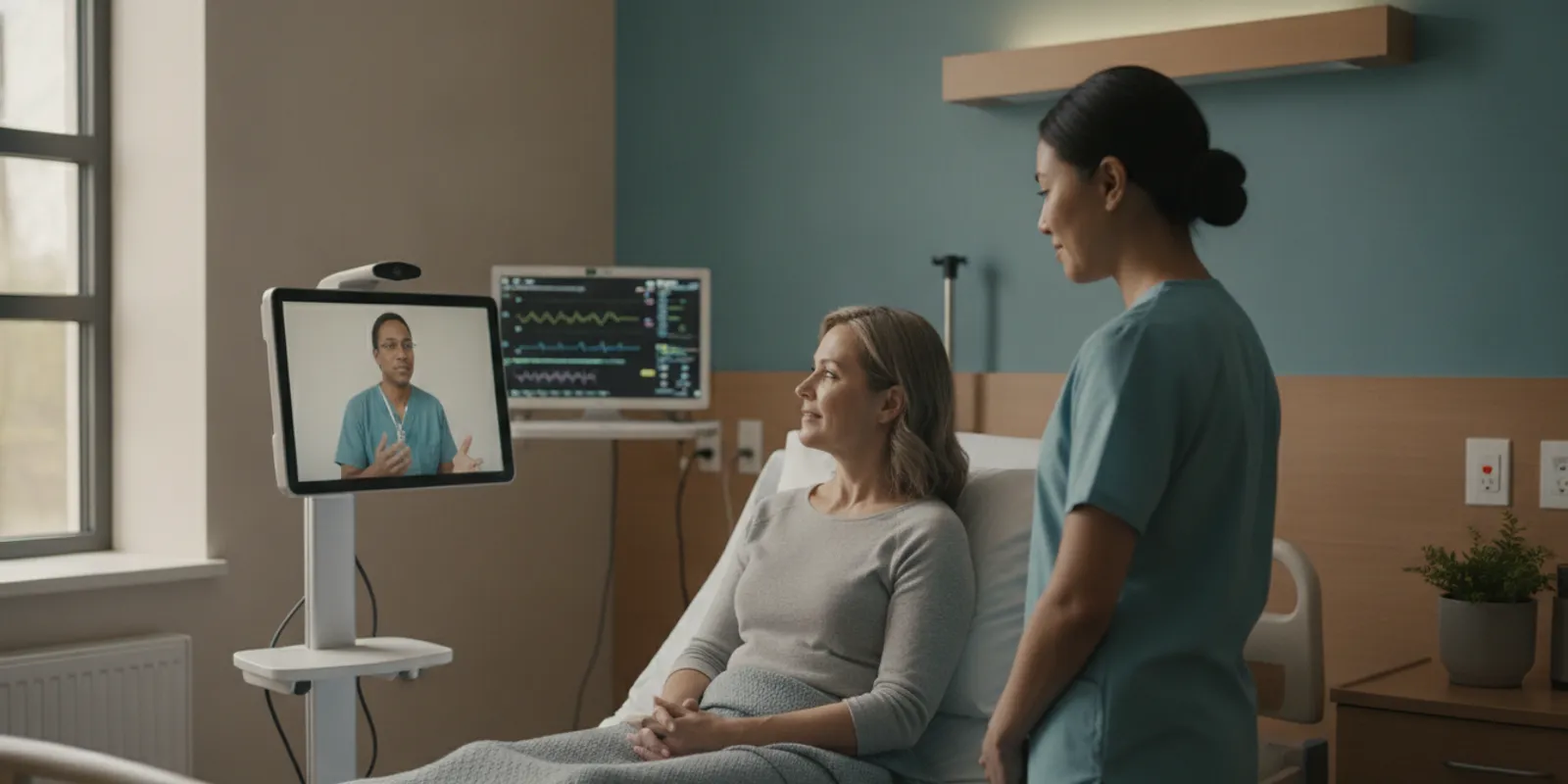
Telehealth implementation is more than choosing a platform or connecting a camera. Healthcare organizations need a defined use case, a reliable care workflow, prepared people, appropriate technology, and a way to assess whether the service works for patients and teams. For facility-based care, Dr. Temi's autonomous robotic telepresence can bring a remote physician to the bedside in under five minutes, 24 hours a day, without requiring staff to transport or position equipment. This guide offers a step-by-step roadmap for hospitals, rural facilities, skilled nursing, and long-term care organizations.
Telehealth implementation begins with a care problem, not a device
Start by describing the problem the organization needs to solve in operational terms. "We need telehealth" is not yet a plan. A useful problem statement names the people affected, the care moment involved, what happens today, and what a better process should make possible.
For example, a skilled nursing facility may want a clinician to assess a resident when a concern arises outside a routine visit. A rural hospital may need a practical way to connect a patient with a remote clinician when local access is limited. A hospital or health system may be evaluating virtual care as one element of a broader access or care coordination plan. Those are different use cases. They can require different participants, equipment, staffing, escalation paths, and measures of success.
Describe the current state before selecting a tool. Map how a request begins, who receives it, how a clinician is contacted, what information is gathered, and how the encounter is documented. Note where waiting, staff effort, travel, handoffs, or technology create friction. Ask the people who perform each step, not only the people who sponsor the project.
Then write a concise outcome statement. It should describe a change the team can observe, such as a more consistent process for initiating remote consultations, a clearer route to the right clinician, or less staff time spent coordinating a particular type of encounter. Avoid promising an outcome before the organization has established a baseline and tested its workflow.
What should leaders decide before selecting a telehealth model?
| Step | Key question | Primary owners | Readiness evidence |
|---|---|---|---|
| 1. Define the use case | What care problem, population, setting, and boundaries are in scope? | Clinical and operations leads | One-page pilot brief |
| 2. Align stakeholders | Who decides, who performs the work, and who handles escalation? | Executive sponsor and cross-functional team | Decision log and issue register |
| 3. Design the workflow | What happens before, during, and after the encounter? | Clinical operations and frontline staff | Workflow walkthrough completed |
| 4. Verify readiness | Can the network, devices, access controls, and integrations support the use case? | IT, security, and site team | Location-based test results and support route |
| 5. Prepare people | Can each role complete its real tasks and exceptions? | Managers, educators, and frontline staff | Scenario practice completed |
| 6. Pilot and measure | What baseline, process, experience, and outcome signals will guide the next decision? | Quality team and project lead | Review cadence and expansion criteria |
Telehealth is an umbrella for care and service activities delivered at a distance. The implementation team should specify what will happen during the planned encounter. Is the service a clinician-patient consultation, a specialist connection, a family visit, a follow-up, or a combination of services? Which decisions are appropriate for remote support, and which situations require in-person assessment or emergency response?
Be clear about the intended population and the setting. A workflow for an independent outpatient visit will not automatically fit a resident in long-term care. A hospital's virtual consultation may involve a bedside clinician, an interpreter, a specialist, and an electronic health record. A rural facility may have different connectivity and staffing conditions from a large campus. The model must fit the actual environment.
Define the boundary of the service. Document which concerns can be handled through the planned telehealth workflow, which need another clinical pathway, and who makes that determination. This is a clinical governance decision, not simply a technical setting. Local clinical leaders should align the workflow with organizational policies, professional responsibilities, applicable regulations, and the needs of the population served.
Consider whether the encounter needs a staff member to move or position equipment, whether the patient can operate the interface, and what assistance is available. In some settings, a staff-supported video visit may be sufficient. In others, leaders may explore autonomous robotic telepresence that can bring a remote clinician to the bedside without requiring staff to transport or position equipment. These are different operating models. Evaluate the work each one requires rather than treating all virtual-care tools as interchangeable.
Dr. Temi provides telemedicine solution designed for facility-based encounters. Organizations should still assess the fit of any model against their own care needs, staffing patterns, patient population, and governance requirements.
How can a cross-functional team make implementation decisions?
Telehealth implementation touches clinical practice, operations, technology, privacy, finance, and patient experience. Assign an accountable executive sponsor and a day-to-day project lead, then bring in representatives who understand the work across those areas. The exact team will vary, but a practical group often includes:
- Clinical leadership: Defines appropriate use, clinical oversight, escalation, and documentation expectations.
- Frontline staff and nursing: Describes current workflows, patient support needs, staffing realities, and safe handoffs.
- Operations: Coordinates scheduling, room or unit readiness, device availability, and cross-team responsibilities.
- IT and security: Reviews network needs, identity and access, integrations, support, and technical risk.
- Privacy, compliance, and legal reviewers: Assess relevant organizational policies and applicable requirements for the intended use.
- Finance and procurement: Reviews the full cost model, contracting, purchasing, and any applicable reimbursement assumptions.
- Patient or resident advocates: Brings forward accessibility, consent, communication, language, and dignity considerations.
- Measurement and quality staff: Helps establish definitions, baselines, data sources, and review cadence.
Give each role a clear decision right. Some questions are clinical and belong to clinical governance. Others concern technical architecture, contracting, or staffing. A written decision log helps the group track what has been agreed, what remains open, who owns the next action, and whether a decision needs formal approval.
Agree on a regular meeting cadence for the planning and pilot stages. Keep an issue register that captures the problem, impact, owner, due date, and resolution. This is especially useful when a workflow crosses departments. A small unresolved question about who answers a call can become a major adoption barrier if it is left until launch week.
Set criteria for moving from planning to a pilot, and from a pilot to expansion. These should include operational readiness, staff preparation, acceptable technical performance in the intended setting, a support route, and approval from the appropriate leaders. Do not let a calendar date substitute for readiness.
How should an organization choose its first use case?
A good first use case is important enough to matter but bounded enough to test. Starting with an entire organization, every unit, or multiple unrelated services makes it difficult to learn what is working. Select one population, one type of encounter, and a specific site or team where the process can be observed and improved.
Use a short scoring discussion to compare potential use cases. Consider the importance of the care need, how often the workflow occurs, whether the patient population can be supported safely, the readiness of the clinical team, and the availability of a suitable remote clinician. Also consider whether a pilot can collect the data needed to answer the project's questions.
Do not select a use case solely because it is technically easy. It should have a clear clinical owner and a plausible path to routine operations if the pilot is useful. At the same time, avoid trying to prove every potential benefit in the first phase. A narrow, well-defined question produces more interpretable learning.
Write a one-page pilot charter before configuring the service. Include the problem statement, target population, location, workflow boundaries, accountable leads, start and end dates, training plan, success measures, and decision criteria. Record assumptions that must be checked, such as who is available to respond, what equipment is needed, and which documentation process will be used.
Turn the use case into a testable implementation brief
Before approving a pilot, translate the broad care problem into a short brief that operational teams can use. State what initiates the encounter, what counts as a completed encounter, and what situations are outside scope. For instance, "support an appropriate remote clinical consultation when a participating resident has a non-emergency concern" still needs local definitions: which staff roles may request the consultation, how the request is prioritized, and what alternative route applies if the concern is urgent.
List the dependencies that must be true on the first day. These may include clinician coverage, an available device, reliable network access in a specific set of rooms, a trained staff member on each participating shift, and an agreed documentation location. Mark each dependency as confirmed, in progress, or unresolved, and name one owner. A dependency list prevents the team from mistaking general enthusiasm for operational readiness.
It is useful to separate assumptions from decisions. An assumption might be that evening staff can support a resident at the bedside; the team can validate it by shadowing that shift or testing the workflow. A decision might be that clinical leadership owns the inclusion criteria; that decision should be recorded and communicated. For each assumption, specify how and when it will be tested. If it proves false, decide in advance who can change the workflow or pause the pilot.
Also define the pilot's learning questions. These could include whether requests reach the appropriate clinician, whether a remote assessment can be completed with the available support, or whether documentation and follow-up fit existing routines. Rank the questions rather than trying to answer everything at once. A focused test lets the team distinguish a use-case problem from a training, technology, staffing, or workflow issue.
How do you design the care workflow around a telehealth encounter?
Map the encounter from beginning to end. Include what happens before the connection, during the visit, immediately after it, and if the connection fails. A workflow should identify accountable roles and handoffs, not just show the sequence of screens.
Before the encounter
Define how a need is identified and how a request is initiated. Specify who can request an encounter, what information is needed, and where the request is routed. Establish a clear method for locating the appropriate clinician and confirming availability. If the service has scheduled visits, explain how the schedule is created and communicated; if it responds to requests, clarify how requests are prioritized and acknowledged.
Decide how the patient or resident will be informed about the visit and what support is available. The process should account for communication preferences, language access, hearing or vision needs, cognitive or mobility needs, and whether an authorized representative or family member should be involved. Do not assume that every patient can navigate a screen or that a family member is always available.
Set the pre-visit checklist. Depending on the use case, it may cover identity confirmation, the patient's readiness, the location and privacy of the encounter, relevant clinical information, device and connection readiness, and any connected equipment required for the visit. The checklist should be concise enough to use in real work.
During the encounter
State who welcomes the patient, introduces participants, explains the remote format, and helps the patient communicate with the clinician. Clarify who remains physically present and what that person is expected to do. If an interpreter, family member, bedside clinician, or other participant may join, define how their role is introduced and how the clinician confirms the patient's preferences.
For an encounter involving connected vital-sign devices, specify which devices may be used, who prepares and operates them, how the results reach the clinician, and what happens if a reading is missing or inconsistent. The technology does not replace clinical judgment. Clinical staff should determine how information is interpreted and what action is appropriate.
When autonomous navigation or robotic telepresence is part of the model, describe how the robot is requested, how it reaches the intended location, what staff should do if the route is blocked, and how a person can pause or redirect the workflow when needed. Confirm that the physical space, patient needs, and facility procedures support the planned use. The robot should be treated as clinical support equipment, not as a substitute for an accountable care team.
After the encounter
Identify who records the encounter, where documentation belongs, and how the care team is notified of follow-up actions. Make a clear distinction between the remote clinician's responsibilities and the facility's responsibilities. Define how orders, recommendations, or unresolved issues are communicated and tracked according to organizational processes.
Close the loop with the person who initiated the request. The workflow should confirm that the encounter occurred, explain what to do next, and identify who owns any follow-up. If an encounter cannot be completed, record the reason and route the patient through an appropriate alternative. Avoid a process where a failed connection silently leaves a clinical request unresolved.
When the expected workflow does not work
Write a downtime and escalation plan before launch. It should cover an unavailable clinician, a connection failure, equipment or device problems, a patient who declines, a change in the patient's condition, and any situation that falls outside the service's defined scope. Include the contact path and the next responsible role. The plan should align with existing emergency and clinical escalation policies rather than create a competing pathway.
Test those exceptions through walkthroughs. Ask staff to describe what they would do if the device is not available, the patient cannot participate, the clinician is delayed, or the encounter needs to switch to another care route. A workflow that only works in ideal conditions is not ready for routine use.
What should patient consent and communication include?
Patient communication should explain the remote nature and purpose of the encounter in language the patient can understand. Follow the organization's processes for consent and documentation, and have clinical, privacy, and compliance leaders determine what applies to the specific service and jurisdiction. This guide is not legal advice and does not replace that review.
At a minimum, make sure the workflow provides a way to explain who is participating, why the visit is being offered, what technology will be used, and how the patient can ask questions or decline. Explain any limitations that matter to the encounter, including what to do if the connection is interrupted or the patient needs a different form of care. Provide information in an accessible manner and use qualified language support when needed under organizational policy.
Respect the patient's choice and privacy. Specify how the team will respond if the patient does not want a remote encounter, changes their mind, or wants another person to leave the room. Avoid treating access to technology as proof that a patient is comfortable with its use. Record preferences and decisions in the manner required by local policy.
For family or other participants, define how the care team confirms that their involvement is appropriate and wanted. A multi-participant session may support communication among a care team and family, but more participants do not automatically mean better communication. The clinician and organization should keep the patient's needs and preferences at the center.
How can teams assess network, devices, and integration readiness?
Technology readiness should be checked in the exact locations where care will occur. A successful demonstration in a conference room does not establish that the connection will work in a resident's room, a rural clinic, or a mobile care environment. Ask IT to assess coverage, signal quality, bandwidth, wireless access, dead zones, and the effect of doors, walls, elevators, and routine network use.
Test the entire path used in the encounter, not only whether a device can connect to Wi-Fi. Confirm that users can sign in, reach the right service, connect to a clinician, communicate clearly, and access required functions. Test at different times and in representative care areas. Include the people responsible for network operations and support in the test.
Inventory devices and dependencies. Identify which equipment is required, where it will be stored or charged, who checks it, how it is cleaned according to facility procedures, and who handles repair or replacement. For connected vital-sign devices, confirm compatibility for the intended setup, the operating steps, and how results are conveyed to the clinician. Do not assume an integration exists because a product brochure mentions connectivity; validate the specific system, configuration, and workflow.
Plan for identity and access. Determine who is authorized to initiate, join, or manage a session and how access is granted, changed, and removed. Review device management, authentication, permissions, session controls, and audit needs with the appropriate technical and privacy teams. Ensure that staff know how to report access issues or suspected incidents.
Map integrations and documentation. Identify the system of record, what information needs to be entered or transferred, who is responsible, and whether the proposed integration is available for the organization's configuration. A manual step may be acceptable in a pilot, but it should be visible, assigned, and assessed for burden and error risk.
Security and privacy review must be specific to the product, data flows, use case, and organizational environment. Ask vendors and internal teams for the documentation needed to evaluate their responsibilities and controls. Verify claims through the proper procurement and review process. Do not treat a general statement about security or a product feature as a substitute for the organization's own assessment.
Implementation literature also emphasizes planning across people, workflows, and organizational conditions. The CDC's telehealth implementation considerations provide planning resources for organizations developing telehealth programs. The AMA Telehealth Implementation Playbook, available through AHRQ's Integration Academy, is another resource for planning adoption of telehealth strategies: review the implementation playbook resource.
How should staff training prepare people for actual work?
Training is effective when it reflects the tasks people will perform. A single overview session rarely prepares every role. Separate the learning objectives for clinicians, nursing and support staff, operations, IT, and administrators. Keep role-specific instructions available at the point of work.
Clinicians may need to practice starting and conducting a remote encounter, communicating with the patient and on-site team, using any connected devices in scope, documenting appropriately, and responding to technical disruption. Staff who support the patient may need to practice preparing the room, explaining the visit, helping with the interface, respecting privacy, and escalating concerns. Technical support personnel need a route to diagnose and resolve common issues and to escalate problems they cannot solve.
Use hands-on practice in the actual care environment. Walk through the normal encounter and the exceptions. Include patients or representative users in usability checks when appropriate and approved. Ask trainees to demonstrate the steps rather than only confirm that they have seen them. Make room for questions about responsibilities, patient communication, and when the telehealth pathway should not be used.
Training materials should be brief, specific, and version-controlled. Include a quick-start checklist, troubleshooting steps, support contacts, and the escalation route. Make it clear how staff can report a recurring issue or suggest a workflow improvement. When the process changes, update the material and tell affected users what changed.
Plan for staff turnover, shift coverage, and new team members. A service can lose reliability if only a few champions know how it works. Identify trainers or local contacts, define how new staff are onboarded, and decide how competence or readiness will be documented according to organizational policy.
Adoption should be assessed through observation and feedback, not by counting training attendance alone. During the early weeks, ask whether staff know when and how to use the service, whether roles are clear, and whether the process adds avoidable work. Respond to what the team reports and distinguish a training need from a technical or workflow design problem.
Build a launch-readiness check that tests the whole service
Before the first live encounter, conduct a readiness review with the people who will use, support, and govern the service. Treat it as a practical go/no-go conversation, not a presentation of completed tasks. Each owner should be able to describe what is ready, what remains uncertain, and what fallback applies if a dependency fails. Keep the list short enough to review but specific enough to expose gaps.
- Clinical scope: The participating clinical leader has approved the intended use, inclusion and exclusion boundaries, urgent escalation route, and responsibility for follow-up.
- People and coverage: Roles are assigned for every participating shift, remote clinician coverage is understood, and staff know who handles an unanswered request.
- Patient communication: Staff have a clear explanation of the service, a way to document preferences according to policy, and an alternative pathway when the patient declines or cannot participate.
- Environment and equipment: The actual care locations have been tested; required devices are available, charged or connected, cleaned per local procedures, and assigned to an owner.
- Technical and privacy support: Users can access the service, the support contact is known, and privacy, security, and access reviews have been completed through the organization's process.
- Documentation and measurement: Staff know where to record the encounter, how follow-up is tracked, which pilot measures are collected, and who reviews exceptions.
Run at least one end-to-end simulation before opening the workflow to patients. Choose a realistic case and have participants perform every handoff, including the steps that are easy to overlook: confirming the correct location, introducing everyone present, conveying a device reading, recording the outcome, and notifying the person who made the request. Then run a failure scenario, such as a blocked route, an unavailable clinician, or a dropped connection. Ask each participant to explain the next action without prompting.
Record defects by severity and owner. A typographical issue in a quick guide may be fixed after the simulation; an unclear escalation route or unreliable connection in the care area may require postponing the pilot. Make the go-live decision jointly with the leaders accountable for clinical safety, operations, and technical readiness. Set a date for reassessment of unresolved lower-risk issues, rather than letting them disappear from view.
During the first days of use, keep the pilot deliberately small and maintain an easy feedback route. A brief check-in after each early encounter can surface confusing instructions, missing equipment, or unanticipated patient support needs. The team should know which changes can be made locally and which require clinical, privacy, or technical approval. Document changes so that all shifts work from the same version of the process.
Make the handoffs visible in a real-world example
Walk through one representative case from the perspective of each role. A nurse or facility staff member identifies a concern and submits a request using the agreed channel. The designated coordinator confirms that the request is in scope and routes it to the appropriate clinician. The patient is told what to expect, and the on-site person checks that the space and any required equipment are ready. The clinician conducts the encounter, communicates the plan, and records the appropriate information. Finally, the original requester receives confirmation and knows who owns any follow-up. This example is not a universal clinical protocol; each organization must define its own criteria, roles, and documentation rules.
At every handoff, ask what information must travel with the request and what acknowledgment proves that the next person has accepted responsibility. A request form that captures too little information may lead to repeated calls, while a form that asks for unnecessary detail can slow staff down. Test the minimum useful set with the people who initiate and receive requests. Decide where pending requests are visible, who checks them during a shift, and how an unanswered request is escalated. These practical details prevent responsibility from becoming unclear between teams.
Use the walkthrough to distinguish process failures from clinical decisions. If no clinician is available, the workflow should identify the established coverage or escalation route rather than asking frontline staff to improvise. If the patient prefers another format, the team should know how to offer an appropriate alternative. If technical access fails, staff should be able to preserve the original request and continue through the organization's downtime process. Recording the reason for a handoff or failed attempt helps the pilot team improve the design without assuming that a person or product caused the problem.
Keep a simple change log during the pilot: date, observed issue, affected step, decision, approver when needed, and the version of the quick guide that changed. Share a concise update with every participating shift. This makes local learning usable, helps leaders see repeated barriers, and reduces the chance that two units follow different instructions by accident.
What should a pilot measure?
Choose measures that answer the pilot's question. Establish a baseline before launch where feasible, define each measure precisely, and identify a reliable data source and owner. A small set of clear measures is more useful than a long dashboard of loosely defined counts.
Consider balancing measures alongside the hoped-for improvement. If a project seeks to make clinician access more timely, it should also watch workload, incomplete encounters, patient experience, and whether requests are being routed appropriately. No single measure captures the performance of a care service.
- Access and timeliness: Track requests received, requests completed, elapsed time using a defined start and end point, and the circumstances of delays or cancellations.
- Workflow reliability: Record successful connections, failed or interrupted encounters, repeat attempts, equipment availability, and reasons the intended process was not followed.
- Staff experience: Ask whether roles are clear, how much time key steps take, where extra work occurs, and what support is needed. Use a consistent method rather than relying only on informal impressions.
- Patient and resident experience: Gather feedback on understanding, comfort, communication, accessibility, and preferences, using an appropriate and respectful process.
- Clinical process: Assess whether documentation, follow-up, and escalation steps are completed as designed. Clinical leaders should define any clinical outcome measures appropriate to the use case.
- Utilization and capacity: Compare the planned service availability with actual use, and explain what factors affected use. Low utilization may indicate a workflow or awareness problem rather than a lack of need.
- Resource and cost considerations: Track staff time, equipment and support needs, connectivity or integration effort, and other costs relevant to the organization's evaluation.
Define data terms in writing. "Response time," for example, may mean the time from a request to acknowledgment, clinician connection, or completion. These are not interchangeable. Record which one is measured, how exceptions are handled, and whether the data comes from a system, manual log, or sample review.
Use a simple review cadence. During an initial pilot, a weekly operational check may surface issues that need rapid attention; the appropriate frequency depends on volume and local capacity. A periodic leadership review can assess whether the service remains aligned with its goals. Share results with the staff who use the service, not only with project sponsors.
Interpret results in context. A change observed during a pilot does not by itself establish that telehealth caused the change. Note changes in staffing, patient mix, demand, or other workflows that could influence the findings. The aim of early measurement is to support responsible decisions and improvement, not to overstate conclusions.
How can rural, hospital, and long-term care teams adapt the roadmap?
The implementation steps are similar across settings, but the operational details are not. Each organization should adapt the plan to its care environment rather than copy another facility's workflow without review.
Skilled nursing and long-term care
Map who notices a change in a resident's condition, who contacts the clinician, and what information is available at the time of the request. Account for shift changes, staff availability, resident communication needs, room privacy, and the role of family or representatives. Decide how the remote encounter relates to existing on-site services and escalation policies.
Test the physical workflow on the units where the service may be used. Consider whether staff need to accompany a resident, prepare a room, support connected devices, or coordinate with a clinician. If autonomous robotic telepresence is being evaluated, test navigation and access in the real environment and clarify how staff can assist when the route or room setup creates a barrier.
Rural and critical-access settings
Assess the quality and resilience of connectivity at the point of care, and identify a fallback process that fits local capacity. Confirm how remote clinicians are engaged and how coverage, scheduling, and escalation will work. Make sure the service is designed around the actual resources of the site, not an assumption that a large IT or support team is available.
Financial and reimbursement planning needs separate verification. A program or payment pathway may apply only when specific eligibility, documentation, and other requirements are met. Do not assume that a telehealth deployment qualifies, that reimbursement will cover all costs, or that rules remain unchanged. Have qualified finance, compliance, and billing staff review current requirements before relying on reimbursement in a business case. Facilities exploring this area can learn about the Rural Healthcare Access Program and assess their own eligibility with the appropriate team.
Hospitals and health systems
Clarify how the telehealth service fits with existing virtual care, clinical communications, identity management, documentation, and support systems. Identify which service line owns the workflow and how it coordinates across departments. A system-wide strategy may need common standards, but the first pilot should still be specific enough to evaluate.
Plan governance for expansion. Decide what must be standardized, what can vary by site, and who approves a local change. Document the operating model so a successful pilot can be reproduced without assuming that another unit has the same staffing, network conditions, or patient needs.
How should teams manage privacy, security, and clinical governance?
Bring privacy, security, clinical governance, and compliance reviewers into planning early. Waiting until a service is ready to launch can force rushed decisions about data flows, access, consent, documentation, or vendor responsibilities. The review should be tied to the specific use case and configuration.
Ask what information is created, viewed, transmitted, or stored during the workflow. Determine who can access it, for what purpose, and how access is managed. Review how sessions are initiated and ended, how users are authenticated, and what happens when a device is lost or a user leaves the organization. Confirm how the vendor's documented practices align with the organization's requirements rather than relying on a broad label.
Establish clinical accountability. The remote clinician's role, the on-site team's role, and the process for urgent concerns should be explicit. Define appropriate scope, escalation, supervision, and documentation with the relevant clinical leaders. If the service uses connected devices or supports an examination, confirm which functions are intended for the particular workflow and how results are interpreted.
For AI-enabled capabilities or other features that could raise medical-device or clinical-use questions, seek regulatory and legal review before making assumptions about authorization or intended use. Do not describe a feature as a substitute for clinical judgment or imply that every capability has the same regulatory status. The organization and vendor should confirm current, product-specific information through appropriate channels.
Maintain an issue and incident process. Staff should know how to report a privacy concern, access problem, unexpected system behavior, or patient safety issue. Define who triages each type of report, how quickly it is reviewed according to policy, and how lessons are fed back into training and workflow design.
What are common telehealth implementation mistakes?
- Starting with the product demonstration: A demonstration can help teams understand a tool, but it should follow a clear description of the care problem and intended workflow.
- Assuming the workflow is self-explanatory: Staff need explicit ownership for requests, patient preparation, connection support, documentation, and follow-up.
- Testing only in a convenient location: Network and navigation conditions can vary across units and rooms. Test where the service will actually be used.
- Leaving patient choice until launch: Consent, communication, accessibility, and alternatives should be designed into the process.
- Training only a small group: A few champions cannot reliably cover every shift, unit, or change in staffing. Build a repeatable onboarding plan.
- Measuring only volume: More sessions do not prove that the service is safe, useful, or operationally sustainable. Pair use with access, experience, workflow, and balancing measures.
- Making broad reimbursement assumptions: Eligibility and payment requirements must be checked for the actual service and current rules by qualified staff.
- Expanding before learning: Resolve material technical, operational, and governance issues in the pilot before replicating the workflow elsewhere.
A useful implementation plan makes assumptions visible. When a problem appears, determine whether the cause is the technology, the workflow, training, staffing, communications, or the use case itself. Avoid treating every issue as a user error. The purpose of a pilot is to learn how the complete service behaves in its intended environment.
How can a telehealth pilot move into routine operations?
At the end of the pilot, review the charter and compare the results with the decisions the team set out to make. Discuss performance with frontline users, clinicians, patients or residents where appropriate, and technical and operational owners. Document what worked, what did not, what changed during the pilot, and what remains uncertain.
Choose among three practical next steps: refine and retest, maintain the service at the pilot scope, or expand in a controlled way. A decision to stop or redesign can be responsible if the use case is not appropriate or the barriers cannot be resolved. A decision to expand should include named owners, support capacity, training coverage, a sustainable budget, and a plan to keep measuring performance.
Before routine operations, assign long-term ownership for each part of the service. This includes clinical oversight, user access, equipment and connectivity, vendor coordination, training, issue management, reporting, and periodic review. Define how the workflow will change when policies, staffing, technology, or clinical needs change.
Expansion should proceed in manageable stages. Add locations or encounter types only after confirming that the existing model is stable and that each new setting has been assessed. Preserve local feedback channels and compare results carefully. A workflow that works in one facility may need adaptation elsewhere.
Ready to discuss a practical telehealth implementation path? Book a Demo with Dr. Temi.
Frequently asked questions
How long does telehealth implementation take?
There is no single timeline that fits every organization. Timing depends on the use case, clinical approvals, procurement, technical integration, network readiness, training, and the number of locations involved. A bounded pilot with assigned owners and clear readiness criteria can help the organization identify the work and sequence it realistically.
What is the first step in a telehealth implementation plan?
Define the care or operational problem and the population affected. Then map the current workflow, name the desired change, and confirm who owns the clinical and operational decisions. Selecting technology before those steps can lead to a service that does not fit day-to-day work.
Does telehealth implementation require new staff?
Not necessarily, but it does require clearly assigned responsibilities. The organization should determine who initiates visits, supports patients, manages equipment, handles technical issues, documents care, and coordinates follow-up. Assess workload during a pilot before concluding that existing capacity is sufficient.
Can a telehealth pilot establish clinical or financial results?
A pilot can help an organization evaluate defined measures, but the findings depend on the quality of the baseline, data, implementation, and context. A short pilot may not establish long-term clinical outcomes or financial performance. Leaders should avoid guarantees and interpret results alongside changes in staffing, demand, and other factors.
How is autonomous robotic telepresence different from a standard video visit?
A standard video visit generally connects people through a camera and screen. Autonomous robotic telepresence can add a mobile, self-navigating platform that brings a remote clinician to a patient at the bedside. The operational implications depend on the particular product and workflow; teams should assess navigation, staff roles, connected equipment, patient experience, and clinical governance as part of implementation.
Build a telehealth implementation plan your team can use
A dependable telehealth service starts with a specific care need and a workflow people can follow. Align clinical and operational owners, prepare the environment and staff, review privacy and security, test exceptions, and measure both intended results and unintended burdens. Use what the pilot teaches to decide whether to refine, maintain, or expand the service.
Dr. Temi helps healthcare organizations explore autonomous robotic telepresence as one approach to extending remote clinical access in facility-based care. A conversation can help your team examine the use case, setting, and implementation questions that matter before deciding on next steps.