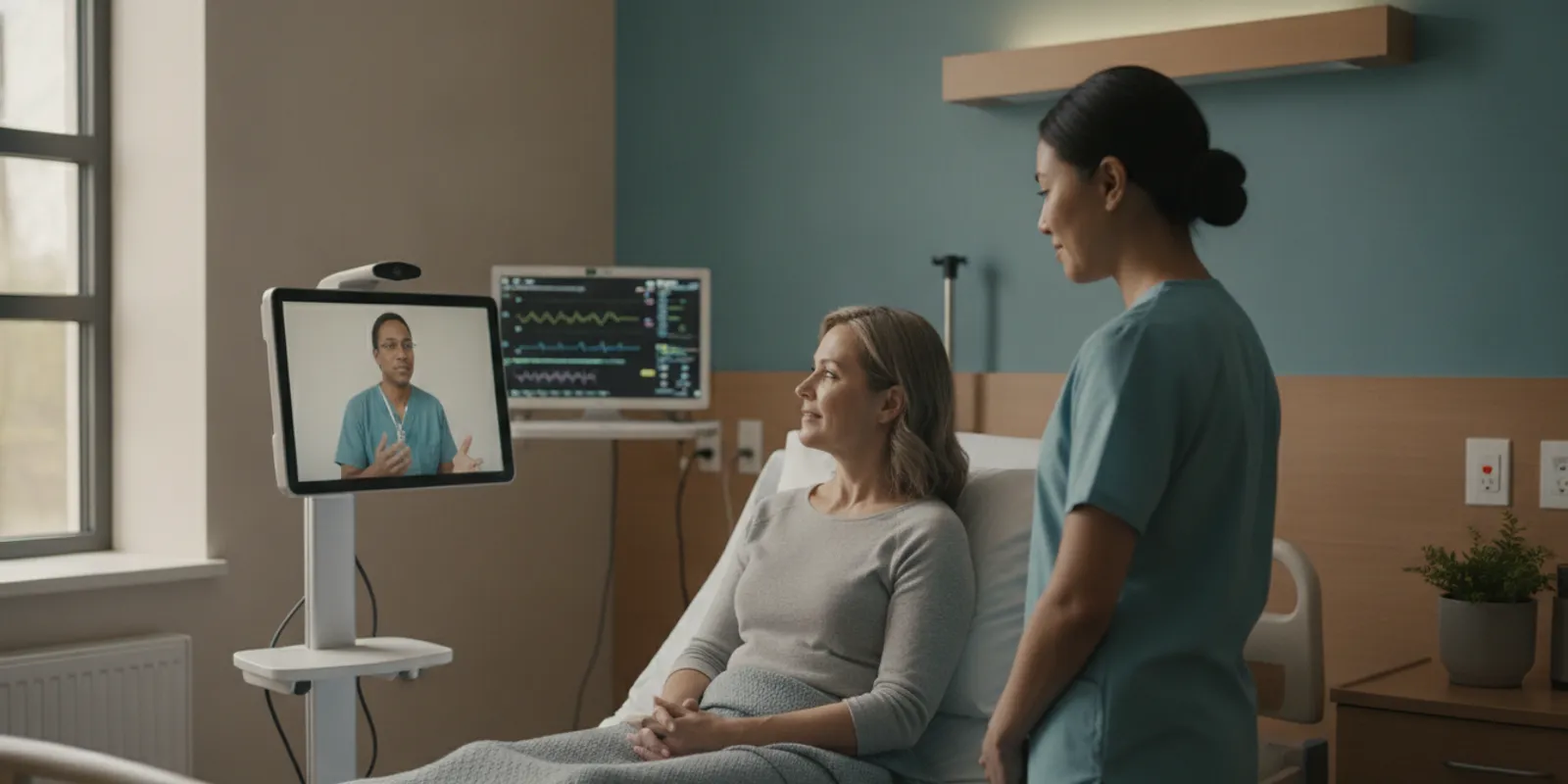
How Hospitals Can Evaluate Nephrology Telemedicine Partners Across Multiple Sites

Choosing nephrology telemedicine partners for multi-site hospital networks means evaluating more than a video platform or a specialist roster. Leaders need to understand who provides clinical coverage, how referrals and follow-up work at each location, and whether the technology fits local workflows. This guide outlines a practical way to compare partners without assuming every site has the same needs.
What should a multi-site nephrology telemedicine partner provide?
Start by defining the service you are buying. “Nephrology telemedicine” can refer to different arrangements: remote specialist consultations, scheduled follow-up, inpatient consult support, chronic-care coordination, or technology that helps a clinician conduct an encounter with a patient at a distant bedside. A partner may provide one part of this model or several. Do not assume that a technology vendor also supplies nephrologists, clinical protocols, or after-hours coverage.
Write down the intended service before comparing proposals. Specify the patient groups and settings, referral triggers, clinician responsibilities, hours of coverage, and what happens when a remote encounter is not appropriate. Then test each partner’s proposal against that scope.
- Clinical coverage: Who employs or contracts with the nephrologists? Which clinicians can receive referrals, and when?
- Care settings: Which sites and visit types are included, such as inpatient, outpatient, skilled nursing, or rural locations?
- Technology: Is the partner providing video software, connected devices, a bedside workflow, or an integrated service?
- Coordination: Who handles scheduling, records, results, escalation, and communication with the local care team?
- Measurement: What evidence will show that the arrangement is workable and useful at each site?
Keep the boundary between clinical services and technology explicit. For example, Dr. Temi describes its platform as autonomous robotic telepresence for remote clinical encounters. Its robot can navigate to a bedside and support a remote clinician’s interaction with staff and a patient. That does not, by itself, establish nephrology staffing, specialty coverage, or a nephrology-specific care program. Health systems should confirm those elements separately with any proposed partner.
Review the Dr. Temi solutions overview and the Dr. Temi platform to understand the technology’s role within a broader care model.
How should leaders map needs across multiple sites?
A network-wide contract can hide important differences among facilities. Before issuing a request for information or evaluating a demonstration, make a short site profile for every location likely to participate. Avoid treating the largest hospital as a stand-in for the entire network.
Describe each site’s current nephrology pathway
Map how a patient currently reaches a nephrologist, from the initial request through consultation, documentation, recommendations, and follow-up. Note where the process differs by site. One hospital may have on-site specialty coverage, while another may rely on referrals or transfers. Record the handoffs and wait points rather than relying on broad statements such as “access is limited.”
Identify the intended use cases and exclusions
For each use case, define who can initiate a remote consultation, which information must be available, who is present with the patient, and what conditions require in-person assessment or another escalation route. The clinical leadership team should own these boundaries. A partner should explain how its model follows the organization’s approved clinical governance, not invent local standards on its behalf.
Assess readiness and variation
Compare staffing, room availability, connectivity, device access, patient support, and local scheduling capacity. Ask whether a site has a reliable person who can help prepare the patient or connect equipment during a visit. A remote-care model still depends on clear local roles. A bedside system may reduce the need to move or position certain equipment, but it does not make local staff unnecessary.
Turn the site profile into a practical worksheet. Include the site’s current referral source, typical request pathway, available staff roles, records access, connectivity constraints, and existing escalation contacts. Identify which statements are documented and which are assumptions that need validation. For example, “the emergency department can support a remote encounter” is not a complete readiness finding. Confirm who receives the request during each shift, whether a suitable space and connection are available, and how the encounter is documented.
Group sites by workflow rather than geography alone. Two hospitals in the same region may have different coverage arrangements, while a rural hospital and a skilled nursing location may share similar connectivity or staffing constraints. A useful profile makes both common needs and local exceptions visible. That gives procurement a clearer scope and gives implementation teams a manageable list of issues to resolve before launch.
Use the About Dr. Temi page for company context, then assess the actual capabilities and workflow fit during a demonstration rather than assuming all sites will use the platform in the same way.
Which partner capabilities should the evaluation cover?
Use a consistent scorecard for each proposal. Ask vendors to describe the same scenarios and provide the same types of evidence. Separate capabilities that are essential from those that are helpful but optional.
| Evaluation area | Questions to ask | What to verify across sites |
|---|---|---|
| Specialist coverage | Who provides nephrology clinicians, what hours are covered, and how are absences handled? | Coverage by time zone, site, visit type, and escalation level. |
| Clinical workflow | How are referrals triaged, visits scheduled, and recommendations communicated? | Local responsibilities, handoffs, documentation, and follow-up steps. |
| Patient and staff experience | How does a patient join the visit, and what assistance is expected at the bedside? | Accessibility, language support, staff preparation, and patient preferences. |
| Technology and devices | What hardware, connectivity, and clinical devices are supported? | Compatibility, room setup, technical support, and backup processes. |
| Records and security | How are notes and relevant information made available and documented? | Integration scope, access controls, privacy practices, and responsibilities. |
| Implementation and support | Who trains users, resolves issues, and manages changes? | Named roles, response paths, training needs, and site-by-site readiness. |
| Performance review | Which operational and clinical measures will be reviewed? | Comparable definitions, baseline data, and reporting cadence. |
Do not accept a feature list as proof of operational fit. Ask the partner to walk through a realistic case from referral to follow-up, including a technical interruption or a patient who needs an in-person assessment. Clarify what the partner handles, what the health system handles, and how responsibility is documented.
Before scoring, decide what each rating means. A simple scale can separate a capability that is available and demonstrated in the proposed configuration from one that is planned, requires a separate contract, or has not been confirmed. Record the evidence beside the score. A high score based only on a sales presentation should not carry the same weight as a workflow demonstration, written coverage schedule, or implementation plan.
Weight the criteria to reflect the clinical and operational priorities the network has approved. For one organization, reliable after-hours specialty access may be essential. Another may first need a consistent way to conduct remote bedside encounters at facilities with limited on-site resources. Do not let a large number of low-priority features compensate for a gap in a required capability. Set minimum thresholds for essential areas, then compare the remaining strengths across partners.
Include a column for unresolved questions and an owner for each follow-up. This small step prevents an ambiguous response from turning into an assumption during contracting. It also gives executives a concise view of what is known, what remains open, and what would need to change before launch.
How should clinical coverage and workflows be compared?
Clinical coverage is often the most consequential difference between proposals. A platform that enables a remote encounter is not the same as a staffed specialty service. Ask the partner to put its operating model in writing: coverage hours, clinician qualifications relevant to the proposed service, response expectations, scheduling method, and responsibility for continuity.
Then map the workflow with representatives from nephrology, nursing, operations, IT, privacy, and site leadership. At a minimum, define:
- Referral and triage: Who submits a request, what information accompanies it, and who determines whether remote consultation is suitable?
- Preparation: Who confirms the patient’s availability, gathers relevant records, and prepares any supported equipment?
- Encounter: Who is with the patient, how does the clinician communicate with the local team, and how are examination needs supported?
- Documentation: Where is the note entered, who receives the recommendations, and how is completion tracked?
- Escalation and follow-up: Who acts on urgent concerns, arranges in-person evaluation when needed, and closes the loop?
Run a tabletop exercise for more than one type of site. Include a hospital with established specialty services and a location where access or local support differs. A workflow that relies on an informal workaround at one site may not scale safely across the network.
Make the exercise concrete. Walk through an ordinary scheduled consultation, then a request that arrives outside the planned coverage window. Ask the team to identify the person who sees each request, the information they need, and the point at which a clinician accepts responsibility. Then introduce a missed connection or incomplete record. The group should know whether to reschedule, use a backup channel, route the patient to an in-person evaluation, or follow another locally approved process.
Consider continuity as well as the individual visit. If a remote clinician makes a recommendation, who confirms that the local team received it? Who tracks a test or follow-up action that remains open after the encounter? A complete workflow includes the closeout step, not only the consultation itself. Define how the covering team can find the record when responsibilities shift between units or across weekends.
Finally, distinguish a protocol from a preference. If a site wants to use a different scheduling tool or request form, determine whether that variation changes triage, documentation, or clinical accountability. Preserve local flexibility where it is safe and useful, but keep the core rules clear enough that staff can follow them during a busy shift.
How can the technology fit the bedside encounter?
Technology should support the agreed care model, not define it. During a demonstration, observe how the remote clinician sees and communicates with the patient, how staff participate, and what devices or records are available. Ask what is integrated today, what requires manual steps, and what would depend on future configuration.
For a robotic telepresence option, ask specifically how the unit reaches the bedside, how it is positioned, which connected clinical devices are supported, and what staff assistance remains part of the visit. Dr. Temi describes autonomous navigation and support for a remote clinical encounter. Its product information also identifies an ICU-grade patient monitor and digital stethoscope among the relevant capabilities. Buyers should verify the exact configuration, intended use, and workflow available to their organization rather than assume every component is included or appropriate for every nephrology use case.
Evaluate reliability and fallback procedures as carefully as the demonstration itself. What happens if wireless connectivity drops, a device is unavailable, or the robot cannot reach a room? Who responds, and can the care team complete the encounter another way? Confirm technical support hours, maintenance responsibilities, training, and how changes are communicated across the network.
Use a short, repeatable demonstration script instead of an open-ended product tour. Ask each partner to show how a clinician joins, how a bedside participant can be heard, how the local care team contributes, and how the encounter ends. If clinical devices are part of the proposed workflow, ask how they are connected and how information becomes available to the clinician. Then test a realistic failure point, such as a room that is not available or a connection that needs to be restored.
Observe the amount of staff work as well as the screen experience. Record each task required before, during, and after a visit. For instance, note whether staff must locate equipment, move it into position, sign into multiple systems, or manually relay information. These steps may be acceptable, but the network should understand them and plan for them. A demonstration that works only with a specialist operator present may not represent normal conditions at every facility.
Ask for a configuration-specific description of network, device, and support requirements. Separate what is standard from what would require additional setup or a local purchase. Have IT and facility teams review room access, wireless coverage, charging or storage needs, and service responsibilities before sites are selected. The goal is not to eliminate all local variation; it is to know which differences affect the encounter and how each will be handled.
What should leaders verify about records, privacy, and governance?
Bring privacy, security, compliance, and clinical governance teams into the review early. Ask for documentation that matches the proposed configuration and workflow. Do not rely on broad assurances; determine which party owns each responsibility and how that responsibility is operationalized at each location.
- How does the partner control user access and handle authentication?
- What information is transmitted, stored, or recorded, and for how long?
- How do notes, recommendations, and relevant data become part of the appropriate record?
- Which integrations are available now, and which require separate implementation?
- Who responds to privacy or security incidents and technical service issues?
- What training and local approvals are required before a site begins?
Dr. Temi states that its live video is encrypted, access is credentialed, and calls are not recorded or retrievable. Health systems should review current technical and contractual documentation directly and confirm how those statements apply to the configuration under consideration. For a broader look at its telemedicine capabilities, visit the telemedicine solution page.
Convert each review into a specific governance question. For records, identify who enters the note and which system is the official record. For privacy, confirm which users may initiate or join a session and how access changes when staff roles change. For security, ask which technical documents describe the configuration under review and who receives an incident report. For clinical oversight, identify who approves the use cases, escalation rules, and changes to the workflow.
Keep a responsibility matrix with a named organizational owner for every shared task. A vendor may operate a platform, but the health system still needs to define local clinical governance, staff permissions, record-handling procedures, and escalation pathways. A matrix can show whether a task belongs to the partner, central operations, a site team, or a shared group. It should also state how unresolved issues are elevated before a site goes live.
How should a network pilot be designed?
A pilot should answer specific questions, not simply demonstrate that a call can connect. Select sites that represent meaningful differences in staffing, workflow, and technical readiness. Set a baseline and define measures before launch so the team can distinguish a genuine improvement from a change in reporting.
Useful pilot measures may include referral-to-visit time, completed versus scheduled encounters, technical interruptions, staff time required to support visits, completion of documentation and follow-up, and patient and clinician feedback. Choose measures that fit the use case and can be collected consistently. Do not assume a result from one location will transfer unchanged to every facility.
A published study on telemedicine in nephrology examined feasibility and patient acceptance at a public hospital. It is one example of why an evaluation should consider both whether a service can operate and whether patients accept the experience; it does not establish that a specific model will work in every network. See the study on utility and patient acceptance of telemedicine in nephrology.
Agree on decision thresholds and review dates in advance. At the end of the pilot, the steering group should decide whether to expand, adapt, repeat, or stop. Document what must change before adding sites, including training, integration, staffing, and local workflow adjustments.
A staged pilot makes those decisions easier to manage:
- Choose representative sites. Include at least one location with a mature specialty workflow and one with a meaningful operational difference. Record why each site was selected.
- Establish the baseline. Agree on how the organization currently records referral timing, completion, technical problems, and follow-up. Keep definitions consistent across participating sites.
- Test readiness before the first encounter. Confirm assigned roles, access, training, connectivity, documentation, escalation contacts, and the fallback process. Resolve critical gaps rather than counting on staff to improvise.
- Review early experience. Hold short check-ins with local users and the clinical lead. Capture issues while details are fresh, and assign an owner and due date to each corrective action.
- Make a documented decision. Compare observed results with pre-agreed criteria. State what is ready to scale, what needs adaptation, and what evidence is still missing.
Keep measures balanced. Operational indicators can show whether the pathway functions; patient and staff feedback can reveal friction that counts alone may miss. Where relevant, define how the team will record a visit that was scheduled but not completed, or one that required a different care route. Without shared definitions, sites may report superficially comparable numbers that describe different events.
Do not treat a pilot as a substitute for clinical approval or contracting review. The pilot should run within an approved scope, with clear oversight and a stated process for concerns. If the service or technology configuration changes during the test, document the change and consider whether results from earlier weeks remain comparable.
How should leaders plan implementation and contract review?
Before signing or expanding an agreement, translate the evaluation into operational commitments. The proposal, contract, and implementation plan should describe the same scope. If the partner is providing technology but not nephrologists, say so plainly. If coverage is limited to certain hours, locations, or visit types, list those boundaries. Do not leave critical service details in a demonstration deck or informal conversation.
Ask each partner to identify prerequisites and dependencies. These may include local approvals, user accounts, network access, staff training, device configuration, records workflows, or a defined contact for technical support. For every dependency, record the responsible party and the date it must be complete. A timeline that omits health-system tasks may look faster than the actual implementation will be.
Plan the rollout in waves when sites differ materially. Start with facilities that can test the core workflow and provide useful feedback, then add locations after the first group has addressed practical issues. For each wave, define entry criteria, training completion, support coverage, and the person who can pause the launch if a required safeguard is missing. A shared calendar and issue log help central teams see patterns across locations rather than treating each incident as isolated.
Clarify change management as well. Ask how users will hear about software or workflow changes, how updated instructions are distributed, and who approves a change that affects clinical operations. Decide how performance reviews will occur after the pilot ends. A partner comparison is more useful when it covers the full operating relationship, not only the purchasing decision.
For company background and the platform’s broader purpose, leaders can review Dr. Temi’s website; procurement teams should still validate the specific commercial, technical, and service terms proposed for their organization.
What questions should buyers ask during a partner review?
Use these questions in a proposal review or demonstration:
- Which parts of the arrangement are clinical services, which are technology, and which remain the health system’s responsibility?
- Can you show the end-to-end workflow for each proposed use case, including referral, documentation, escalation, and follow-up?
- What coverage is actually included, and how are schedules, absences, and after-hours requests managed?
- What site prerequisites, staff roles, devices, connectivity, and training are required?
- Which integrations are available in the proposed configuration, and what requires additional work?
- How will the partner report operational performance and support a multi-site review?
- What implementation support is available at each location, and how are issues escalated?
- What assumptions, exclusions, or additional costs should be understood before contract approval?
Document answers in a shared scorecard. If a response is unclear, mark it as unresolved rather than treating it as a commitment. Ask for the relevant operating detail in writing before procurement advances.
To discuss how autonomous robotic telepresence may support remote bedside encounters as part of a broader care model, contact Dr. Temi. You can also review the Rural Healthcare Access Program if your organization is assessing that program; eligibility and applicable terms must be confirmed for each facility.
Frequently asked questions
Does a telemedicine technology partner provide nephrologists?
Not necessarily. Some organizations provide clinical coverage, while others provide technology or implementation support. Confirm who employs or contracts with clinicians, what services are included, and which responsibilities stay with the health system.
Should every hospital in a network use the same workflow?
Use shared clinical and governance standards where appropriate, but validate local workflows at each site. Differences in staffing, connectivity, patient populations, and existing specialty access may require site-specific procedures.
What is the difference between a telehealth platform and robotic telepresence?
A telehealth platform may connect clinicians and patients through software or standard video equipment. Robotic telepresence adds a mobile unit that can navigate to a bedside and support a remote encounter. Neither description alone tells you whether specialty clinicians, coverage, or a complete care pathway are included.
What should a pilot prove before expansion?
It should test the agreed clinical workflow, technical reliability, site readiness, staff responsibilities, and selected operational and experience measures. The steering group should review results against pre-set criteria before adding locations.
How can a network compare partners fairly?
Give each partner the same scope, scenarios, and evidence requests. Use shared rating definitions, score essential capabilities separately from optional features, and record unresolved questions with an owner. This makes differences easier to review and helps prevent assumptions from becoming contract expectations.
A disciplined, site-by-site evaluation helps health systems choose a nephrology telemedicine arrangement that matches their clinical scope and operating realities, while making clear where technology ends and clinical responsibility begins.