How to Optimize Nursing Workflows in Senior Care
In senior care, a shift rarely breaks down because one person forgot one task. Friction usually accumulates across routine rounds, unanswered escalation questions, physician access, transport, documentation, and handoffs. A strong workflow makes each transition visible: what needs attention, who owns the next action, and when the team must reassess.
Book a Demo to discuss practical ways to support bedside physician access and nursing workflow coordination.
To understand how to optimize nursing workflows in senior care, map the full path from resident observation to clinical decision, action, documentation, and handoff. Then remove avoidable movement, define escalation triggers, assign clear ownership, and review whether information reaches the next caregiver in time.
Nursing homes are a critical part of the long-term care continuum, and workforce factors influence quality, as the CDC-hosted research summary notes. The practical starting point is a workflow that supports nurses' judgment while making reliable care coordination easier to see and repeat.
What an Efficient Senior-Care Nursing Workflow Should Accomplish
An efficient workflow gives each resident the right attention at the right point in the shift, while making ownership visible to the whole care team. It should help nurses move from observation to assessment, action, escalation, documentation, and follow-up without unnecessary handoffs or repeated work.
That standard matters across senior care settings because nursing homes are a critical part of the long-term care continuum. The CDC-hosted summary also notes that nursing-home quality depends on several workforce factors. Which means workflow design should support staff judgment and coordination rather than treat efficiency as simply doing more tasks faster. Learn more from the CDC-hosted research summary.
Separate process friction from clinical complexity
Not every delay is a process defect. A resident with changing symptoms may require careful assessment, consultation, monitoring, and a decision that cannot be rushed. Clinical complexity calls for time and judgment. Process friction is different: searching for information, clarifying who owns an escalation, waiting for a routine response. Walking between locations to coordinate care, or documenting the same update in multiple places.
Ask a practical question during workflow reviews: did the resident's needs require this step, or did the system make the team take it? The answer can reveal improvements without weakening clinical safeguards. For example, a team may preserve the same assessment standard while creating a clearer trigger for escalation and a named owner for the next action.
Set a baseline before changing the process
Start with one common workflow, such as a change in condition, a routine round, or a physician escalation. Map the sequence from trigger to resolution. Record where information is captured, where responsibility changes, which steps are repeated, and how long the resident waits for the next decision. Review a small sample with nurses, aides, and clinical leaders, and separate required clinical steps from avoidable motion.
A useful baseline is specific enough to compare later: completion of scheduled rounds, time from concern to escalation, unresolved actions at handoff, and documentation rework. Improve one friction point at a time, then check that the change makes work clearer without compromising resident assessment or nurse judgment.
How Do You Prioritize as a Nurse During a Busy Shift?
When several needs compete for attention, prioritization should make the next safest action clear without turning the shift into a rigid script. Use the resident's current condition, the care plan, facility policy, scope of practice, and clinical judgment together. The following sequence can help a senior-care team organize work while leaving room to respond to changing conditions.
A practical order for competing demands
- Address immediate risk first. Respond to changes that may indicate an urgent threat to safety or a resident's condition. Follow facility protocols, assess within your role, and obtain help or emergency support when policy and clinical judgment require it. Do not delay a time-critical response to complete routine tasks.
- Complete time-sensitive care. Next, handle medications, treatments, assessments, transfers, nutrition, or other care activities that have a defined window or depend on another clinician, department, or caregiver. Confirm what is due, what can safely move, and what needs reassignment.
- Escalate with a clear owner. If a resident needs a provider's input, communicate the relevant change, assessment findings, actions already taken, and specific question through the approved chain. Make ownership explicit: who is contacting the provider, who is monitoring the resident, and when the team will reassess. A remote physician workflow may support bedside collaboration, but it does not replace nursing assessment or clinical decision-making.
- Complete planned rounds. Once immediate and time-sensitive needs are covered, return to scheduled rounds and proactive checks. Group related tasks when appropriate to reduce avoidable movement, while still following required observation and care intervals.
- Document the care that matters. Record assessments, interventions, changes, communication, and follow-up according to facility requirements. Capture necessary information without duplicating entries across disconnected notes. Documentation should help the next clinician understand what happened and what remains open.
- Close with a deliberate handoff. Before the shift ends, identify unresolved needs, pending results, monitoring instructions, and escalation status. A handoff transfers responsibility by updating another provider on patient status, and it can occur at shift change or when a resident moves between departments. Use the facility's approved handoff method, confirm the receiving person's understanding, and name the next action. The AHRQ handoff primer provides additional context on this transition.
Reprioritize as conditions change
Priorities are not fixed for the entire shift. Reassess when a resident's condition changes, a planned task is delayed, or new information arrives. A brief team check can prevent an important action from remaining ownerless and helps the next decision reflect the resident's current needs rather than the original schedule.
Build a Reliable Rounding and Escalation Workflow
Rounding is most useful when it creates a shared picture of resident needs and a clear next action. A practical workflow starts before the round, not when a concern becomes urgent. Review scheduled visits, recent changes, pending orders, known risks, and residents who may need physician input. Assign who will lead each interaction, who will gather observations, and who will document the outcome.
Set the trigger before the concern grows
Use consistent observation points for every round, while allowing the nurse to apply clinical judgment. Depending on the resident and facility protocol, the team may watch for a change in symptoms, vital signs, behavior, intake, mobility, or response to an intervention. The trigger should answer a practical question: what finding requires routine follow-up, same-shift review, or immediate escalation?
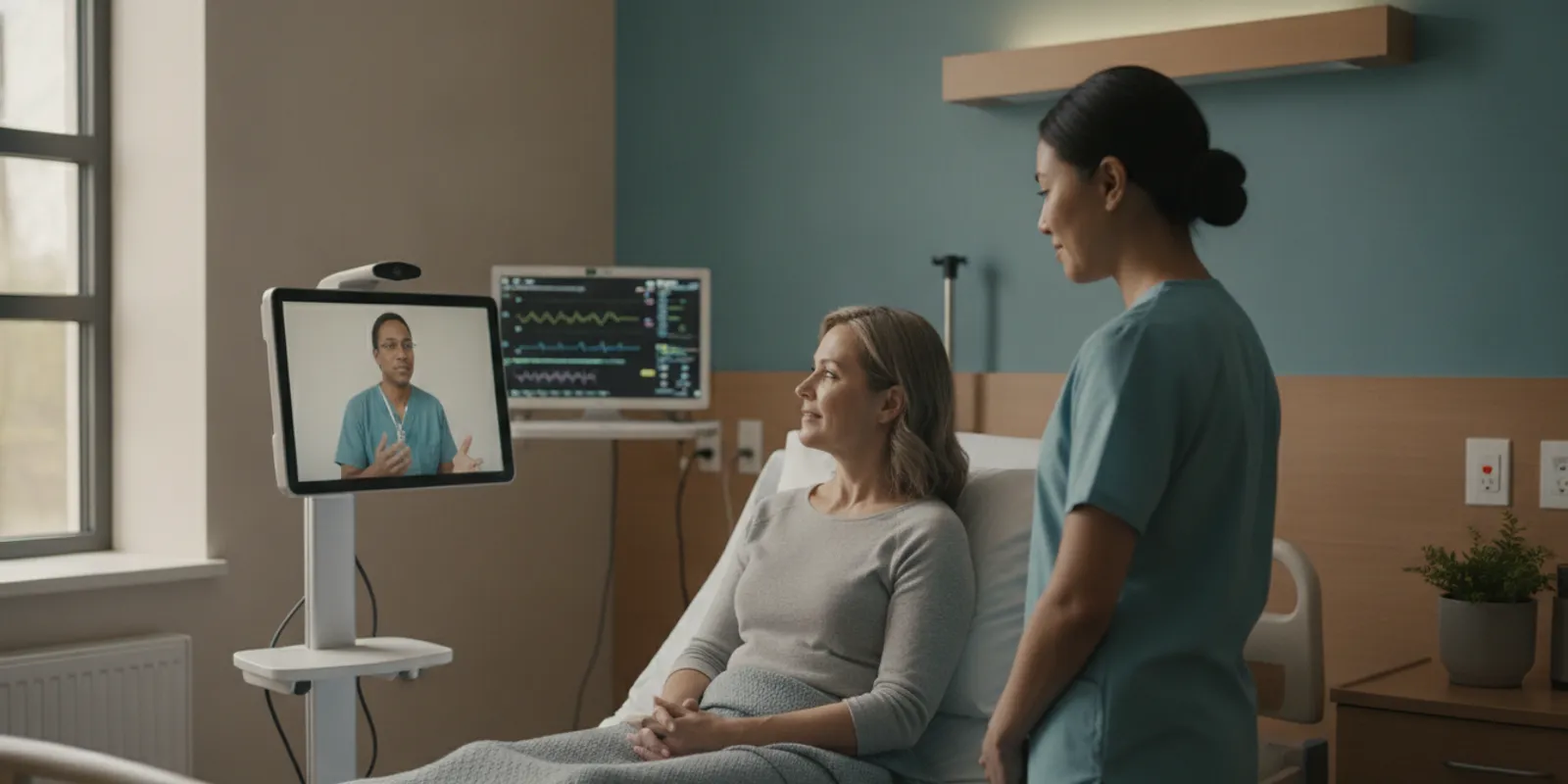
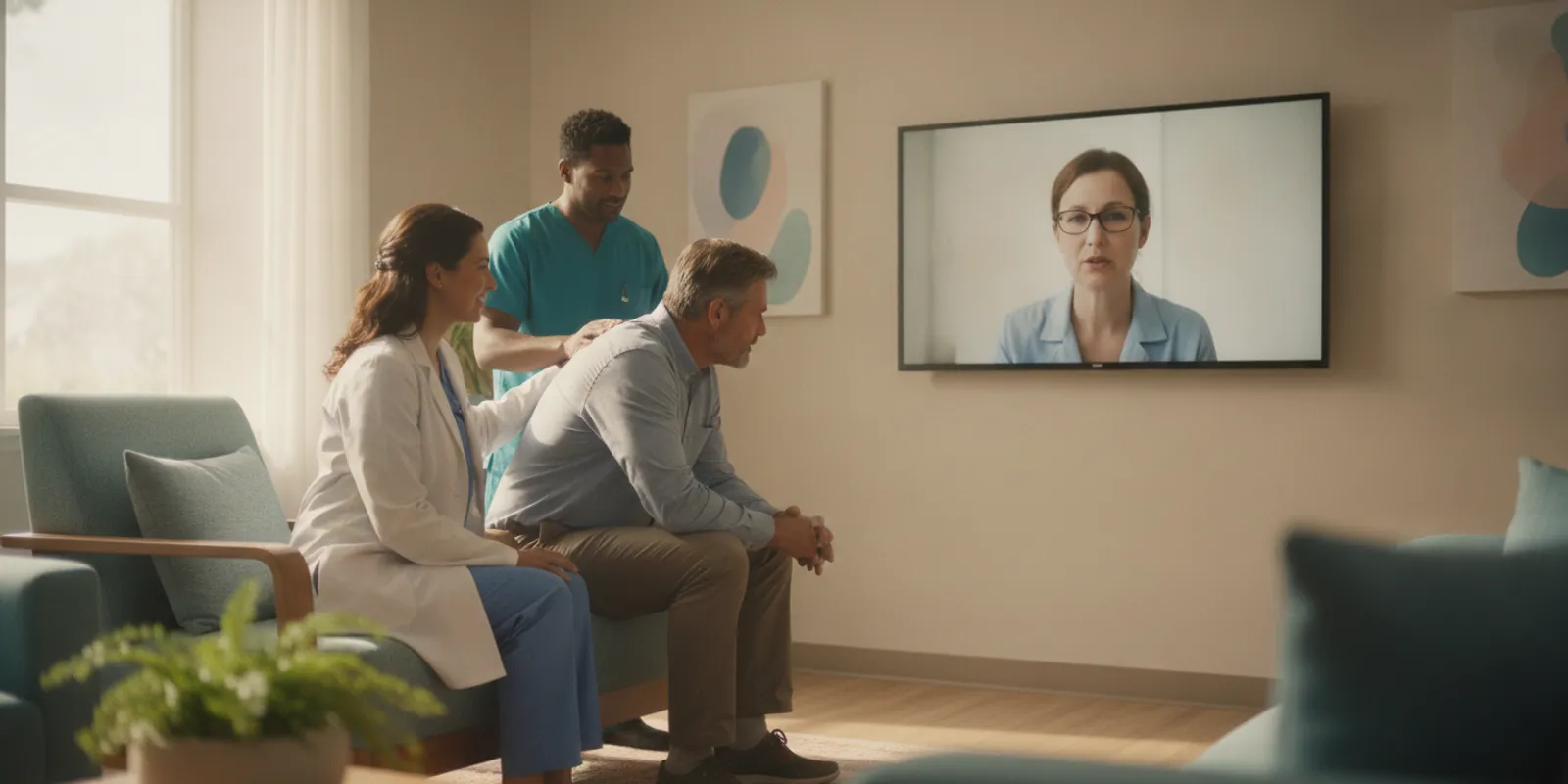
When physician input is needed, the on-site nurse remains central to the encounter. In the workflow described by Dr. Temi, a remote physician consults and reviews live vital signs while on-site nurses assist with hands-on examination under physician guidance. The platform supports two-way coordination between the remote physician and nursing staff. It does not independently make clinical decisions. A nursing assistance solution should strengthen that coordination, not replace the nurse's assessment or accountability.
Close the loop and name the owner
Escalation is incomplete until someone confirms what happens next. State the concern, relevant observations, and urgency. Identify the clinician responsible for the decision, the nurse responsible for carrying out the plan, and the time for reassessment. Ask the receiving clinician to repeat or acknowledge the request when the situation is complex. Then record the decision, unresolved questions, and follow-up time in the facility's approved system.
At the next round, check whether the action occurred and whether the resident's status changed. If the trigger remains present, escalate according to policy rather than restarting the conversation from scratch. This repeatable loop helps teams reduce avoidable ambiguity while preserving professional judgment and hands-on nursing care.
How Can Senior Care Teams Improve Physician Access and Transport?
When a resident needs physician input, the workflow should make the escalation clear without creating avoidable movement for residents or staff. A conventional process may involve locating equipment, arranging transport, positioning a resident, and coordinating a remote visit. An autonomous bedside workflow can change where that work happens, while keeping clinical decisions and hands-on care with the appropriate professionals.
| Workflow element | Conventional transport-heavy approach | Autonomous bedside workflow |
|---|---|---|
| Trigger | A nurse identifies a need for physician input, then coordinates equipment, location, and timing. | A defined escalation prompts a remote physician encounter at the resident's bedside, subject to facility policy and clinician availability. |
| Staff movement | Staff may transport and position telehealth equipment or move the resident to a suitable location. | Autonomous navigation can reduce the need for staff to transport and position telehealth equipment. |
| Bedside collaboration | The remote clinician and on-site team coordinate through the available room, device, and communication process. | The remote physician can consult and review live vital signs, while on-site nurses may assist with hands-on examination under physician guidance. |
| Documentation responsibility | The designated nurse and clinician document the encounter, findings, actions, and follow-up in the facility's approved systems. | The same clinical responsibilities remain in place; technology supports communication and access but does not make autonomous clinical decisions. |
This model is relevant to telemedicine in skilled nursing because it treats physician access as part of the resident-care workflow, not as a separate technology event. Dr. Temi describes a stated capability to bring a physician to the bedside in under five minutes, 24/7. That is a company-stated capability, not a guarantee for every circumstance or deployment.
Equipment and workflows depend on deployment, connected-device availability, staffing, and clinical policy. Some configurations may support connected examination equipment, but a facility should confirm what is included and how each device fits its protocols. The goal is not to replace nursing staff. It is to give nurses a clearer path for escalation and enable autonomous bedside physician access while preserving on-site judgment, resident support, and accountable documentation.
Make Documentation Support Care Instead of Duplicating It
Documentation should make the next care decision easier, not pull nurses away from residents or require the same information to be entered in several places. Electronic nursing documentation provides a mechanism to exchange information and record clinical care, and it is necessary for accreditation and regulatory agencies. The operational goal is not less accountability. It is a clearer, more usable record.
Define the minimum record at the point of care
Start by agreeing on what the receiving clinician, covering nurse, or next shift must know. For each recurring workflow, identify the minimum necessary details: the resident's current concern, relevant observations, action taken, response, unresolved risk, and named owner for the next step. Capture those details as close to the point of care as practical, while the sequence is still clear. Avoid copying a full narrative into every related field when a concise, linked entry can preserve the clinical story.
This discipline matters because fragmented documentation tools can contribute to variability in care. A single source of truth should identify where the authoritative update lives and how other team members find it. If a physician joins a remote encounter, the nurse remains responsible for documenting the on-site observations and actions required by facility policy. The technology supports coordination rather than replacing clinical judgment.
Use a short audit to find friction. Select a few recent episodes and ask: Was the necessary information present? Was it entered near the event? Did two systems contain conflicting versions? Was ownership of the next action obvious? Were staff documenting the same fact more than once? The cited ANA documentation principle advises nurses to capture critical and necessary information while avoiding duplicative documentation. The documentation review provides the supporting context for that principle.
Turn the findings into one small change, such as removing a redundant field, clarifying an escalation-owner field, or standardizing where follow-up is recorded. Recheck the workflow after implementation. The best documentation process protects time for resident care while preserving the information clinicians need to act safely.
Design Safer Staff Handoffs Across Every Transition
A handoff is more than a report at the end of a shift. It transfers responsibility by updating another care provider on a resident's current status. That transfer can happen during shift change, when a resident moves between departments, or whenever responsibility changes. The Agency for Healthcare Research and Quality notes that handoffs have been linked to adverse clinical events across care settings. Which makes the quality of the transition a practical safety concern. AHRQ PSNet's handoff primer provides useful context, but it does not prescribe one universal format for every facility.
Use a consistent structure, not a rigid script
Senior-care leaders can improve reliability by asking every handoff to cover the same essential information while allowing the conversation to fit the resident and setting. Use the following prompts to structure the exchange:
- Current status: What is happening now, including meaningful changes from baseline?
- Changes: What changed during the shift, visit, treatment, or department transfer?
- Pending actions: What still needs to happen, by when, and under what conditions?
- Escalation status: Has a nurse practitioner, physician, family member, or supervisor been contacted? What guidance was given?
- Owner: Who is responsible for the next action, and who should be notified if the plan changes?
- Read-back: Can the receiving team restate the priority and next step to confirm shared understanding?
For example, a nurse transferring a resident from rehabilitation to the long-term-care unit should identify the resident's current mobility status. Any change in pain or cognition, pending therapy recommendations, and the person responsible for follow-up. At shift change, the outgoing nurse can distinguish routine monitoring from a concern that requires an immediate reassessment. If a remote physician has guided an examination, the on-site nurse should also clarify what was observed, what was recommended, and which team member owns the follow-up.
Keep the handoff focused on decisions and accountability rather than copying every chart detail. A brief read-back and a clearly named owner help turn information exchange into a completed care transition.
How to Optimize Nursing Workflows in Senior Care Without Adding Friction
Improvement works best as a short operating cycle, not a one-time technology project. A 30-day loop can help leaders see where time is lost, test a focused change, and decide what should become standard practice. The goal is not to make nurses move faster at every cost. It is to make ownership, escalation, and bedside support more dependable.
Use the first month as a controlled learning cycle
- Observe for days 1 through 5. Follow a representative shift and record avoidable trips, delayed physician contact, repeated questions, duplicated documentation, and handoffs that lack a clear owner. Ask nurses where the process breaks down rather than assuming the answer is a staffing problem.
- Map the workflow in week two. Choose one high-friction process, such as a change in condition or an urgent physician assessment. Map the trigger, the person who receives it, the steps that follow, and the point at which responsibility returns to the bedside team. This gives leaders a practical starting point for how to optimize nursing workflows in senior care.
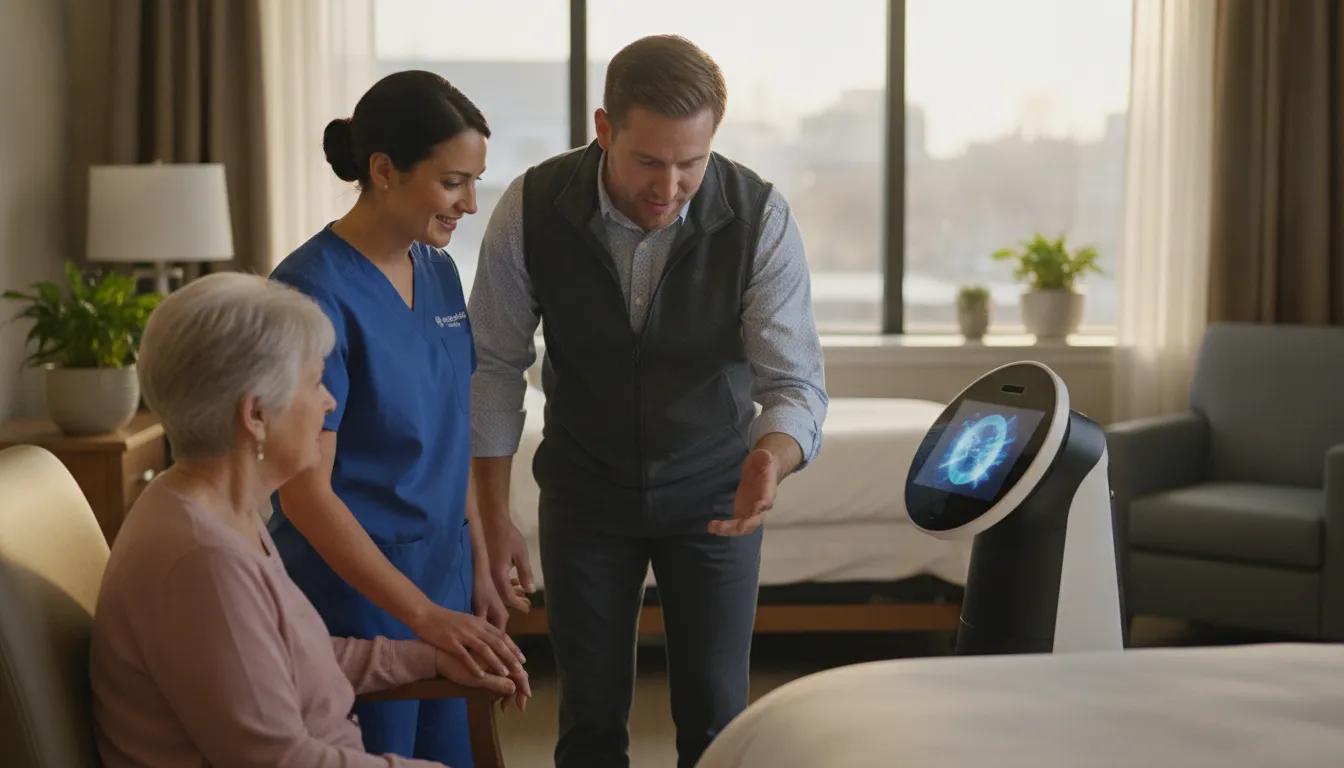
- Pilot one change in week three. Keep the scope narrow. For example, standardize the escalation trigger, assign a named owner, and define the information the nurse prepares before contacting a physician. Where remote access is appropriate, autonomous bedside telemedicine can reduce transport friction by helping coordinate a remote physician with an on-site nurse at the resident's bedside.
- Measure and review in week four. Track practical indicators such as time from escalation to physician connection, unnecessary equipment movement, incomplete handoffs, and staff-reported interruptions. Review the results with the nurses who use the process. Coach to the agreed standard, then revise anything that creates new work or conflicts with resident needs.
Dr. Temi's nursing assistance solution can be considered when physician access and bedside coordination are part of the bottleneck. Its role is to support communication and hands-on care coordination, not to replace nursing assessment, clinical judgment, supervision, or facility policy. Device availability and workflow fit should be confirmed for the specific deployment.
Repeat the loop with the next bottleneck after the pilot settles. Small, measured revisions are easier for teams to adopt and easier for leaders to correct when the reality of a senior-care shift differs from the original plan.
Frequently Asked Questions
How do you optimize a workflow?
Start by observing the current process from trigger to handoff. Map each step, identify duplicated documentation, unclear ownership, avoidable transport, and delays in escalation. Then pilot one change, define a small set of measures, review the results with frontline staff, and revise the process before expanding it. Keep clinical judgment and resident needs at the center of every decision.
How do you prioritize as a nurse?
Address immediate safety and clinical risks first, followed by time-sensitive care and unresolved escalation needs. Next, complete planned rounds, document the care provided and outstanding concerns, and prepare a clear handoff. If priorities compete, make the conflict visible to the charge nurse or designated clinical leader rather than allowing a pending task to disappear.
What should a senior care handoff include?
A useful handoff identifies the resident, current status, changes since the last update, completed actions, pending tasks, escalation status, and the person responsible for the next step. Handoffs transfer care responsibility and occur during shift changes or transitions between departments. AHRQ PSNet describes handoffs as updates that support the transfer of responsibility.
How can teams improve access to a remote physician?
Define which findings trigger remote review, who initiates the request, what bedside support is needed, and where the encounter is documented. Dr. Temi describes an autonomous workflow in which the robot navigates to the bedside, a remote physician consults with the resident, and on-site nurses assist under physician guidance. Device availability depends on the specific deployment, and the platform supports coordination rather than replacing nursing or physician judgment.
Ready to Discuss Workflow Coordination?
When senior care teams need a clearer way to coordinate bedside physician access, escalation, and nursing handoffs, a focused conversation can help connect workflow goals to practical support. Dr. Temi can walk through how its autonomous robotic telepresence platform may fit your facility's care processes while keeping clinical judgment with your team.
Book a Demo to discuss your needs with the Dr. Temi team.