Hospital Credentialing for Telemedicine: A Practical Guide
Hospital credentialing for telemedicine is more than checking a remote clinician’s license. It is a governance process for confirming qualifications, defining permitted clinical work, documenting responsibility, and coordinating care across the hospital and the clinician’s home organization. A clear process helps leaders connect bedside care with remote expertise without leaving gaps in accountability.
What does credentialing for telemedicine cover?
Credentialing is the process of collecting and verifying information about a clinician’s identity, education, training, licensure, work history, and other qualifications. Privileging is the separate decision about which clinical services that clinician may provide within a particular organization. Hospitals often discuss the two together, but they answer different questions: Is this clinician qualified, and what may this clinician do here?
Remote care adds operational details to both questions. The clinician may work from another health system, a contracted group, a home office, or a centralized virtual-care center. The patient may be at a hospital, a separate facility, or another approved site. The hospital needs a reliable way to establish whose credentials it is relying on, what scope of care is approved, and how the remote clinician fits the local care team.
Credentialing and privileging rules can depend on the clinician’s role, facility type, payer arrangements, state law, and applicable federal requirements. They may also change. The University of Arizona’s discussion of telehealth credentialing challenges is a useful overview of why remote practice creates governance questions. It should not substitute for reviewing current requirements with the organization’s medical staff office and legal or compliance advisers.
Which rules and agreements should leaders verify first?
Start with the requirements that apply to the specific encounter, rather than assuming there is one national telemedicine credentialing pathway. Identify the state where the patient is located, the clinician’s practice arrangement, the hospital’s accreditation and medical staff rules, and the relevant payer or program conditions. Ask counsel and credentialing leaders to confirm current requirements before a policy is approved or a new relationship goes live.
Some hospital arrangements may use a process commonly called credentialing by proxy, under which a hospital may rely on another entity’s credentialing work for a remote practitioner when applicable conditions are met. The details matter: the participating organizations, written agreements, practitioner categories, and hospital responsibilities must be reviewed against current rules and bylaws. A 2011 American Academy of Pediatrics news report described then-updated CMS regulations concerning privileges for remote physicians. Because that report is historical, treat it as background rather than proof of today’s requirements, and check the current CMS materials and legal interpretation for the proposed arrangement.
Before relying on another organization’s review, establish who performs primary-source verification, what records are shared, how often information is refreshed, and who notifies the hospital when a license, sanction, or privilege changes. Contract language should identify each party’s duties and records access. A memorandum of understanding or services agreement is not a substitute for confirming that the credentialing model fits applicable law and hospital policy.
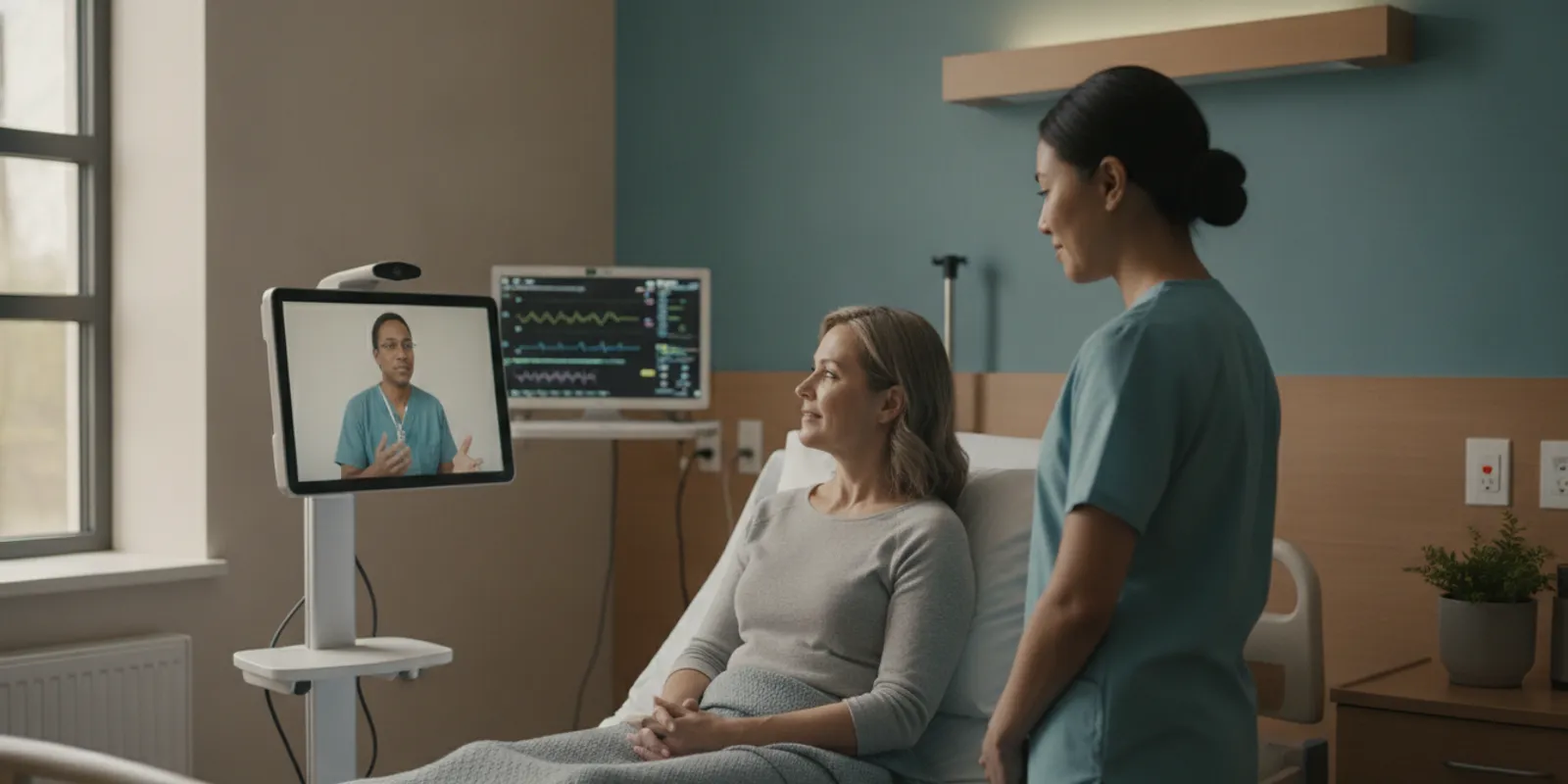
For context on how virtual care can connect to an in-person care setting, review Dr. Temi’s clinical telepresence solutions. The technology and the governance process are separate parts of program design: remote access does not itself establish a clinician’s qualifications or privileges.
How should a hospital define the clinician’s scope?
Privileges should describe the work the clinician is approved to perform, not just the platform through which the encounter occurs. A video connection, mobile robot, or remote monitoring interface does not define clinical scope. The scope should instead reflect the clinician’s specialty, training, competence, local policies, and the limits of the remote encounter.
For each role, document the intended setting and patient population, the types of consultations or follow-up allowed, any exclusions, escalation expectations, and whether the practitioner may enter orders or document in the health record. Clarify whether the privilege covers independent assessment, consultation to an on-site clinician, or both. Set out how bedside staff participate when an examination requires hands-on assessment or connected devices.
A practical privilege description should avoid broad language such as “telemedicine services” without further definition. That phrase may encompass very different workflows, from specialist consultation to an acute evaluation or follow-up visit. Consider separate privilege categories or approved protocols where clinical tasks and risks differ. Have the appropriate medical staff bodies review the scope through the hospital’s established process.
- Define the service: State what clinical encounter or consultation the privilege covers.
- Set boundaries: Identify patient groups, locations, hours, and circumstances that are outside the approved scope.
- Specify local support: Describe when an on-site clinician or staff member must be available and what tasks they perform.
- Plan escalation: Explain how the remote clinician requests in-person assessment, emergency response, or transfer when needed.
- Review changes: Reassess privileges if the service, technology, patient population, or clinician role changes.
What should the credentialing file and review process include?
The file should let reviewers understand both the clinician’s qualifications and the basis for the hospital’s decision. Build a consistent checklist, assign an owner for each verification step, and record dates, sources, exceptions, and approvals. Do not assume that a profile supplied by a staffing vendor or distant facility is complete or current.
Depending on the applicable rules and the hospital’s policy, reviewers may need to verify identity, current licensure, education and training, board status where relevant, work history, references, competency, malpractice coverage, and applicable sanctions or exclusions. Confirm which sources qualify as primary sources under the hospital’s process. Determine how any gaps, adverse findings, or conflicting information are escalated and resolved.
Remote arrangements also call for a clear process to maintain the record after initial approval. Decide who checks expiration dates, collects updated attestations, monitors changes, and alerts medical staff leadership. Set a renewal schedule consistent with the organization’s bylaws and applicable requirements. When another organization supplies credentialing data, document what is received, how it is validated, and how the hospital can audit or request supporting records.
It also helps to distinguish onboarding from ongoing oversight. Before activation, confirm that required approvals are complete, relevant service agreements are signed, the remote clinician has access to the approved workflow, and local staff know how to contact the clinical lead. Define who can pause or restrict participation if a required credential expires, a privilege changes, or a concern is under review. Establish a documented route for restoring access after the issue is resolved. These controls should follow hospital policy and not become an informal workaround for the normal review process.
Use a single source of truth for status where possible, even when documents are held by more than one organization. The medical staff office should be able to tell whether a clinician is approved for the relevant service and site, when that approval must be revisited, and who owns the next action. A routine report to the service’s clinical and operational leaders can surface upcoming renewals and unresolved file items before they disrupt care.
How can teams make each approval traceable?
Use a documented sequence that connects evidence to a decision. For example, the medical staff office can first confirm the clinician’s identity and collect the required application materials. Assigned reviewers can then verify each item, record the source and date, and flag missing or inconsistent information rather than silently treating it as complete. The clinical department can assess whether the applicant’s experience supports the proposed scope, while the appropriate committee or authorized decision-maker reviews the recommendation under the hospital’s process.
At each handoff, note who owns the next action and what would allow the file to advance. If information is incomplete, identify the missing item, request it through the agreed channel, and set a follow-up date. If an exception is considered, document its rationale, approving authority, limits, and review date. This creates a usable audit trail and helps prevent a pending application from being mistaken for final authorization.
Before granting access to the live workflow, reconcile the final approval against the service roster. Check that the clinician’s name, site, privilege category, effective date, and any restrictions match the schedule and access configuration. A short pre-launch review can catch a mismatch between a committee decision and an operational list before it affects a patient encounter. Keep the checklist practical: it should clarify decisions, not duplicate every document already held in the credentialing file.
| Review area | Questions to resolve | Operational evidence |
|---|---|---|
| Identity and qualifications | Who is the practitioner, and which qualifications are verified? | Completed checklist, verification sources, review dates, and documented exceptions |
| License and authority | Where will the patient be located, and what authority is required for this service? | License or other required authorization checks recorded under current policy |
| Privileges and scope | What care may the remote clinician provide, and what is excluded? | Approved privilege language, specialty scope, and relevant protocols |
| Cross-organization reliance | Can the hospital rely on another entity’s work, and under what conditions? | Reviewed agreement, defined responsibilities, accessible supporting records |
| Ongoing monitoring | Who tracks expirations, status changes, complaints, and renewal? | Named owners, escalation path, and scheduled review process |
How should documentation and accountability work?
Credentialing sets the authorization framework. Clinical documentation and accountability make that framework usable during care. Before launch, map where the encounter note is created, who signs it, how it becomes part of the patient record, and which team members receive follow-up tasks. If the remote clinician and local care team use different systems, define how relevant information moves between them and who confirms completion.
Policies should explain which clinician is responsible for the assessment and plan, who may enter or carry out orders, and how the record identifies participants in the encounter. Set expectations for documenting the patient’s location, the remote clinician’s location where required by policy, the modality used, participants, relevant limitations, and any technical interruption that affected the encounter. The exact documentation standard should be aligned with applicable rules and the hospital’s record policies.
Accountability should also be explicit when care crosses organizational lines. Name the clinical lead for each service, define who handles complaints and quality review, and describe how safety concerns or unexpected outcomes are escalated. Agreements should cover communication between the remote organization and the hospital, record access, incident reporting, and cooperation with review processes. Avoid vague language that leaves teams unsure who responds when a concern arises.
For connected care, leaders can also consider how information is documented and exchanged with the broader record. Dr. Temi describes its approach to autonomous clinical care, including its technology partnerships. Any organization evaluating a particular workflow should confirm the actual integration, documentation responsibilities, and approvals relevant to that deployment rather than assuming that technology alone resolves recordkeeping or accountability.
How can teams coordinate across sites?
Remote credentialing is one part of a relationship among the hospital, clinician, remote employer or group, and the facility where the patient receives care. Each participant needs a named contact and an understood role. Operational coordination should be designed before the first patient encounter, not improvised during a clinical handoff.
Build a responsibility map that identifies who schedules the service, confirms the patient and location, supports the connection, documents the encounter, communicates recommendations, and follows up on unresolved issues. Include an after-hours contact path if the service operates outside normal business hours. Clarify what happens if the clinician is unavailable, the connection fails, or the patient needs an in-person assessment.
Test the workflow with the actual teams who will use it. A tabletop exercise can walk through routine care, a technology interruption, a scope question, and an urgent escalation. Use the results to refine contact lists, handoff language, and downtime procedures. Staff should know whom to contact without having to search through a contract or policy during an encounter.
Hospitals considering bedside robotic telepresence should assess both the clinical workflow and the credentialing framework. Dr. Temi’s platform overview describes an approach designed to bring remote clinicians to the bedside. The hospital still defines which clinicians may participate, what role each has, and how local teams coordinate each encounter.
What should leaders measure after launch?
Credentialing oversight should continue after approval. A small set of process measures can help leaders find administrative gaps without confusing activity with clinical quality. Choose measures that the medical staff office and service leaders can act on, and interpret them alongside applicable quality and safety review.
- File readiness: Are required records complete before a clinician begins providing service?
- Renewal status: Are expiring licenses, privileges, and other required items identified early enough for review?
- Scope alignment: Do actual encounters remain within approved privileges and protocols?
- Documentation completion: Are notes, orders, and follow-up responsibilities routed as intended?
- Escalation performance: Can teams reach the right clinical contact when a question or urgent need arises?
- Review and learning: Are complaints, incidents, and workflow issues routed to the appropriate committee or leader?
Use findings to improve the process, not to bypass formal review. A repeated delay may point to unclear ownership, incomplete information exchange, or a mismatch between the privilege scope and real operations. Changes to scope, participating sites, or clinician arrangements should go through the organization’s established approval pathway.
What questions should a hospital ask before a demo?
A technology demonstration is an opportunity to test operational assumptions, but it does not replace credentialing review. Invite medical staff services, clinical leadership, nursing, IT, compliance, and the operational owner to assess the same proposed workflow. Questions should connect the demonstration to decisions the hospital must make.
- Which clinicians are expected to participate, and which organization employs or contracts with them?
- What is the proposed privilege scope, and which local protocols would govern the encounter?
- How does the remote clinician communicate with bedside staff before, during, and after the visit?
- What documentation is created, where is it stored, and who is responsible for completing it?
- What connected devices or hands-on tasks are part of the proposed service, and who operates them?
- What happens when the technology is unavailable or the patient needs care beyond the remote scope?
- What credentialing evidence and agreements will the hospital need before implementation?
Dr. Temi’s healthcare technology articles provide additional context for leaders evaluating connected-care workflows. Keep the demo focused on the facility’s intended use, the responsibilities of each party, and the evidence needed for the hospital’s own approval process.
Frequently asked questions
Is credentialing the same as privileging?
No. Credentialing gathers and verifies information about a clinician’s qualifications. Privileging is the organization’s decision about which services the clinician may provide. A hospital should address both through the applicable medical staff and governance process.
Can a hospital rely on another organization’s credentialing review?
Some arrangements may allow reliance on another entity’s credentialing work under defined conditions, but eligibility and responsibilities depend on current requirements and the organization’s policies. Have credentialing leadership and counsel assess the specific arrangement, confirm the records available, and document the hospital’s responsibilities before relying on it.
Does a telemedicine platform grant a clinician privileges?
No. Technology can support communication and care workflows, but it does not establish a clinician’s qualifications or authorize practice at a hospital. The hospital’s credentialing and privileging process determines approval under its applicable rules.
What if the remote clinician is in another state?
Confirm requirements based on the patient’s location, the clinician’s role, and the specific service. State and federal rules can differ and may change. Ask qualified legal and credentialing advisers to verify the applicable requirements before the clinician begins providing care.
Build credentialing into the care model
A dependable telemedicine program connects verified qualifications, clearly defined privileges, complete records, and practical coordination across sites. When hospital leaders assign owners for each step and revisit the process as services evolve, remote clinicians can work within a transparent framework that supports the local care team and the patient.